Other Publications
Connecting the dots
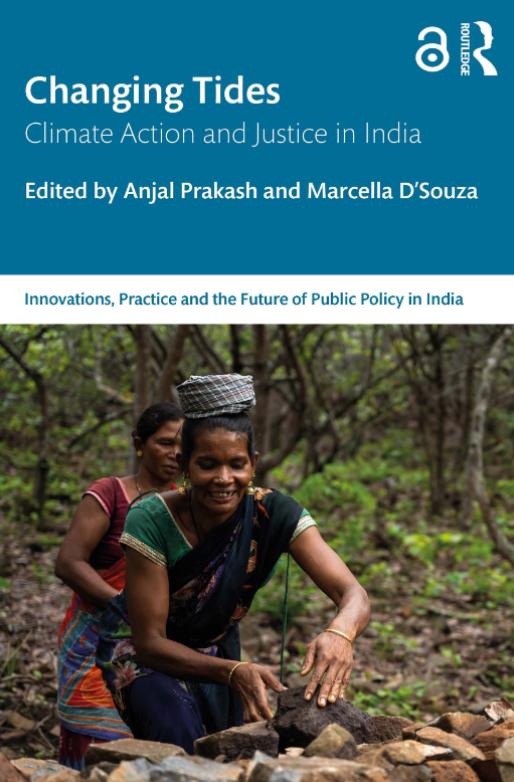
bridging traditional knowledge, water security, and climate justice in higher education
Suparana Katyaini, Anamika Barua, Aradhana Amlathe, Bhavya Katyal, Bibhu Prasad Nayak, Tristan McCowan
October 2025 | Sustainable Water
Overview
While climate justice is a global imperative, its impacts are felt most acutely by marginalised communities in the Global South. A significant gap exists in how formal climate policies recognise the lived experiences and experiential learning of these communities. This research discusses the erosion of traditional knowledge poses barriers to climate adaptation and social equity.
Integrating Traditional Knowledge: Highlighting how experiential knowledge of ecology and society serves as a vital nature-based solution for water security and climate action.
Reimagining Higher Education: Positioning universities as catalysts for climate justice by documenting and validating local knowledge systems through qualitative research.
Moving beyond quantitative data to gain insight of the narratives of communities and women, whose non-structural adaptation measures (such as social networking and seasonal migration) have potential to inform policies.
Key alignment with the Sustainable Development Goals(SDG): Integrating traditional knowledge into higher education directly supports SDG 4.7 on equipping learners with skills for sustainable lifestyles and appreciation of cultural diversity; SDG 6.5 on implementing Integrated Water Resources Management through transboundary cooperation; SDG 13.1 on strengthening resilience and adaptive capacity to climate-related hazards.
What are the recommended priority actions at the science-policy-practice interface
- Understand how to enable women’s leadership across all climate change issues.
- Quantify the costs of disasters to infrastructure and livelihoods.
- Identify more nature-based solutions for policy recognition and upscaling.
Key Highlights
The chapter synthesises learnings from two major initiatives: the UKRI-supported Climate-U project and the Vera Thiess Fellowship by International River Foundation, focusing on flood adaptation along the Brahmaputra River. The relationship between riverine communities and the Brahmaputra exemplifies a complex socio-ecological system.Communities have developed sophisticated Traditional Knowledge Systems categorised into structural and non-structural adaptation measures.
- Co- creation of knowledge: Moving beyond academic boundaries to include community priorities where the disconnect with the rich, context-specific knowledge held in regional languages needs to be bridged for advancing climate justice.
- Gendered adaptation: Women’s experiential knowledge—often revolving around non-structural measures like household food security and community support—is critical for resilience but lacks formal policy recognition compared to structural engineering solutions.
- The role of institutions: development organisations and higher education institutions must act as "translators converting validated local wisdom into actionable policy frameworks that can be scaled up to resilience.
“Climate justice hinges on inclusion of diversity. To accelerate sustainability, the research calls for a shift toward community-engaged and transdisciplinary research. By valuing traditional knowledge as a critical pillar to scientific data, policymakers can design more equitable, effective, and culturally grounded climate strategies for a hotter world.”