Council on Energy, Environment and Water Integrated | International | Independent


Suggested citation: Jain, Abhishek, Nikita Tank, Aastha Bafna, Ruchira Goyal, Chandan Jha, Stuti Manchanda, Madhumita Srinivasan, Rohan Gupta, Sara Haris, Arti Agarwal, and Apoorve Khandelwal. 2026. Cattle and Community in a Changing Climate: Sustainable Pathways for India's Dairy Sector. New Delhi: Council on Energy, Environment and Water.
India, the world’s largest producer and consumer of milk, is also home to the largest bovine population, with more than 300 million animals (DAHD 2023). Milk contributes approximately 5 per cent to the national Gross Domestic Product (GDP), and cattle rearing1 supports the livelihoods of over 80 million farmers (GoI 2022). Between 2003 and 2019, India’s milk production increased from 86 million tonnes to 188 million tonnes (NDDB 2024), almost a 2.2-fold rise, with only an 11 per cent increase in the bovine population. At 471 grams per capita (DAHD 2024), India’s milk availability is already well above the country’s nutritional requirement of 300 grams per capita.
However, these aggregate statistics obscure diverse lived realities in the sector. Dairy systems range from highly milk-productive animals in the intensive systems of Punjab and Haryana to mixed-use cattle still valued for draught power in Maharashtra. While socio-cultural factors strongly influence cattle ownership in eastern states, dung use is a primary motivation for a significant share of farmers in central India. Diversity is visible across animal type (indigenous cattle, crossbred cattle, and buffaloes), herd sizes, and challenges and motivations for rearing. Climate change further shapes these differences, impacting these animals and rearers differently, necessitating a nuanced understanding of the diversity of India’s dairy sector and the cattle rearers.
This first-of-its-kind report sheds light on these regional and typological variations to guide responsive and bespoke policies and interventions that seek to strengthen the resilience of the sector. It answers the following key questions:
We address these key questions using a primary representative survey of rural cattlerearing households.
Figure ES1. A multi-stage sampling approach was used to conduct the survey
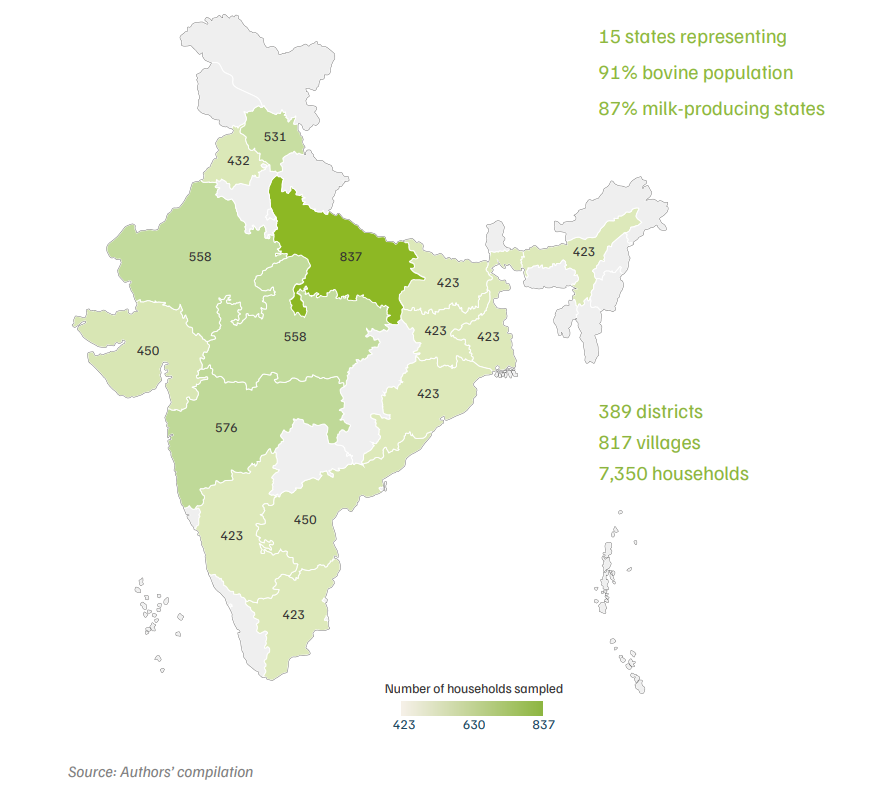
The survey spans 15 states, 389 districts, 817 villages, and 7,350 cattle-rearing households (Figure ES1). Collectively, these 15 states represent 91 per cent of the total bovine population.
Segment 1: Unpacking the diversity of Indian cattle rearing
The diversity in the dairy sector extends beyond the breed mixes and herd sizes—there is significant heterogeneity in rearer motivations for cattle rearing, challenges faced, and herd mixes, all of which signal a need for bespoke policymaking.
1) Small herds (1–2 animals) dominate in number, but they contribute less to output
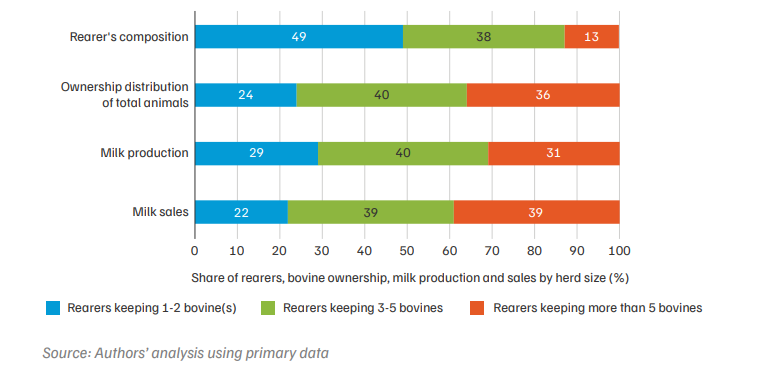
Half of rural cattle rearers in India own only 1–2 animals. This group accounts for a ~25% of the bovines reared, 29 per cent of the total milk produced, and 22 per cent of milk sold (Figure ES2). These small herds dominate hilly, central, and eastern regions, while larger herds (more than five animals) prevail in Gujarat, Rajasthan, Maharashtra, Tamil Nadu, and Punjab.
Figure ES2. Rearers with small herds play a vital role in the Indian dairy sector
2) Low diversity in herds at the household level
The diversity of bovine types at the household level is relatively low, with 82 per cent of rearers owning only one bovine type. Limited diversity at the bovine-type level can simplify the targeting of animal-type-focused interventions, but limited diversity at the breed level may reduce the sector’s resilience to shocks or disruptions. Regionally, indigenous cattle are more dominant in the east, buffaloes in the north, and crossbreds in the south.
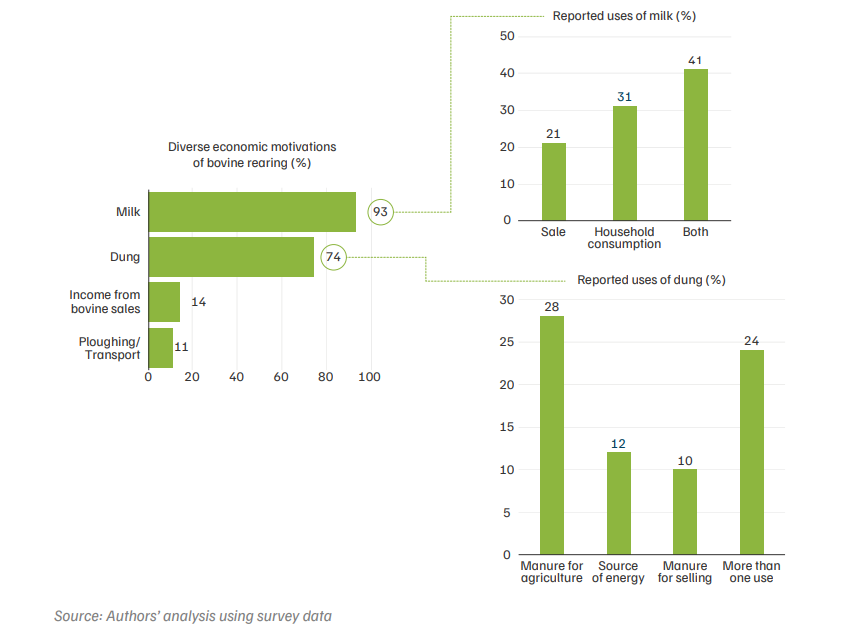
Figure ES3. Milk and dung are the top two motivations for bovine rearing in rural India
3) Thirty-eight per cent of Indian rearers do not sell milk
Milk (93 per cent) and dung (74 per cent) are the top two motivations for cattle rearing. Notably, seven per cent of cattle rearers, around 5.6 million rearers nationally, rear bovines for purposes other than milk consumption and sale such as dung, draught power, or income from selling bovines. This share rises to about 15 per cent in West Bengal and Maharashtra (Figure ES3).
Among milk-motivated rearers, 31 per cent rear bovines solely for the households’ own consumption of milk. Along with the 7 per cent who have no milk-related motivations, around 38 per cent of rearers (approximately 30 million) do not cite milk sales as a motivation for rearing cattle. This share reaches 71 per cent in Jharkhand and over 50 per cent in West Bengal and Himachal Pradesh. Most of these households typically own 1–2 indigenous cattle, indicating the relatively critical role of indigenous cattle for non-market uses, such as household nutrition, dung, and draught power, especially within integrated farming systems.
When asked to rank bovine-related benefits, nearly 34 per cent of rearers placed milk for household consumption first, and 20 per cent ranked non-milk-related motivations as their primary motivation.
Figure ES4. Nationally, over half of rearers rank benefits other than milk sales as their primary motivation for cattle rearing
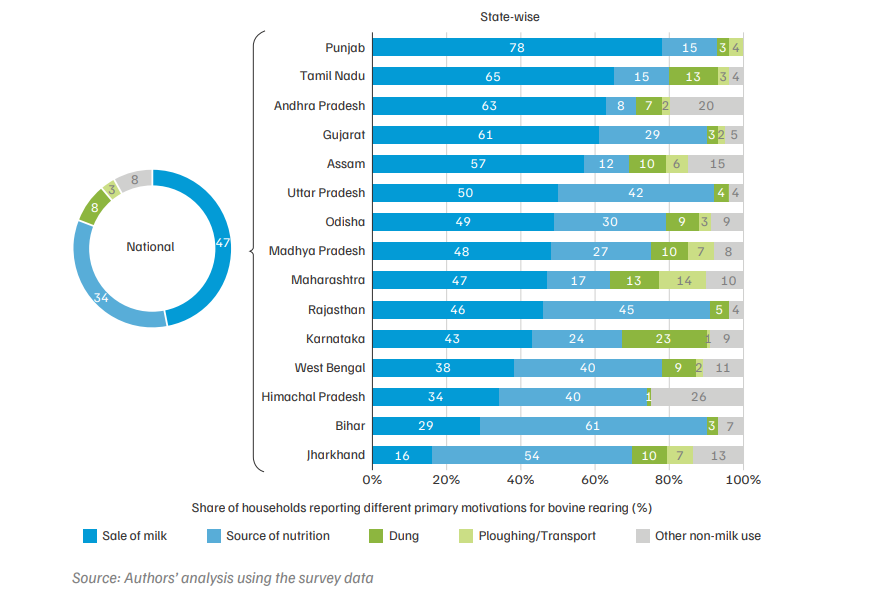
Despite Maharashtra and Karnataka having relatively formalised dairy sectors, over 30 per cent of rearers in these states prioritise non-milk benefits, mainly dung and draught power. These trends are most common among rearers keeping 1–2 indigenous bovine animals. In Himachal Pradesh, Andhra Pradesh, and Assam, over 15 per cent of rearers identify socio-cultural or religious motivations as their foremost reason for keeping cattle. These findings highlight the need for policies that recognise multi-faceted motivations for cattle rearing and extend beyond a sole focus on milk. Notably, in 9 of the 15 states, less than half of cattle rearers cite milk sales as their primary motivation for rearing (Figure ES4).
The dairy sector faces numerous challenges, varying with typologies, herd mixes and shortages. Our findings throw light on these challenges and constraints of the cattle rearers.
1) Securing affordable feed and fodder is the biggest challenge for rearers, yet awareness of government interventions remains low
Figure ES5. Feed and fodder shortages are the leading constraint across the sector as reported by households
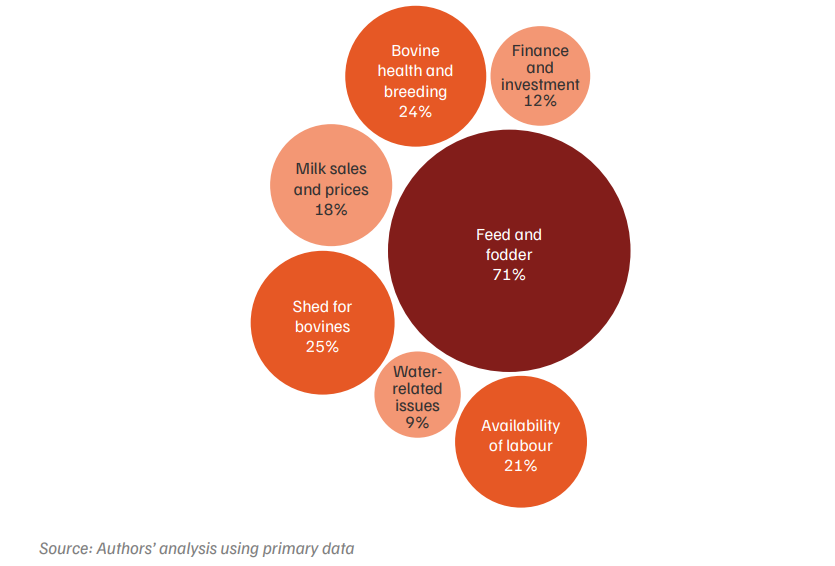
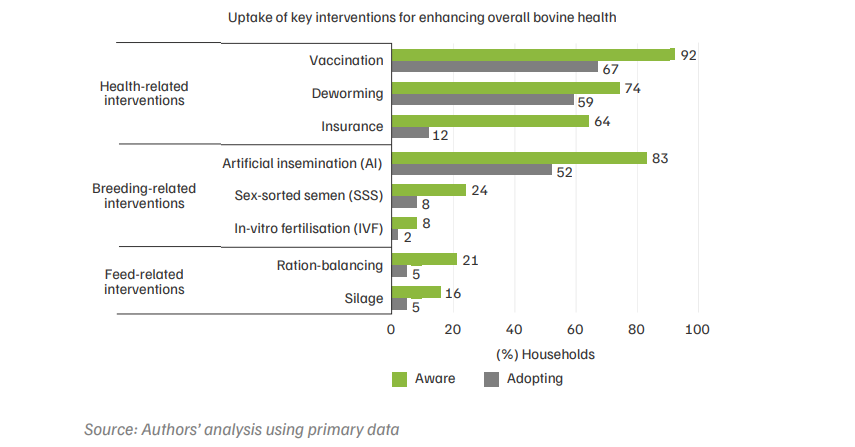
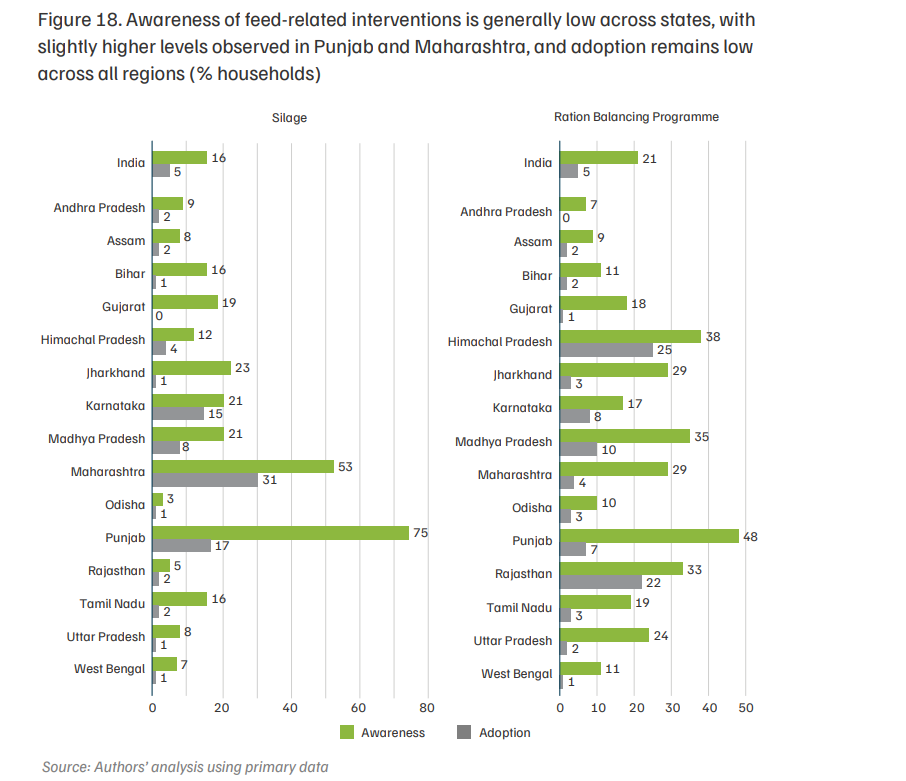
Almost three out of four Indian cattle rearers report facing challenges related to feed and fodder (Figure ES5). Despite regional surpluses of green and dry fodder, affordability remains a widespread concern, particularly in Punjab, Himachal Pradesh, and Gujarat. Declining grazing lands are a significant concern in Assam (~40 per cent), Punjab, Madhya Pradesh, and Odisha (~25 per cent). Meanwhile, Uttar Pradesh, Gujarat, and Bihar report an acute shortage of land for fodder cultivation. Despite the challenges around feed and fodder, nationally, 80 per cent of rearers remain unaware of key feeding interventions, such as silage (to improve green fodder availability) and ration-balancing programmes (to promote balanced animal nutrition) (Figure ES6). Adoption remains even lower, at 5 per cent for each intervention. Reasons for non-adoption vary across states. For instance, in Punjab, silage awareness is relatively high, but adoption remains low due to the easy availability of green fodder, which reduces the perceived need for preservation techniques. In contrast, Maharashtra shows higher adoption levels of silage despite lower awareness, with non-adoption driven mainly by a lack of awareness.
Figure ES6. Awareness and adoption of feeding-related interventions remain low
2) About a quarter of cattle rearers face challenges related to animal health and breeding
Regarding animal health, rearers cite inadequate veterinary services, poor-quality care, and high treatment costs as key constraints. While veterinary hospitals are essential, mobile dispensaries can efficiently deliver basic care in rural and remote areas, improve local access, and ensure broader rural coverage. Punjab exemplifies these needs, with 1,389 veterinary hospitals but only 22 mobile dispensaries (DAHD 2024). In contrast, Andhra Pradesh has 337 hospitals and 1,558 mobile dispensaries; further, far fewer rearers in Andhra Pradesh cite animal-health-related constraints (DAHD 2024). Interventions such as vaccination and deworming programmes have over 75 per cent awareness and about 60 per cent adoption rates. However, limited service availability remains a key challenge in Jharkhand, Bihar, Madhya Pradesh, Rajasthan, and Uttar Pradesh.
3) Half of the rearers are adopting Artificial Insemination (AI), with popularity varying by bovine type
Regarding breeding interventions, AI has high levels of awareness (80 per cent), and adoption rates are about 50 per cent across the country. The Nationwide Artificial Insemination Programme (NAIP), launched by the Government of India in 2019, may have contributed to this expansion (PIB 2019). However, AI adoption exhibits significant variations across bovine types. It is lower among indigenous cattle rearers (34 per cent) – half of whom use the milk exclusively for household consumption – and buffalo rearers (45 per cent), compared to 76 per cent adoption among crossbred rearers, despite similar awareness levels. The most common reason for non-adoption is a preference for natural mating approaches; poor conception rates are also frequently cited by buffalo rearers.
Awareness of sex-sorted semen (SSS) remains limited (around 25 per cent), given the technology’s recency, which also leads to low adoption rates across states and typologies. Even among those aware, cost and availability are significant barriers.
A big percentage of cattle rearers report aspirations for continuation of cattle rearing, with a significant percentage aiming to expand herd sizes. Therefore, future-proofing the sector is an important lens that must be considered in policymaking for the sector.
1) Rearers report a positive future outlook about cattle rearing, with ~75 per cent citing that their next generation would likely continue to keep animals
Figure ES7. Over 40% of rearers plan to increase their herd size
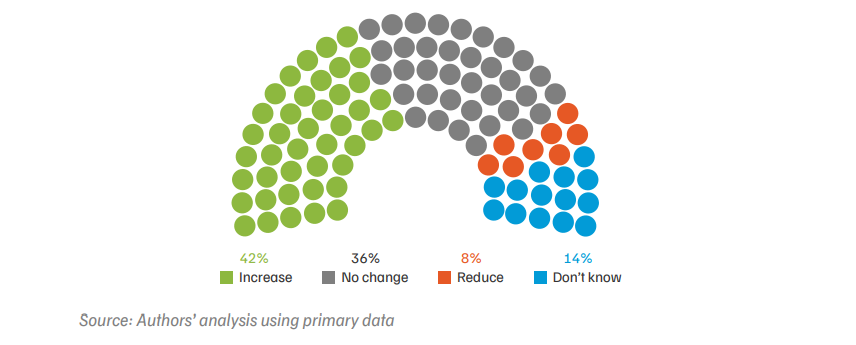
Nationally, about 42 per cent of rearers intend to increase their herd size (Figure ES7). In most states, rearers demonstrate an interest in either expanding or maintaining their herd sizes. States such as Jharkhand, Rajasthan, Maharashtra, and Assam show a strong preference for herd expansion. In contrast, Gujarat, Bihar, West Bengal, Punjab, and Uttar Pradesh exhibit a notable inclination to maintain their current sizes. These findings suggest that the bovine population may continue to grow overall. Moreover, almost three-quarters of rearers stated that future generations in their family will likely continue cattle rearing (39 per cent interested and 35 per cent likely). Only 9 per cent of rearers expressed that their future generations would not be interested in animal keeping. These findings reinforce the likely growth of the sector.
2) Rearers report climate impacts, with variations across bovine types
Climate stress is projected to reduce bovine productivity by around 25 per cent over the next 5 decades (Thornton et al. 2022). Already, 54 per cent of buffalo rearers, 50 per cent of crossbred rearers, and 41 per cent of indigenous rearers report climate-related impacts on their bovines. The primary reported impacts include higher disease incidence (33 per cent) and mortality, as well as increased restlessness (20 per cent). The extent of these impacts is noteworthy, especially as a sizeable proportion of rearers intend to expand their herds, typically by adding the same type of animal they currently rear.
Figure ES8. A higher share of crossbred cattle owners find climate change leading to greater disease incidence
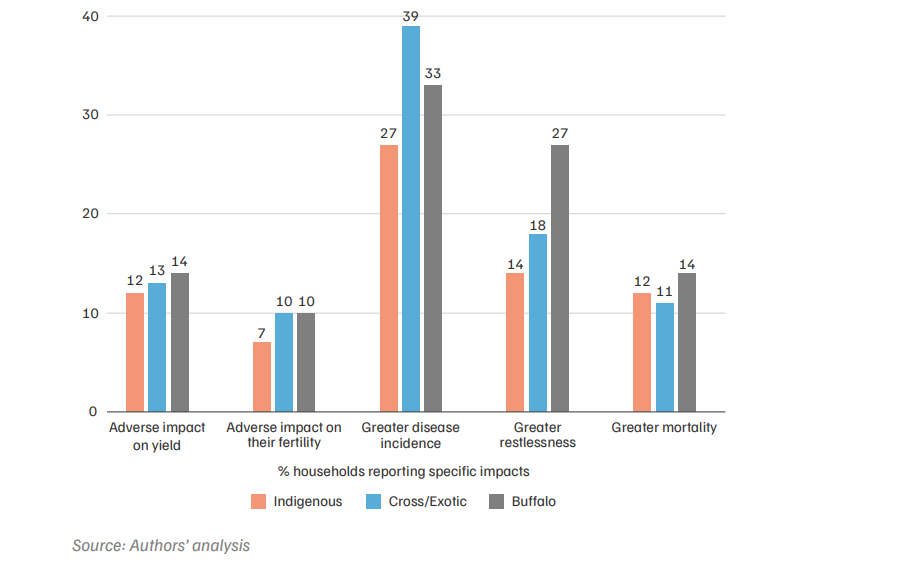
However, around 27 per cent of indigenous rearers who plan to expand would like to add crossbreds or buffaloes. A closer look at the rearers’ preferences shows differing motivations. Indigenous rearers who plan to expand their herds are mainly driven by factors such as better milk quality for household consumption (35 per cent), lower fodder requirements, and better suitability to local conditions. In contrast, those opting for crossbreds or buffaloes are primarily motivated by higher milk yields and better market prices due to higher fat content. While these decisions may improve the perceived benefit associated with milk productivity, they may also increase vulnerability to climate stress. A higher share of buffalo and crossbred rearers report observing climate impacts on their animals, while indigenous cattle are more climate resilient (Sarang et al 2024). A shift towards buffaloes and crossbreds in herd mixes thus increases the climate risk of the sector.
The dairy and cattle-rearing sector is a critical source of livelihood, nutrition, and well-being of millions of Indians. The diversity spans animal types, uses, and the challenges and motivations of cattle rearers. Thus, the policy interventions must:
Only with such approaches can India sustain a resilient and inclusive dairy sector that continues to deliver for its people in a changing climate.
India’s dairy sector plays a pivotal role in securing livelihoods, nutrition, and the environment. With an annual production of 239.3 million metric tonnes of milk (NDDB 2024; PIB 2024a), India ranks first globally in milk production and consumption, accounting for 25 per cent of the world’s total output (Manjul and Tarannum 2024). It is also home to the world’s largest bovine population – around 300 million animals (DAHD 2023). Milk is the largest agricultural commodity in India (PIB 2024a), accounting for approximately 5 per cent of the national GDP and supporting the livelihoods of over 80 million farmers (GoI 2022).
In terms of nutrition, milk is an essential part of the Indian diet, providing protein, calcium, and micronutrients (ICMR-NIN 2024). India’s per capita milk availability stands at 471 grams (DAHD 2024), nearly 45 per cent higher than the global average of 322 grams (FAO 2023). However, consumption remains highly inequitable across income groups due to affordability constraints, and significant regional and socio-economic disparities persist in both per capita availability and consumption (NDDB n.d.). For instance, Scheduled Tribe households consume 4 litres less milk per capita per month than general category households (NSSO 2024).
In terms of the environment, the cattle-rearing sector is both a contributor to and a victim of climate change. The livestock sector accounted for 63 per cent of emissions from the agriculture, forestry, and other land use (AFOLU) sector in 2018, representing 7.5 per cent of India’s total emissions (Chakraborty et al. 2022). About 90 per cent of livestock emissions come from bovines (Chhabra et al. 2012; Jha et al. 2011; Dixit and Birthal 2016). Rising population and income levels are expected to drive increased demand for dairy products, potentially further exacerbating the sector’s environmental impact (Gupta and Dasgupta 2020).
Concomitantly, climate change is reducing milk output and affecting farmer livelihoods (USEPA 2020). Climate resilience in the dairy sector is closely tied to bovine nutrition. As rising temperatures and erratic rainfall reduce fodder availability and quality, livestock face nutritional stress that lowers milk yield, fertility, and immunity. These changing climatic conditions have increased competition for (climate-impacted) natural resources, reduced feed quality and availability, and heightened livestock diseases and heat stress on animals (Bogale and Erena 2022). Given the sector’s projected expansion, strengthening its climate resilience is essential to ensure sustainable growth.
The Indian dairy sector exhibits significant regional variations – in dominant bovine types, average yields, the relative intensity of challenges, and the motivations for rearing cattle. For instance, the average milk yield of indigenous and crossbred animals ranges from 1.1 litres/day and 5.5 litres/ day, respectively, in Assam to 8.9 litres/day and 13.5 litres/day, respectively, in Punjab (NITI Aayog 2023a). India’s eastern regions face more breeding-related challenges, whereas western regions struggle with greater feed and nutrition shortages. While feeding constraints remain the top challenge across all bovine types, disease-related losses are more prevalent in crossbreds (Birthal and Jha 2005).
Understanding these diverse motivations and local constraints is essential to unlocking the sector’s full potential and steering it towards more sustainable outcomes. Interventions should therefore be context-specific and tailored to the regional and typological needs of different cattle rearers.
To prioritise context-specific interventions and better inform policies for a sustainable dairy sector, we require bottom-up data on all aspects of cattle rearing: rearers’ contexts, motivations, constraints, awareness, and adoption of different programmes. This is critical for guidance on sectoral strategic decisions. However, such data remain largely unavailable in the public domain.
This report seeks to fill this critical gap by presenting a first-of-its-kind, large-scale survey of cattle rearers in India. The survey covers almost 7,500 cattle rearers across 15 states, representing 91 per cent of India’s bovine population and 87 per cent of the total national milk production. The methodology section describes the survey’s multi-stage sampling design, framework, and quality checks to ensure representativeness. Following this, our report presents:
Finally, the report assesses the sector’s future prospects amid climate challenges, noting the heightened vulnerability of certain types of rearers. Overall, it serves as a valuable resource for understanding the dairy sector’s current dynamics and future directions.
The following section details the robust, multi-stage sampling approach implemented to ensure national representativeness. It details the methodology used to select representative cattle-rearing households and villages, alongside the framework of the village and household-level questionnaires and the outline of the data collection process.
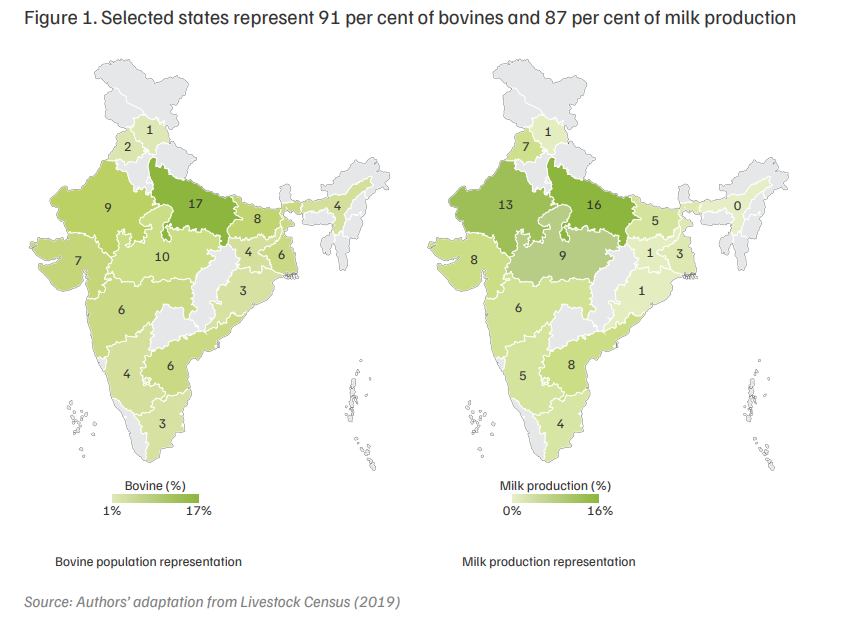
The nationally representative survey covers 7,350 cattle-rearing households across 817 villages in 389 districts spanning 15 states, representing all major agro-climatic zones of India. Together, these states account for 91 per cent of the country’s bovine population and 87 per cent of total milk production (Figure 1).
The following sub-sections provide an overview of the survey design and data collection process.
State selection
State selection was guided by two key considerations:
1. Coverage of all major agro-climatic zones in India
2. Representation of maximum possible diversity across dominant bovine types, total bovine population size, productivity levels, share of male animals, and level of formal market access
We primarily relied on the Livestock Census (DAHD 2019) and the Basic Animal Husbandry Statistics (DAHD 2020) for the data across these indicators.
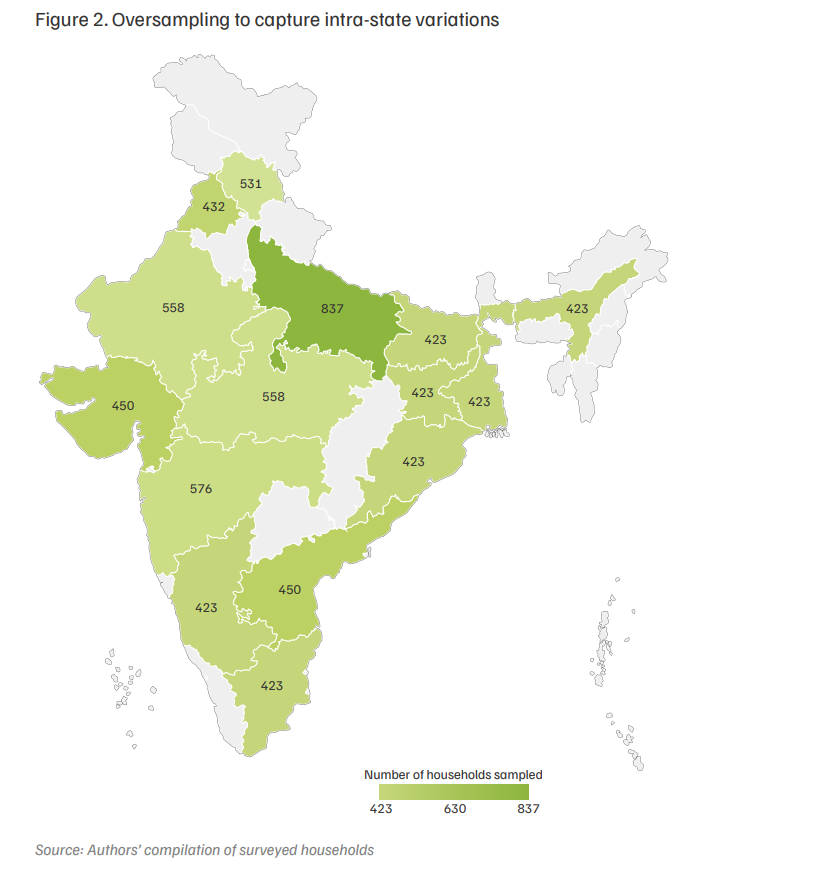
To estimate the household sample size within each state, we used the number of rural households per village reported in the Population Census 2011 (NABARD 2011). In the absence of village-level data on cattle-rearing households, we relied on total rural households for our sampling population. We applied the Cochran method4 to determine the statistical power or the minimum sample size required for reliable survey results, assuming a 95 per cent confidence interval and a 5 per cent margin of error. This resulted in a requirement of 385 households per state. To better capture intra-state variation in states with larger bovine populations, we oversampled beyond what was statistically required. The sample was proportionately increased – by 50 per cent in Uttar Pradesh and 33 per cent in Rajasthan and Madhya Pradesh (Figure 2)
Village and household selection
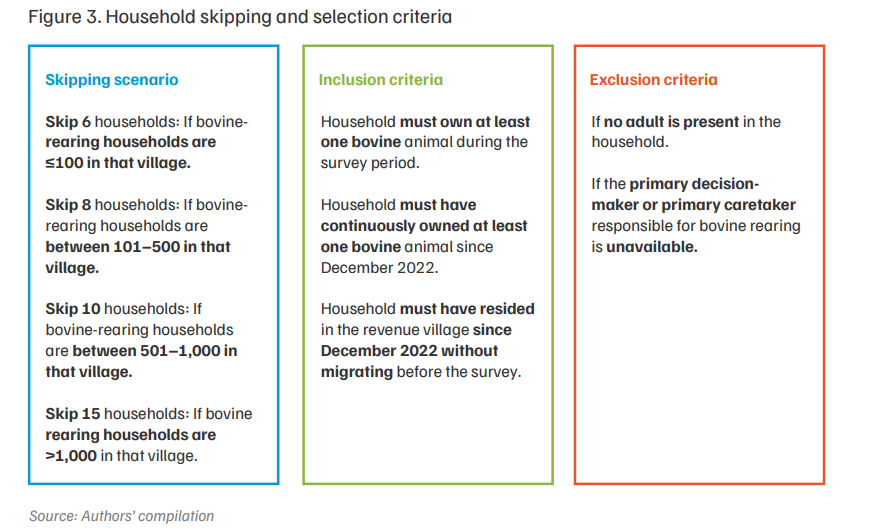
Using a multi-stage sampling approach (NITI Aayog 2022), villages were randomly selected from the state-level village listings. We excluded the bottom 1 per cent of villages with the lowest bovine populations using the Livestock Census 2019 data (DAHD 2019). To ensure overall representation of the state, we limited the survey to a maximum of four villages per district. Within each village, nine households were surveyed using the random walk method, following the eligibility and skipping criteria detailed in Figure 3. If a household did not meet the eligibility requirements, the process continued until an eligible household was identified. To ensure adherence to the randomisation process, we recorded non-response rates and reasons for ineligibility.
Questionnaire framework
We employed two levels of survey: one at the village level, administered to a village head (or equivalent5), and another at the household level. The key components of both questionnaires are discussed as follows.
Village-level questionnaire
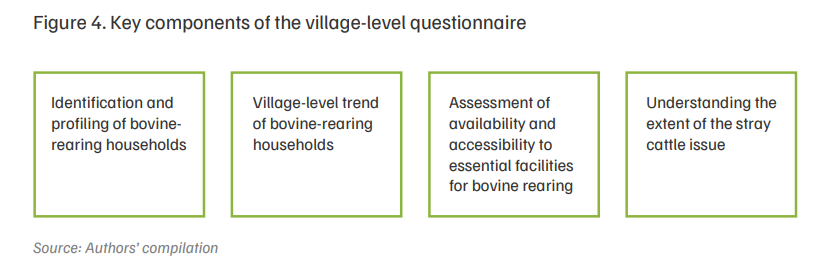
The primary objective of the village-level questionnaire was to capture the number of households engaged in cattle rearing, the trends in bovine population, and the cattle-rearing infrastructure and extension services within the village. Information on cattle-rearing households at the village level was then used to define the skipping pattern for the randomisation process and to calculate sampling weights to ensure representativeness. The critical components of the village survey are summarised in Figure 4.
Household-level questionnaire
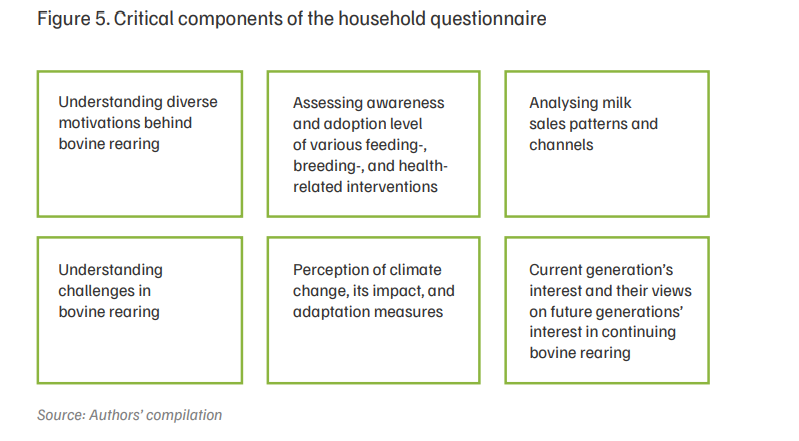
The household-level questionnaire captures information on cattle-rearing motivations, constraints, and decision-making factors of the rearers. The critical components of the household questionnaire are as follows:
Fieldwork overview
We conducted survey pilots in six villages across six districts in three states – Rajasthan, West Bengal, and Tamil Nadu – to capture maximum contextual diversity. Insights from these pilots informed iterative revisions to the questionnaire, helping refine content, streamline administration protocols, and optimise survey duration.
For the primary survey, CEEW trained a team of 90 enumerators and 30 supervisors to conduct in-person interviews and record data on handheld tablets. The entire team, including the state heads of the survey agency, underwent role-play exercises and mock field surveys during our training. We conducted the survey between January–April 2024 in eight Indian languages: Assamese, Bengali, Hindi, Kannada, Marathi, Odia, Gujarati, and Telugu.
The survey adhered to the highest ethical research standards, including oversight by the Institutional Review Board. Additionally, we implemented several quality-control measures to enhance data reliability, including spot checks, telephonic back-checks, and outlier detection (see Annexure 1). Details on the sampling weights are provided in Annexure 2.
India’s cattle-rearing landscape is highly diverse. This section presents insights into key emerging patterns in herd sizes and types of bovines across the country.
Herd ownership across the country
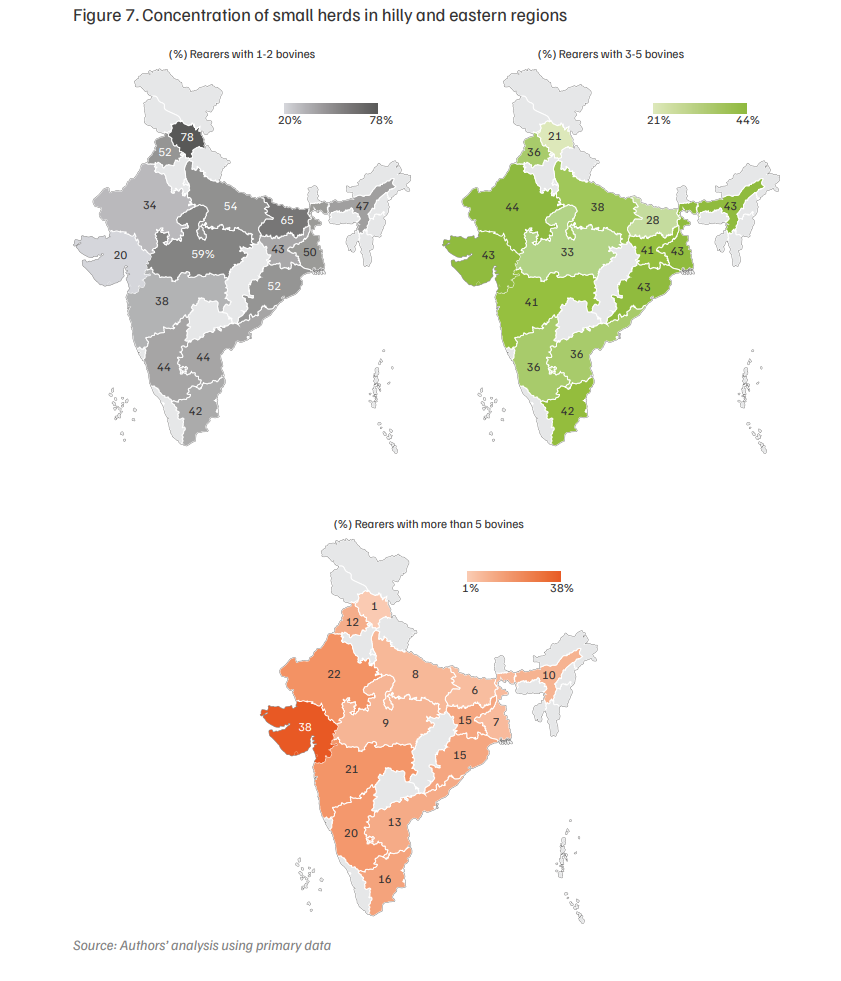
According to the 77th round of the National Sample Survey Organisation (NSSO 2019), the average bovine herd size in rural India is 3.14 animals, indicating the predominance of smallholder livestock ownership. Our survey findings closely align with this national trend, with an average herd size of 3.28 animals, highlighting the persistence of small-scale cattle rearing in India. Nearly half of all rearers own only 1–2 animal(s), while only 13 per cent own more than 5. This translates to a mean herd size of 3.3, which corroborates the average herd size of 3 animals estimated by the National Sample Survey Organisation in 2021 (MOSPI 2021). These results suggest a gradual yet likely increase in the average herd size nationwide.
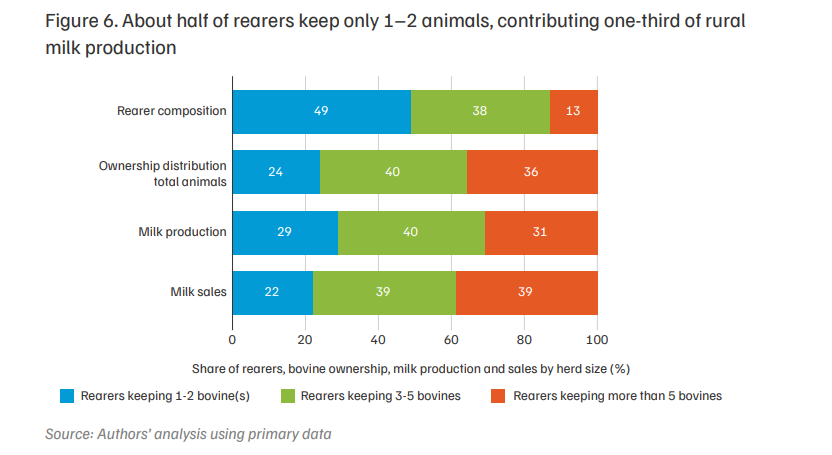
While half of cattle rearers keep small herds (1–2 animals), they own only around a quarter of the total bovine population and contribute about 22 per cent of the milk sold. In comparison, medium (3–5 animals) and large (5+ animals) rearers each account for about 35–40 per cent of the bovine animals and milk sold (Figure 6).
Beyond the national aggregates, herd sizes vary considerably across states (Figure 7). In the hilly, central, and eastern regions, 50–75 per cent of rearers maintain small herds. In contrast, in states with more developed dairy sectors – such as Gujarat, Rajasthan, Maharashtra, and Tamil Nadu – 60–70 per cent of rearers keep 3 or more animals, including about 20–30 per cent who keep more than 5 animals.
Bovine types and their diversity across India
Indigenous cattle continue to form the largest share of the Indian rural bovine population at around 43 per cent, followed by buffaloes at 36 per cent and crossbred cattle at 21 per cent (Figure 8). However, the share of indigenous cattle has been steadily declining from as high as 57 per cent in 2003 (GoI 2003).
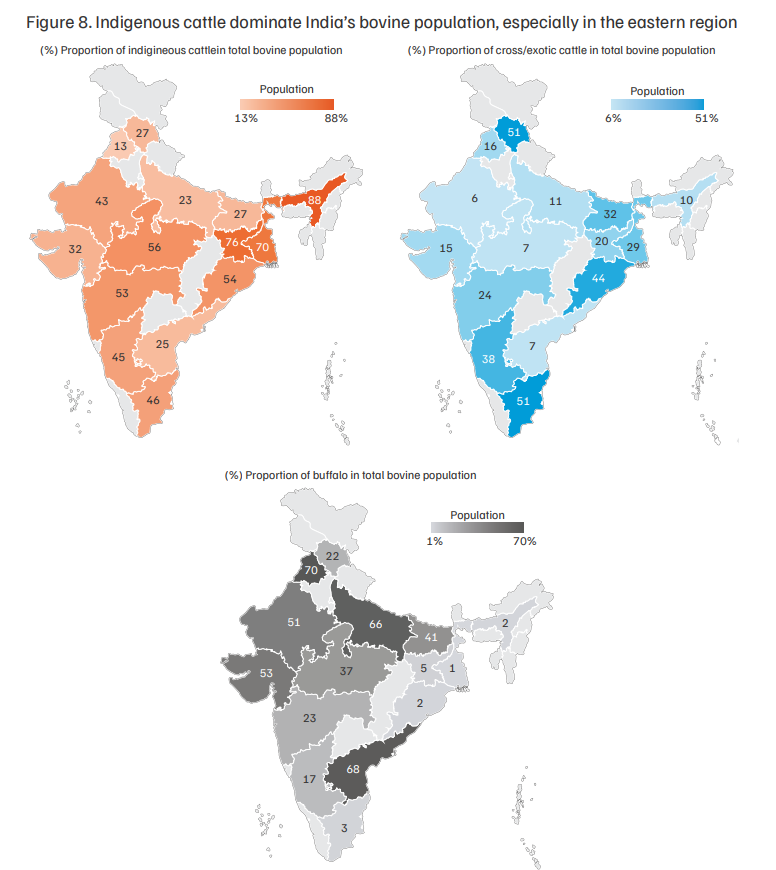
Indigenous cattle form the largest share of bovines in India’s eastern and central regions. In contrast, buffaloes dominate in several top milk-producing states, including Uttar Pradesh, Rajasthan, Madhya Pradesh, and Gujarat. Meanwhile, states such as Tamil Nadu, Himachal Pradesh, Karnataka, and increasingly Odisha, have a higher proportion of crossbred cattle.
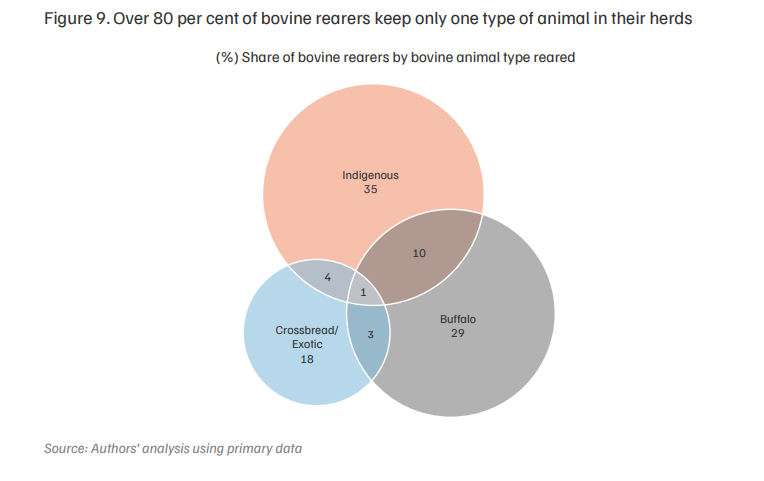
We find that 82 per cent of rearers keep only one type of bovine, indicating that most herds in the country are highly homogeneous (Figure 9). Among the remaining rearers who maintain mixed herds, the most common combination is indigenous cattle (35 per cent) and buffaloes (29 per cent) – reported by about 10 per cent of households. While such homogeneous herd ownership can simplify the targeting of many animal-type-specific interventions, it could also increase exposure to disease outbreaks or climate-induced health impacts that disproportionately impact a particular bovine type.
A range of economic, nutritional, and socio-religious motivations drives cattle rearing in India. These include revenue from milk sales, milk for household consumption, dung for manure (Singh et al. 2017), dung cakes for energy, cow urine for medicinal purposes (Mohanty et al. 2014 ), draught power, as investments for future needs, and social reasons (Ecoheritage 2024). While these motivations are recognised, there is limited understanding of their extent and relative importance. To address this knowledge gap, our survey asked respondents to select all their motivations for cattle rearing.
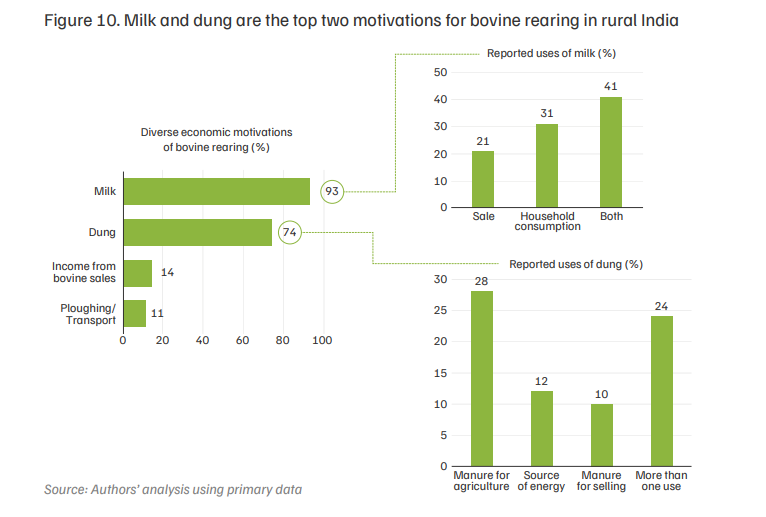
Milk-related uses are the most common motivation for cattle rearing, as reported by 93 per cent of rearers. It is closely followed by dung, as cited by 74 per cent of rearers. A smaller but substantial share also reports income from the sale of bovines (14 per cent) and draught power (11 per cent) as motivations (Figure 10).
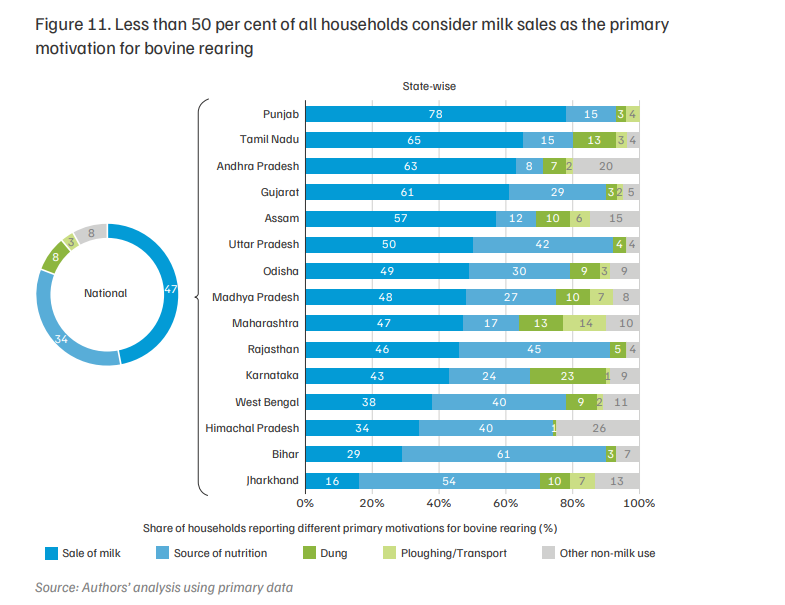
To understand the relative importance of economic, non-economic, and socio-religious motivations, rearers were asked to rank their primary reasons for cattle rearing. Overall, 53 per cent cited non-milk-sale benefits – with 34 per cent citing family nutrition and another 19 per cent citing dung use, draught power, or socio-cultural reasons. In contrast, 47 per cent identified milk sales as their primary motivation. Even in states such as Maharashtra and Karnataka, where 75–80 per cent of the milk produced is sold, over 30 per cent of households still cite non-milk related motivations (such as dung and socio-religious factors). These are typically households with 1–2 bovine animals and indigenous cattle ownership (refer to Figure 11).
In states such as Bihar, Jharkhand, West Bengal, and Himachal Pradesh, where households prioritise family consumption, rearers report limited milk sales to formal milk channels (refer to Figure 11), again corresponding with indigenous cattle ownership. This highlights the importance of understanding ownership patterns by animal type, enabling better-targeted and context-appropriate interventions.
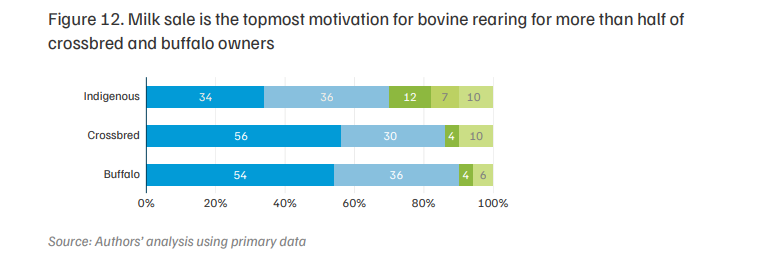
The top motivations also vary by bovine type. Crossbred and buffalo owners more often cite milk sales as their primary benefit, while non-milk motivations, such as dung use, are more common among households owning only indigenous cattle. These patterns suggest a relationship between breed choice and the rearers’ underlying motivations, which may also influence how they engage with different interventions and programmes (Figure 12).
Nationally, multifaceted motivations are found in the context of deriving benefit from milk. Thirty-one per cent of rearers use milk exclusively for household consumption, 21 per cent keep cattle solely for milk sales, and the remaining 41 per cent cite both household consumption and milk sales as motivations. Notably, about 7 per cent of rearers do not report any milk related motivation. Thus, we note that 38 per cent of rearers do not report the sale of milk as a motivation – comprising both those who rear bovines solely for nutrition and those who do not cite any commercial motivation in the context of milk.
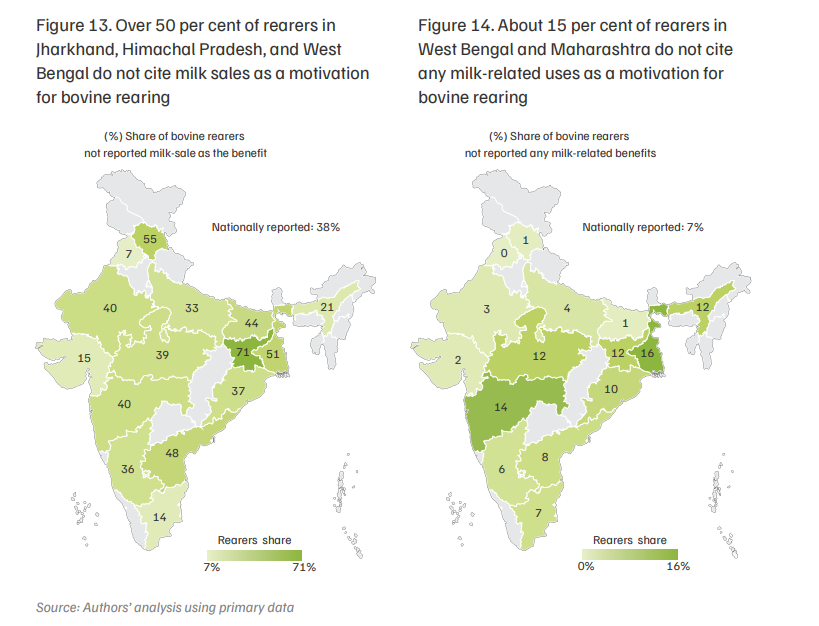
Significant regional variation is observed in these motivations. In states such as Himachal Pradesh and Jharkhand, over 50 per cent of households primarily keep cattle only for household consumption, highlighting the critical role of cattle rearing in supporting household nutrition. In contrast, this share is under 10 per cent in states such as Punjab and Tamil Nadu, where milk-sale motivations are high (Figure 13). Meanwhile, more than 1 in 10 households in West Bengal, Maharashtra, Madhya Pradesh, Jharkhand, and Odisha report no milk-related benefits and keep bovines mainly for draught- and dung-related benefits (Figure 14). Most of these households are dominated by rearers owning small herds (1–2 animals) with predominantly indigenous cattle, indicating the relatively critical role of indigenous cattle for non-market uses, such as dung, household nutrition, and draught power, among households with small herd sizes.
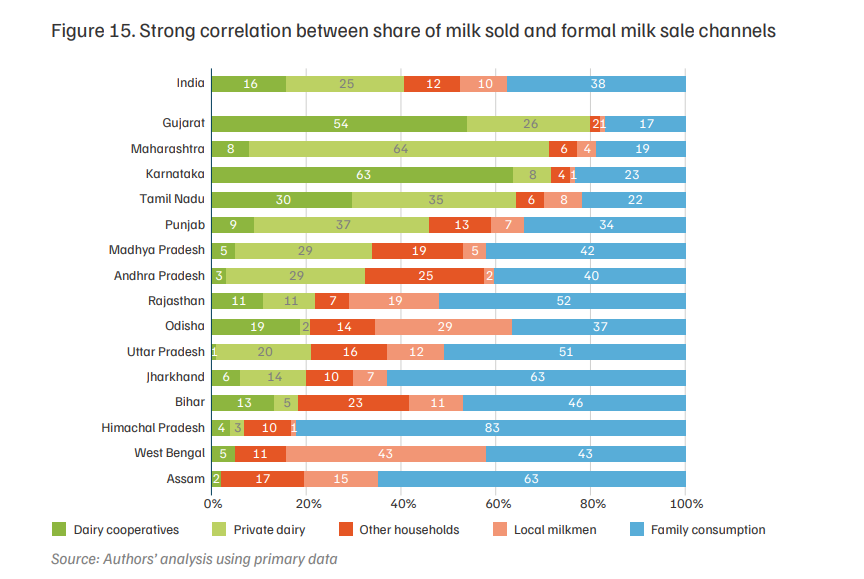
We observe a strong correlation (r = 0.9) between the share of milk sold and formal milk sale channels – including private dairies (large and small) and dairy cooperatives. This suggests that access to formal markets likely influences rearers’ motivation to produce milk for sale.
Even among regions with high overall milk sales, the channel preferences vary considerably: dairy cooperatives dominate in Gujarat and Karnataka, while private dairies lead in Maharashtra and Tamil Nadu (Figure 15).
Further, milk retention for household consumption also varies by bovine type. Households owning only indigenous cattle retain about 60 per cent of the total milk produced, compared to only 25 per cent among those owning only crossbred cattle. This underscores the relative importance of indigenous bovine ownership for household nutrition.
Beyond milk, dung remains a critical motivation for cattle rearers, with 74 per cent reporting dung-related benefits, whether as manure for agricultural fields, a source of energy, or dung compost for sale. Distinct regional patterns emerge in the reported use of dung. The use of dung as manure in agricultural fields is most prevalent in Karnataka (84 per cent), followed by Assam (76 per cent), both significantly above the national average of 50 per cent. Madhya Pradesh leads in using dung for energy, with nearly 50 per cent of all households making dung cakes for fuel, followed by Uttar Pradesh at 42 per cent, compared to a national average of 27 per cent. Meanwhile, Gujarat and Tamil Nadu stand out for dung compost sales, with nearly 60 per cent of households citing it as a key motivation – more than double the national average of 26 per cent.
These diverse and widespread applications of dung underscore its economic and environmental significance. Strengthening dung-based value chains offers strong waste-to-value potential, contributing to circular economy opportunities and broadening the sources of livelihood from bovine ownership beyond milk.
Some studies have highlighted the range of non-milk benefits or motivations for bovine rearing, including the use of dung as a bioresource (Gupta et al. 2016), integration with biogas production to improve rural profitability (Nandiyanto et al. 2018), and draught power (Natarajan et al. 2016). Our findings reinforce the widespread role of these non-market motivations in supporting rural livelihoods and nutrition across regions. Existing practices and policies in some states demonstrate how such benefits can be harnessed, offering valuable lessons for guiding future policy design in other regions.
For instance, the Government of India’s Galvanizing Organic Bio-Agro Resources Dhan (GOBARDhan) scheme aims to convert livestock waste into energy and fertiliser by establishing compressed biogas (CBG) plants. Similarly, the National Dairy Development Board’s (NDDB) manure value chain model (NDDB Mrida Limited n.d.) supports farmers with manure management solutions, including the installation of plants to produce biogas for cooking fuel, industrial boilers, and bio CNG, as well as for the utilisation of slurry as organic fertiliser. The NDDB has also established the Zakhariyapura Sakhi Khad Sahakari Mandali, all-women manure cooperative in Zakhariyapura, Gujarat. Through this initiative, ithe NDDB has supported the installation of household-level biogas units, which produce an alternative cooking fuel – biogas – replacing the use of firewood. The surplus slurry is processed into biofertiliser and sold to the NDDB, which sells it as organic manure (Swachh Bharat Mission Grameen 2021). In Dr Rajendra Prasad Central Agriculture University’s Sukhet model in Pusa, Bihar, household waste and cow dung are collected door-to-door and converted into vermicompost. The revenue from organic manure sales is used to supply LPG cylinders to participating households every two months in exchange for their waste and dung (Jain 2021). Cow urine is also gaining attention for its potential pharmaceutical applications due to its germicidal and antibiotic properties (Mandavgane and Kulkarni 2020). These models present promising opportunities to capitalise on underutilised resources and leverage them as assets to boost income for cattle rearers. Aligning with this, government schemes, such as the National Mission on Natural Farming, which aims to scale natural farming practices to one crore farmers (PIB 2024b), are expected to increase demand for cattle dung and urine-based organic manure (Sahu et al. 2022). Thus, targeted schemes for developing such bio-inputs could help realise the full potential of the dung economy.
Other livelihood support models, such as making cow-dung-based diyas or gau kashth, can also be explored. Krishi Vikas Kendra, Dehradun, Uttarakhand, generates employment opportunities for women by training them to make herbal diyas from cow dung (ICAR n.d.). Dung-based logs are increasingly being used in crematoriums and festivals as a resource-efficient alternative to tree logs, with the added benefit of being biodegradable and soil-enriching after use (Raju 2022; ICAR n.d.). Additionally, various businesses now produce dung-based stationery, packaging materials (Gaukriti n.d.), eco-friendly paints such as the Khadi Prakritik Paint (Sidvig & Co n.d.) developed by KVIC (MoMSME 2021), and bricks (Solanki et al. 2021). for insulation. With the right incentives, such enterprises can be scaled to enhance rural livelihoods while promoting a green economy in the country.
Further, beyond dung, about 30 per cent of households in Jharkhand, Maharashtra, and Odisha have reported using bovine animals for draught power, significantly higher than the national average of 11 per cent. A smaller proportion also reports other motivations, such as rearing animals as an investment to meet future expenses and emergency needs. Thus, the diverse landscape of motivations for rearing bovine animals shows significant variation across regions and herd owners.
Stray cattle have emerged as a growing challenge across rural India, with nearly half of village representatives in our survey highlighting it as a concern. The issue is particularly acute in northern states, such as Uttar Pradesh, Rajasthan, Madhya Pradesh, Punjab, and Himachal Pradesh, where over 70 per cent reported disruptions linked to stray cattle. The consequences are far reaching: nearly 40 per cent cited crop damage and field invasions, with the issue most severe in Uttar Pradesh (91 per cent), followed by Punjab and Rajasthan (over 70 per cent). This poses major economic risks, particularly given that 50 per cent of all bovine rearers primarily depend on crop cultivation and another 21 per cent on agricultural labour. One in five village representatives also reported road accidents involving stray animals.
The problem stems from both structural and economic gaps. Our survey revealed that unproductive bovines are often abandoned due to high upkeep costs and lack of shelter infrastructure. In Punjab and Rajasthan, 97 per cent and 83 per cent of village representatives, respectively, reported the cost of maintaining unproductive animals as the key issue, while in southern states, such as Tamil Nadu and Andhra Pradesh, around 70 per cent pointed to the absence of gaushalas. Addressing this challenge requires reimagining the value of bovines beyond milk.
By harnessing the economic potential of dung, whether as bio-manure, bio-energy, or as a raw material for innovative products – such as dung-based logs, stationery, packaging, paints, and insulation – a range of value-chain opportunities can be developed to make even non-milch bovines economically viable. Integrating such initiatives into a circular-economy framework can diversify income opportunities for rearers, reduce the environmental footprint, and simultaneously discourage the abandonment of unproductive animals. In doing so, it can help mitigate the widespread economic and social disruptions caused by stray cattle while enhancing rural livelihoods and promoting sustainable livestock systems.
Cattle rearing in India is influenced not only by economic factors but also by strong non economic motivations (Bhandari et al. 2021) with significant variation across states. For instance, in some farming communities in India, cattle are gifted to daughters or sisters on certain special occasions, and in some parts of Karnataka, buffaloes and bulls are used in traditional sporting events, such as Kambala races (Nanda and Nakao 2003).
We analysed these non-economic motivations by organising them into three categories: socio-cultural, religious, and medicinal. Socio-cultural factors include motivations such as inheritance, wedding gifts, pride, and social status. Religious benefits include service to cows and the use of cow urine or dung-related products for religious purposes. Medicinal uses include the use of milk and milk products, cow dung, and cow urine.
Overall, about 50 per cent of cattle rearers reported at least one of these socio-cultural, religious, or medicinal motivations. However, this varies regionally, ranging from over 90 per cent of households in Odisha and Andhra Pradesh to approximately 20 per cent in Tamil Nadu and West Bengal (Figure 16). Socio-cultural motivations are also more pronounced in southern India, particularly in Andhra Pradesh, while religious motivations are more commonly reported in northern and eastern states, such as Jharkhand, Odisha, and Himachal Pradesh. Similarly, medicinal motivations remain high in Odisha (nearly 50 per cent) but are rare in Himachal Pradesh, Bihar, West Bengal, and Tamil Nadu.
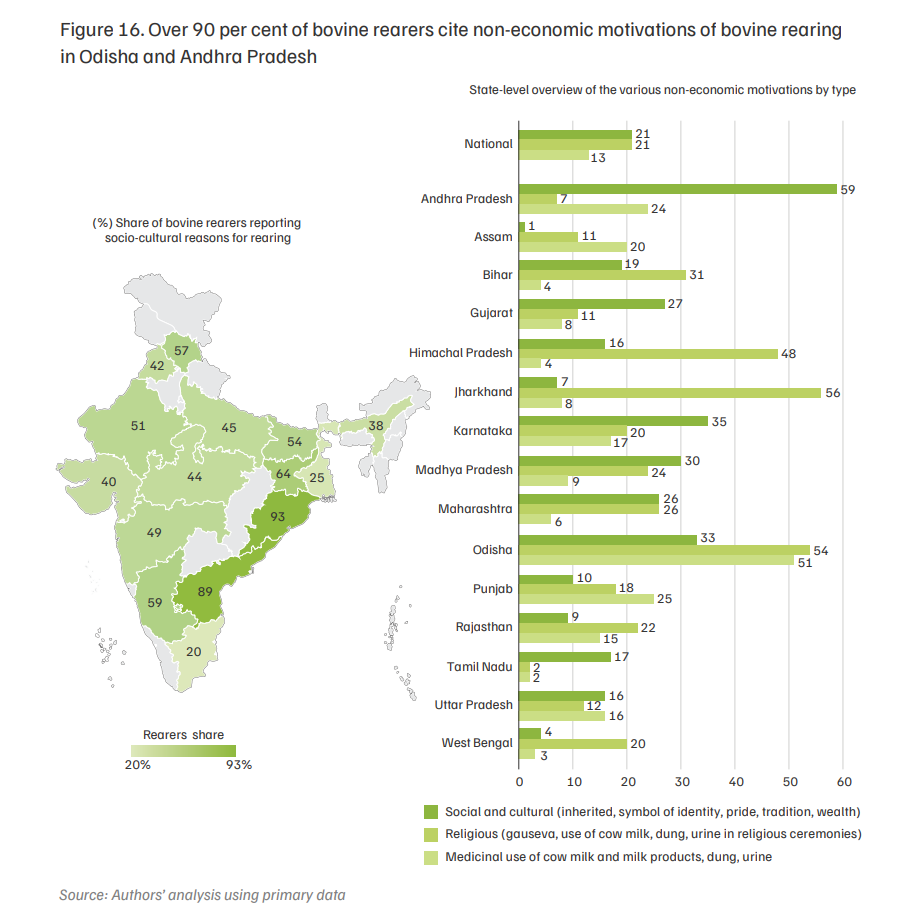
The vast prevalence and variation of non-economic motivations across regions highlights that cattle-rearing behaviour is shaped by more than productivity alone. Recognising these socio cultural and religious motivations is crucial, as they may impact technology adoption and the uptake of modern management practices.
India, therefore, has a significant opportunity to harness its dung resources to advance sustainable development, economic diversification, and environmental conservation. Realising this potential requires a nuanced, region-specific approach that accounts for the diversity of cattle-rearing practices, dung usage patterns, local market gaps, and socio-economic conditions across states. For instance, regions with poor soil organic carbon may benefit more from manure applications, while areas prioritising green livelihood generation may find value in promoting dung-based products, such as diyas, logs, and packaging. Combining our survey data with complementary state-specific characteristics can support this contextualisation, enabling targeted and impactful interventions.
A typology-based approach can guide the selection of appropriate models (refer to Table 1). For instance, in states such as Punjab, where stall-fed large herds enable easier dung collection within contained spaces, large-scale bio-CNG or composting units could be operationalised by leveraging the state’s existing strong dairy infrastructure and service networks. In contrast, eastern states, such as Odisha, Jharkhand, and Assam, where non-milk motivations are more prevalent and grazing-based feeding systems on shared common lands dominate (which may make large-scale aggregation relatively less cost-effective), may benefit more from household biogas plants, community compost pits, or micro-enterprises producing dung-based products. Similarly, in regions with low LPG coverage and widespread use of dung as a fuel source, biogas solutions such as the Sukhet model can offer clean cooking alternatives with significant health and time-saving benefits. Meanwhile, areas promoting organic farming or facing nutrient deficient soils may be better suited for decentralised composting or slurry-processing initiatives. However, scaling these models will require strong enabling support – financial, infrastructural, cultural, technical, and policy – to ensure sustained adoption and impact.
| Typology | Solutions |
|---|---|
| Households that report no milk-related benefits and limited use of dung for compost | Develop value chains for the dung economy:
|
| Regions that are dominated by small herd owners and high use of dung cakes for energy | Promote mini biogas digesters to ensure access to cleaner energy while also creating an additional value chain for cattle rearers. |
| Regions that lack awareness about the various value chains associated with dung | Create awareness and dissemination channels through FPOs and SHGs using demonstration farms, etc., to raise awareness about the various additional opportunities within cattle rearing. |
| Areas that have large rearers and smaller rearers in close vicinity | Establish larger bio-CNG plants in these regions with incentives attached to set quantities of dung being procured by the plant. |
| Source: Authors' analysis | |
The dairy sector generates several unaccounted positive externalities, leading to its contributions to the economy and rural livelihoods being underestimated (Dikshit and Birthal 2013).
Thus, a systemic-level shift is needed to recognise and build on the sector’s positive externalities, including contributions to household nutrition, rural income diversification, the transition to a green economy, and the environmental and ecological services associated with cattle rearing. Incorporating such benefits into formal valuation frameworks, such as total economic valuation, would provide a more accurate estimate of the sector’s significant contribution to agricultural GDP and rural livelihoods, reinforcing its central role in India’s economy. This will not only enhance the sector’s value but also help reduce or prevent losses that arise from overlooking its full potential, such as the abandonment of bovine animals considered unproductive.
Despite being the world’s largest milk producer and home to the largest bovine population, India’s dairy sector faces several challenges in realising its full potential. These challenges include inadequate animal nutrition, feed shortages, labour constraints, and insufficient veterinary and breeding services, among others. National and state governments have introduced several programmes and interventions to address these challenges, such as artificial insemination (AI) for better breeding, vaccination to reduce disease incidence, and ration-balancing for better nutrition.
This chapter examines the key challenges reported by cattle rearers, along with their perspectives regarding the adoption of various intervention programmes. We examine their popularity, levels of adoption, associated gaps and challenges, and, most importantly, how they vary across different segments of cattle rearers, states, animal types, and herd sizes. Many of the challenges faced by cattle rearers are likely to intensify under the impacts of climate change. For instance, inadequate shelter exposes animals to heat and cold stress, increasing the risk of disease. Climate extremes can also disrupt fodder availability, leading to nutritional deficiencies and reduced productivity. Limited access to veterinary services further exacerbates these health issues. This understanding is crucial for designing context-specific approaches that reflect the diversity of ground realities.
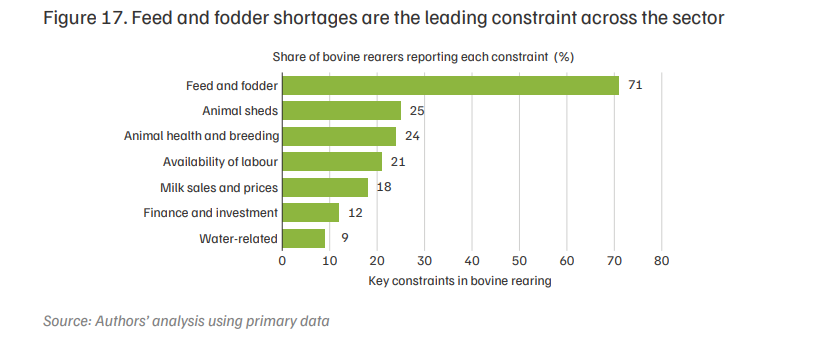
Across the sample, feed-and-fodder-related constraints emerge as the most prominently cited challenge (71 per cent), followed by inadequate animal sheds (25 per cent), animal health and breeding issues (24 per cent), and labour shortages (21 per cent) (Figure 17).
Feed and fodder account for one of the largest costs of cattle rearing and are central to determining productivity. Yet, fodder crops have remained stagnant at 5 per cent of India’s gross cultivated area for the past 25 years (NITI Aayog 2018). Despite the implementation of a sub-mission on feed and fodder development in 2014–15 aimed at increasing fodder availability, fodder scarcity in the country continues to intensify. This is driven by increasing demand, competing use of land (Chaudhary et al. 2016), crop residue burning, crop residue diversion to industries, and a shift from dual-purpose crops, such as bajra and jowar, which are traditionally used for both fodder and food, to single-purpose cash crops.
In addition, the adoption of dwarf crop varieties with low residue-to-grain ratios, fragmentation of landholdings, mechanised harvesting limiting residue collection, encroachment of common lands, and reduced access to forest grazing further exacerbate the issue. Together, these pressures lead to imbalanced animal nutrition, contributing to health-related challenges and lower productivity among bovines (Deen et al. 2018).
While fodder scarcity remains common across regions, several studies highlight significant regional variation in both the nature and extent of shortages (Patel and Sabapara 2023; Adhikari et al. 2023; Siva et al. 2019; Singh et al. 2021; Nirmal et al. 2024; Yadav et al. 2021; NITI Aayog 2018). Our findings also show that the affordability of both green and dry fodder remains a widespread challenge across states. While availability concerns persist among rearers, they predominantly report affordability as a more pressing challenge, driven by rising feed and fodder prices due to shortages and competing land uses. Even in states with surplus green fodder availability, such as Punjab (170 per cent), Himachal Pradesh (44 per cent), and Gujarat (4 per cent), and over 50 per cent surplus dry fodder in Punjab and Himachal Pradesh (Roy et al. 2019), rearers report affordability barriers (Table 2). This suggests that surplus availability does not necessarily translate into economic accessibility.
Table 2. High cost of green and dry fodder is a significant challenge in most states, followed by depleting grazing land
| Per cent of households reporting these constraints across states | Lack of veterinary services in the vicinity | Poor quality of veterinary services | High cost of treatment and medicines | Frequent/Severe disease incidences |
|---|---|---|---|---|
| National | 17 | 10 | 7 | 6 |
| Andhra Pradesh | 8 | 13 | 5 | 7 |
| Assam | 33 | 10 | 3 | 1 |
| Bihar | 10 | 6 | 7 | 6 |
| Punjab | 58 | 38 | 27 | 36 |
Source: Authors’ analysis using primary data
The sector faces persistent challenges of feed and fodder availability and affordability. Green fodder scarcity intensifies during May and November due to India’s tropical climate, forcing farmers to rely more heavily on straws and concentrate fodder, which leads to imbalanced diets (Kumar et al. 2016). Therefore, it is essential to assess the effectiveness of various interventions, such as silage and the Ration Balancing Programme (RBP), in addressing these issues.
Silage, an intervention promoted through the National Livestock Mission, preserves the nutrients of green fodder in its original form, preventing seasonal wastage and providing affordable fodder for smallholder farmers (PIB 2025). This method can ensure that green fodder remains nutritious and beneficial for animals throughout the year (Kumar et al. 2019; Roy et al. 2019). However, our survey found that 80 per cent of rearers lack awareness about silage, and adoption is just 5 per cent nationally (Figure 18). Awareness is over 50 per cent in Punjab and Maharashtra; however, despite Punjab’s higher awareness rates, adoption rates are higher in Maharashtra. This is because a larger share of rearers in Punjab report silage as being expensive (22 per cent), while the availability of green fodder (35 per cent) is higher than in Maharashtra.
Alongside, programmes such as the RBP under NDDB’s National Dairy Plan-I aim to educate farmers on providing balanced rations to meet their animals’ nutritional needs (Ration Balancing Programme 2015). However, widespread challenges related to feed and fodder continue to impede the programme’s overall effectiveness. Overall, awareness and adoption of RBP remain limited nationwide, with averages of just 21 per cent and 5 per cent, respectively (Figure 18). However, some states have significantly higher awareness levels, such as Punjab (48 per cent), Himachal Pradesh (38 per cent), Madhya Pradesh (35 per cent), and Rajasthan (33 per cent). Adoption rates also show regional variations – while Himachal Pradesh (25 per cent) and Rajasthan (22 per cent) have adoption levels well above the national average (5 per cent), Madhya Pradesh (10 per cent) and Punjab (9 per cent) exhibit slightly higher adoption than the national average but remain relatively low. The main barriers cited are affordability and accessibility of the recommended balanced diet. In Madhya Pradesh, about 5 per cent of respondents cite both factors as barriers, while in Punjab, 15 per cent struggle with affordability and 6 per cent face issues with accessibility.
The NDDB, through its Operation Flood-II initiative, implemented a fodder seed production and marketing programme that facilitates the supply of breeder seeds and training of cooperative officers. To strengthen these efforts, the NDDB has also proposed that milk unions create dedicated fodder development funds by allocating 0.25 per cent of net profits, with 25 per cent earmarked for development activities and 75 per cent for working capital and subsidies (Garg 2024). To overcome fodder scarcity challenges arising from unfavourable dry conditions, especially in water-scarce regions, promoting water-efficient fodder cultivation methods, such as azolla and hydroponics, can be beneficial. For example, around 10,000 Azolla farming units have been established for SHGs in Tamil Nadu, with cultivation models demonstrated at veterinary dispensaries to support wider adoption (Subramaniam 2024). While hydroponics effectively conserves resources, its high costs can be mitigated by innovative, low-cost cooling systems, such as fan-and-pad technology (Gupta 2023). Further, targeted interventions, such as improving market access, strengthening distribution networks, and establishing fodder banks to store hay, silage, and fodder blocks, can help meet demand during periods of scarcity and reduce costs for livestock rearers (Das et al. 2010), particularly those that arise due to demand–supply gaps. Utilising locally available feed resources can further lower production costs (Chisoro et al. 2024), while local agro-based feed industries and distribution channels can help establish shorter supply chains, enhancing efficiency and affordability.
Strategies such as supplying silage from surplus to deficit states can help address gaps in fodder availability. To support silage production, cooperatives could undertake initiatives such as establishing community silage pits and supplying equipment, such as chaff cutters, as done by MilkFed in Punjab (Silage Making 2023). Similar initiatives can also be promoted through agri entrepreneurship programmes. For instance, the Punjab Dairy Development Board provides a 40 per cent subsidy on silage baler-cum-wrapper machines. Additionally, setting up custom hiring centres can enable faster and more efficient silage production through the use of shared machinery. Operating on lease-and-use models, CHCs can help improve affordability, as rearers can access expensive machinery without the need for high capital investment (Brar et al. 2023). Currently, spring maize is the primary crop used for silage; however, it is both water – and fertiliser-intensive and faces competing demand from poultry and ethanol industries. Thus, while promoting silage production, emphasis should be placed on diversifying into other crops suitable for silage, such as wheat, barley, sorghum, bajra, and Napier grass, based on agro-climatic suitability (Brar et al. 2023).
Land scarcity for fodder cultivation is a pronounced issue in states such as Uttar Pradesh, Gujarat, and Bihar. With limited land resources, it is crucial to promote multi-use approaches by prioritising dual-purpose crops, integrating fodder crops into existing food and cash crop systems through intercropping or rotational farming, utilising degraded land for fodder production through agroforestry, and exploring alternative green fodder options such as Azolla. Overall, extension services through Krishi Vigyan Kendras (KVKs), cooperatives, and FPOs, among others, should be strengthened to promote these practices based on local contexts (refer to Table 3).
Table 3. Contextualising solutions to address fodder-related challenges based on typology.
| Typology | Solutions |
|---|---|
| Regions/Sub-regions where only dry fodder is fed to animals | Developing production and procurement channels for green fodder. |
| Regions/Sub-regions where all three types of fodder are not fed to the animals | Creating awareness around RBPs and their importance, and simultaneously ensuring supply for all three types of fodder. |
| Regions where land availability is a challenge |
|
| Regions where there is a seasonal deficit of green fodder |
|
Apart from fodder crop scarcity, declining grazing land is a significant concern in four states that together account for about 20 per cent of India’s bovine population. The issue is more pronounced in states such as Assam, where nearly 40 per cent of rearers reported it as a major constraint. Similarly, around 25 per cent of respondents in Punjab, Madhya Pradesh, and Odisha reported declining grazing land as a key concern. Although less acute in Maharashtra and Uttar Pradesh, it still exceeds the national average in these states.
NITI Aayog’s Three-Year Action Agenda highlights the declining fodder base as one of the critical challenges in animal husbandry, driven by poor pasture management and shrinking common lands, thereby calling for innovative pasture protection interventions and effective implementation (NITI Aayog 2018). The All India Coordinated Research Project on Agroforestry by the Indian Council of Agricultural Research (ICAR) introduced a silvopastoral system7, utilising location-specific fodder trees (e.g., Grewia, Celtis, Morus) and fast-growing grasses (bajra napier hybrid, Setaria), tailored to land suitability in Kangra, Himachal Pradesh. This initiative significantly improved fodder availability by improving year-round fodder supply, controlling weed spread, reducing soil erosion, and improving soil biodiversity.
While these models offer multiple pathways to enhance animal nutrition, it is imperative to prioritise solutions that align with regional needs. Ensuring balanced animal nutrition is essential not only for livestock health but also for household nutritional security, particularly among families that rely primarily on bovines for their own dietary needs. For instance, in grazing-based livestock rearing, where milk is mainly used for household consumption, low cost and community-based interventions that address fodder availability and accessibility challenges are more suitable. Such solutions may include promoting dual-purpose crops, improving access to common grazing lands, and introducing simplified ration-balancing using locally available feed. In climate-vulnerable, dryland regions, the focus should be on drought-resilient fodder crops, fodder preservation methods, and water-efficient feeding practices. Across all systems, sustained impact depends on strengthening key enablers, including training, access to input, financial incentives, and institutional support.
Effective animal healthcare management, including preventive measures, regular vaccinations, deworming, and timely treatment, is essential for maintaining bovine health and improving their productivity (Singh et al. 2007). Health and breeding practices likewise shape the genetic potential of animals, significantly impacting the sector’s long-term sustainability. The use of low-quality germplasm can lead to the degeneration of productive animals, undermining sustainable milk production in the long run. It is therefore crucial to develop a nuanced understanding of the related challenges and the penetration of associated interventions.
At the national level, about a quarter of rearers report issues related to animal health and breeding. The most cited challenges include a lack of veterinary services, poor quality of veterinary care, and high costs of medicines and treatment. These concerns vary significantly by region. For instance, in Punjab, many cattle rearers report inadequate veterinary services, low-quality care, and high treatment costs, whereas these concerns are less pronounced in states such as Andhra Pradesh. This contrast may be traced to the relatively low presence of hospitals and mobile dispensaries in Punjab. Such challenges are likely to become more severe with the sparse distribution of mobile dispensaries, which are known for their ability to reach less accessible rural and remote areas.
Table 4. Punjab, Assam, Odisha, and Jharkhand score low in perceived accessibility to quality veterinary services (% households)
| Per cent of households reporting these constraints across states | Lack of veterinary services in the vicinity | Poor quality of veterinary services | High cost of treatment and medicines | Frequent/Severe disease incidences |
|---|---|---|---|---|
| National | 17 | 10 | 7 | 6 |
| Andhra Pradesh | 8 | 13 | 5 | 7 |
| Assam | 33 | 10 | 3 | 1 |
| Bihar | 10 | 6 | 7 | 6 |
| Gujarat | 19 | 8 | 7 | 9 |
| Himachal Pradesh | 12 | 7 | 6 | 5 |
| Jharkhand | 26 | 5 | 19 | 3 |
| Karnataka | 14 | 12 | 7 | 10 |
| Madhya Pradesh | 13 | 15 | 6 | 10 |
| Maharashtra | 22 | 4 | 9 | 6 |
| Odisha | 30 | 26 | 21 | 17 |
| Punjab | 58 | 38 | 27 | 36 |
| Rajasthan | 16 | 8 | 3 | 3 |
| Tamil Nadu | 14 | 3 | 3 | 3 |
| Uttar Pradesh | 17 | 10 | 6 | 4 |
| West Bengal | 9 | 5 | 6 | 3 |
Source: Authors’ analysis using primary data
A comparison of veterinary infrastructure data reveals significant differences across states. For example, Punjab has 1,389 veterinary hospitals but only 22 mobile dispensaries. In contrast, Andhra Pradesh has 337 veterinary hospitals and 1,558 mobile dispensaries. States such as West Bengal (2,609 mobile dispensaries) and Tamil Nadu (921 mobile dispensaries), which report fewer health constraints, have a higher presence of mobile dispensaries, along with 616 and 2,766 veterinary dispensaries, respectively (DAHD 2024). This suggests that mobile services could play a more effective role in delivering certain or basic veterinary services, given their wider reach relative to the concentration of hospitals in urban centres. However, the presence of mobile infrastructure does not guarantee effective service delivery. For instance, despite having 3,553 and 2,841 dispensaries in Odisha and Maharashtra, respectively, cattle rearers in these states still report inadequate services (DAHD 2024). Though the infrastructure for mobile dispensaries is available in these states, it is still saddled with operational inefficiencies and logistical challenges.
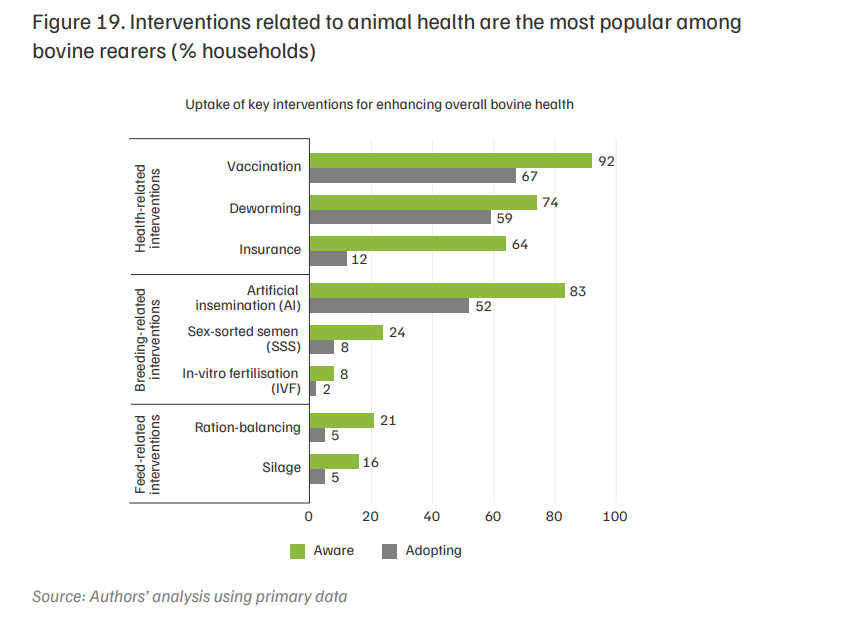
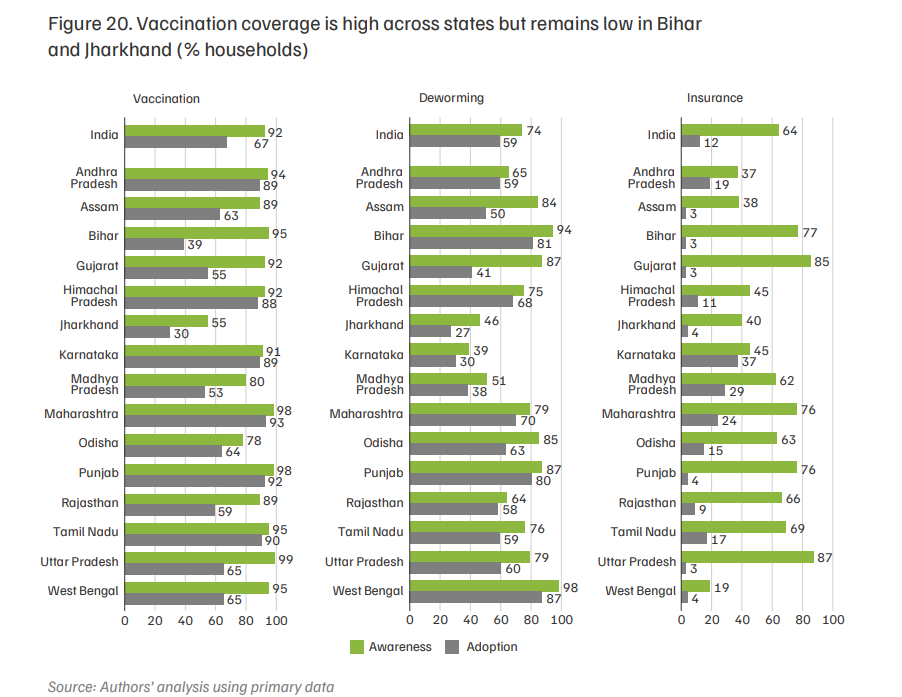
Despite challenges on the ground, sustained government support through budget allocations8 has led to high levels of awareness and adoption of interventions related to animal health, such as vaccination and deworming. Awareness of vaccination exceeds 75 per cent in all states except Jharkhand, and adoption rates exceed 50 per cent in all states, with the exceptions of Bihar and Jharkhand (Figure 19). Among rearers who have not availed of vaccination services, the primary barrier cited is the unavailability of these services.
Nationally, 22 per cent of rearers report a lack of access to vaccination services, with the figure rising to approximately 57 per cent in Bihar and nearly 30 per cent in Madhya Pradesh, Rajasthan, and Uttar Pradesh. In Jharkhand, the availability of veterinary infrastructure, including hospitals, dispensaries, and mobile units, remains relatively limited. This is potentially impeding the adoption of even basic programmes. In contrast, in 6 of the 15 states – Assam, Gujarat, Himachal Pradesh, Karnataka, Maharashtra, and Tamil Nadu – only 10 per cent of rearers report non-availability of vaccination services, indicating a higher penetration of the vaccination programme in these states.
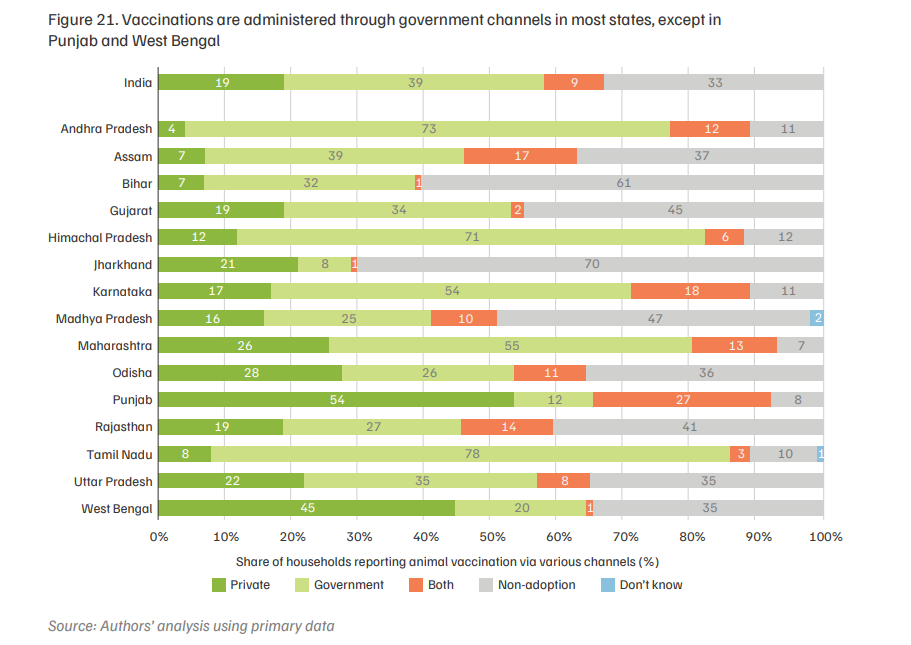
We also examined the different channels through which vaccinations are administered across states. Nationally, approximately 40 per cent of rearers report accessing vaccinations through government services, while about 20 per cent rely on private providers.
Government channels dominate vaccination efforts, as high as 78 per cent in Tamil Nadu and 73 per cent in Andhra Pradesh, as reported by rearers. Both states have a balanced presence of veterinary hospitals and mobile dispensaries. In contrast, in states such as Punjab and West Bengal, vaccination services are primarily available through private providers (Figure 21), likely reflecting a lack of access to nearby public mobile dispensaries that offer quality services.
Alongside Punjab, high treatment costs are also a significant concern in economically disadvantaged states, such as Odisha and Jharkhand. This highlights the need to reassess the channels and infrastructure requirements for better targeting of veterinary services, and to establish the right balance so that hospitals and mobile dispensaries complement each other and minimise delivery gaps. While hospitals remain essential, mobile dispensary services can be more effective in delivering basic veterinary care services, providing better local access, and ensuring wider coverage. This can help prevent losses from delayed treatment, address time-sensitive needs more efficiently, and enable earlier identification of cases requiring accelerated solutions. Examining why the availability of veterinary services in specific regions does not translate into improved accessibility is important for designing fit-to-purpose delivery models. Similar to the Food Safety and Standards Authority of India’s (FSSAI) State Food Safety Index and other state benchmarking tools, a sub-national index could be developed to compare performance across states, assessing indicators such as livestock veterinary care, animals per doctor, travel time to hospitals, and treatment costs. This could also facilitate cross-state learning, enabling best practices to be adapted and applied to regional and local contexts.
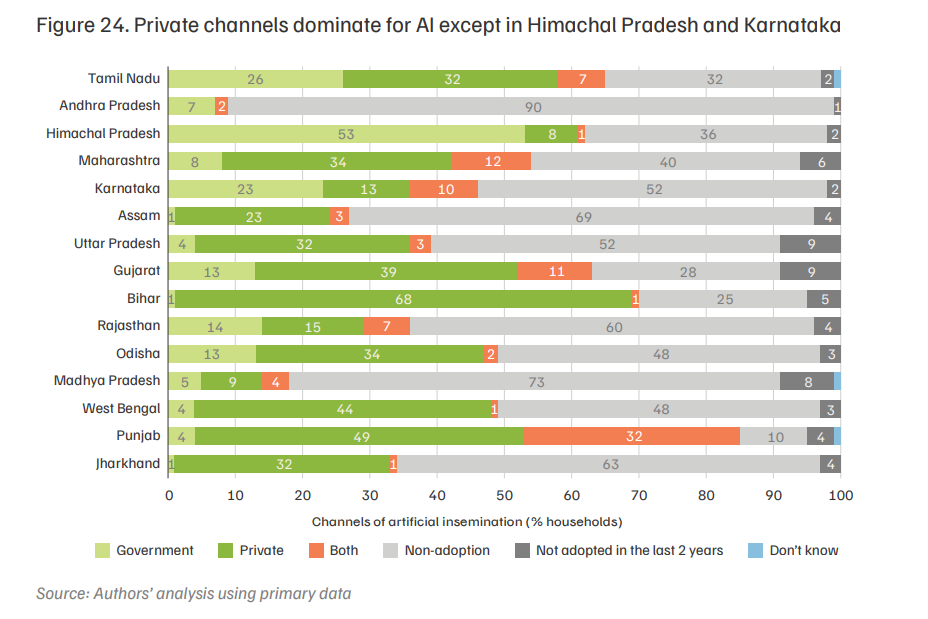
We also examined the awareness and adoption levels of various breeding interventions, including AI and SSS, as well as the channels used to access such services. Artificial insemination is now a widely accepted breeding technology for the rapid multiplication of superior germplasm (Singh et al. 2022). At the national level, nearly 80 per cent of rearers report being aware of AI (Figure 22), and awareness exceeds 90 per cent in more formalised dairy states, such as Punjab, Gujarat and Maharashtra.
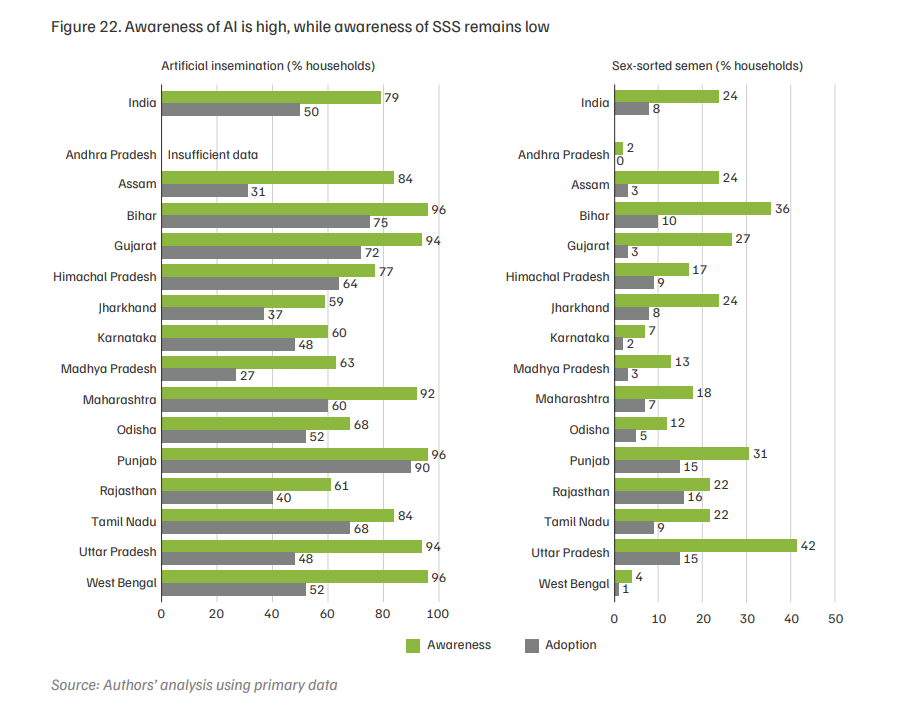
However, a considerable gap persists between awareness and adoption. Only about half the rearers have adopted AI, although this is a significant improvement over the 30 per cent adoption rate reported by the National Academy of Agricultural Sciences in 2017–18 (NAAS 2020). The Nationwide Artificial Insemination Programme (NAIP), launched by the Government of India in 2019, may have contributed to the expansion of AI adoption (PIB 2019).
The relatively higher adoption of AI and health-related interventions may explain why fewer rearers cite animal health and breeding as challenges. However, reasons such as a lack of awareness about a particular intervention, unavailability of the service in the vicinity, and unaffordability of a particular service remain key reasons for non-adoption. Significant regional variations are observed in these responses. About a quarter of rearers across India cited satisfaction with natural mating services as a key reason for not adopting AI, with the highest shares in Uttar Pradesh (45 per cent), Maharashtra (33 per cent), West Bengal (31 per cent), Assam (28 per cent), and Madhya Pradesh (26 per cent). Further, in some states, the lack of doorstep AI coverage remains a challenge, with almost a quarter of rearers in Assam reporting it as an issue.
Awareness of SSS, which is a relatively new and more expensive method that increases the probability of producing female calves, remains low at 24 per cent, contributing to low adoption (Figure 22). Even in states with higher awareness levels, such as Uttar Pradesh, Bihar, Punjab, and Gujarat, rearers report that the main barriers to adoption are the high cost of SSS and its unavailability in their villages.
Our regression analysis also substantiates the finding that crossbred-owning households exhibit significantly higher adoption of AI overall, followed by buffalo-rearing households. While 76 per cent of crossbred owners adopt AI, adoption falls to 45 per cent among buffalo rearers and 34 per cent among indigenous cattle rearers – despite similar levels of awareness across all three groups (Figure 23). These findings are consistent with those of other studies including evidence from Rajasthan (Kachhawaha et al. 2021; Chand et al. 2014).
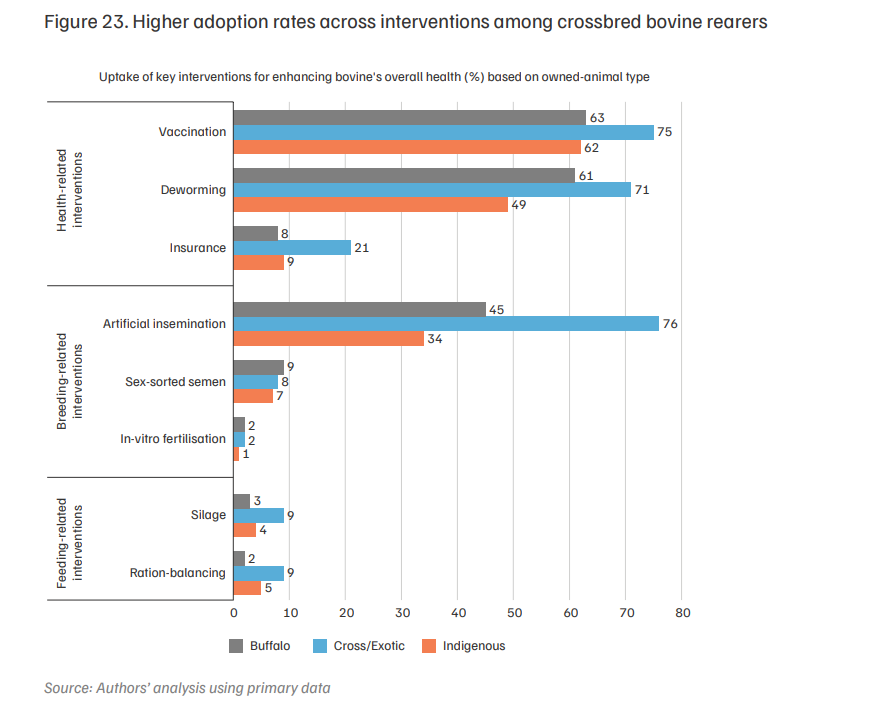
This suggests that interventions linked to productivity and market access are more likely to be adopted by crossbred and buffalo owners, while alternative incentives may be required to effectively engage indigenous cattle owners.
Our survey reveals a growing preference for crossbred cattle among households planning to expand their herds, particularly in Punjab, suggesting further potential demand for such services in the future. However, in states where non-adoption is driven by reasons other than awareness, such as satisfaction with natural mating – notably, Uttar Pradesh, Maharashtra, West Bengal, and Assam – alternate mechanisms, such as high-quality bulls to ensure gene pool quality, especially for indigenous- and buffalo-rearing belts, can be effective. One such example is the Nandi Shala Yojana in Madhya Pradesh, which supports access to improved bulls in rural areas. [District Betul 2014].
Furthermore, in regions where both infrastructure and affordability challenges are prevalent, such as Assam, providing adequate and timely access to various breeding mechanisms is crucial to ensure that rearers have the opportunity to utilise these services. Such regional patterns and insights into varied preferences are valuable in designing future interventions that enhance effective targeting.
Unlike vaccination, where government channels dominate, AI services are primarily accessed through private channels, with notable regional variations. In Himachal Pradesh, government channels play a larger role, whereas Bihar and Punjab rely substantially on private providers. In contrast, both government and private channels are equally preferred in states such as Tamil Nadu and Rajasthan.
Further investigation into why rearers prefer government services for vaccination but opt for private providers for AI could provide valuable insights. These insights can be leveraged to inform future strategies, such as possible government focus on enhancing basic animal health services while adopting a public–private partnership model for breeding interventions, with the government serving primarily as a regulator and quality controller.
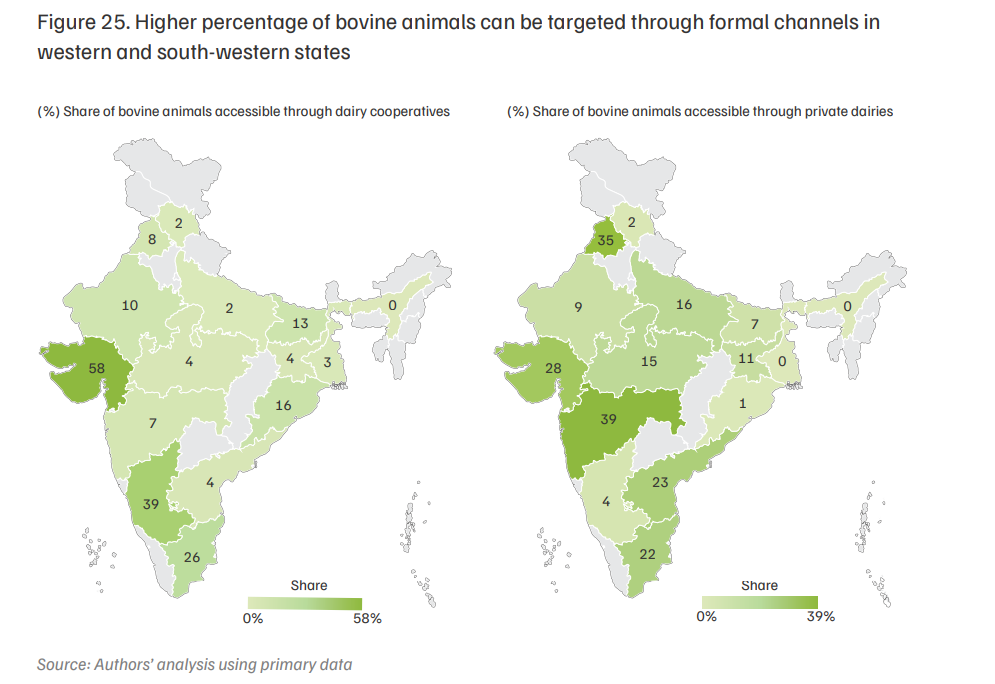
Considering the relative dominance of milk sales channels, both government and private sector : players can leverage these networks to deliver healthcare services more efficiently. This allows for more targeted outreach and better allocation of resources in the livestock sector. In states with more developed dairy industries, such as Gujarat, Maharashtra, Karnataka, Tamil Nadu, and Punjab, milk is primarily sold through formal channels, including private dairies and dairy cooperatives. In contrast, states where households prioritise relatively lower motivation to sell milk tend to rely more on informal channels when they do engage in sales. To maximise outreach in states such as Gujarat and Karnataka for interventions such as AI or feed additive programmes, leveraging the dairy cooperative network would be most effective (refer to Figure 25). In Maharashtra, however, private dairy channels may be more effective. In states dominated by the informal sector, existing government extension services could be utilised to deliver interventions efficiently. Implementing interventions through familiar and trusted sales channels can significantly increase farmer participation and adoption of technologies.
Animal housing and shed-related challenges
Nationally, about a quarter of cattle rearers identified constraints related to animal sheds, including limited land availability and a lack of capital. However, the issue is significantly more pronounced in eastern states, such as Odisha, Jharkhand, and Bihar. In Gujarat as well, inadequate space and high shed construction costs are key factors contributing to this challenge, also highlighted in other studies (Sabapara et al. 2012).
Table 5. Rearers in Odisha, Jharkhand, Bihar, and Gujarat struggle to enable animal shelters
| Percentage of households reporting these constraints across states | Inadequate space for keeping animals | High cost of construction and inadequate funds for building together | Lack of awareness about shed design |
|---|---|---|---|
| National | 20 | 16 | 5 |
| Andhra Pradesh | 8 | 3 | 2 |
| Assam | 17 | 15 | 0 |
| Bihar | 29 | 28 | 3 |
| Gujarat | 30 | 22 | 6 |
| Himachal Pradesh | 7 | 3 | 2 |
| Jharkhand | 35 | 47 | 19 |
| Karnataka | 13 | 12 | 5 |
| Madhya Pradesh | 11 | 13 | 9 |
| Maharashtra | 19 | 11 | 5 |
| Odisha | 45 | 48 | 15 |
| Punjab | 27 | 20 | 18 |
| Rajasthan | 10 | 8 | 2 |
| Tamil Nadu | 10 | 9 | 2 |
| Uttar Pradesh | 24 | 17 | 4 |
| West Bengal | 11 | 3 | 1 |
Source: Authors’ analysis using primary data
Sheds provide essential housing for bovines, in the absence of which, animals are exposed to extreme temperatures, wind, rain, and snowfall, which adversely affect their health, productivity, and reproduction (NCERT 2018). One potential solution is to explore the feasibility of common shelter facilities at the village level. These facilities could be implemented under the Mahatma Gandhi National Rural Employment Guarantee Act (MGNREGA), a solution suggested by rearers during field visits and consultations. This approach is particularly relevant in states where herd expansion and intergenerational continuity in rearing are anticipated. In parallel, there is a need to explore innovative and affordable space management models (including height and width of the shed) at the household level. Rajasthan offers some potential solutions for addressing financing needs. In 2024–25, Rajasthan introduced interest-free loans of up to INR 0.1 million (approximately INR 1 lakh) for shed construction and equipment purchase (Kheti Gaadi 2024). Similar financial assistance programmes in states such as Gujarat could enable cattle rearers to develop appropriate shed models that align with their aspirations.
Innovation platforms (IPs) or multi-stakeholder platforms can be established at both national and sub-national levels to bring together diverse value chain actors, such as producers, CSOs, government departments, and other stakeholders, to collaboratively address common challenges. This approach may be particularly valuable in states with higher constraints and lower awareness and adoption rates, such as Jharkhand, Bihar, Himachal Pradesh, and West Bengal, as well as in states with relatively higher adoption rates but where challenges persist at scale, such as Punjab. This can foster a shared understanding of the challenges faced by different actors, reduce decision-making delays, and facilitate consensus on more actionable solutions. Innovation platforms have achieved some success in the dairy sector of Uttarakhand, where households involved in IPs have reported higher incomes and improved feeding and breeding practices (Ravichandran et al. 2020). However, IPs need to be tailored to local contexts to ensure adequate representation and foster mutual dependencies among stakeholders. These may be explored as pilots in potential policy designs (Swaans et al. 2014).
The dairy sector contributes to almost a quarter of India’s agricultural gross value added (GVA). To sustain growth and strengthen resilience, continuous innovation and novel techniques must translate effectively to the field. Given the importance of feeding and breeding interventions, and their low levels of adoption in the field despite frequent challenges reported in these areas, it is important to prioritise actions that strengthen their implementation.
Promote awareness and adoption of fodder interventions: Low awareness remains the most significant barrier to the adoption of various programmes on the ground. Leveraging extension services–through KVKs, cooperatives, and FPOs–to educate rearers with landholdings on cost-effective solutions, such as silage, ration-balancing, and water efficient fodder growing techniques (e.g., Azolla, hydroponics), can substantially improve the uptake of such practices.
Enhance fodder availability through context-responsive strategies: Establishing fodder banks and improving supply chains can help bridge regional disparities by connecting surplus states (e.g., Punjab, Himachal) with deficit areas. Ensuring better pasture management through policy protection of common lands and community-led pasture management, particularly in high-burden states (e.g., Assam, Odisha) will further improve fodder accessibility in these regions.
Strengthen mobile veterinary services to improve accessibility: Expanding mobile dispensary networks in states with high service gaps (e.g., Punjab, Odisha, Jharkhand), using successful models from Andhra Pradesh and Tamil Nadu. Additionally, developing a sub-national veterinary performance index to track key metrics, such as the number of animals per doctor, travel time to hospitals, and treatment costs, can enable targeted improvements and enhance accountability in service delivery in the sector.
A significant share of India’s livestock sector operates in the unorganised domain, with considerable parts of the national milk sales characterised by informal and fragmented channels (World Bank 2021; Birthal 2022). Gaps in awareness and adoption of existing intervention support programmes, particularly around bovine health and nutrition, continue to pose challenges for sustainable management and the sector’s long-term growth. To gain deeper insights into how India’s cattle rearers are adapting to a changing climate, this section examines their perceptions and their outlook for the future of cattle rearing.
In most states, a substantial share of rearers intend to increase their herd size, with Jharkhand, Rajasthan, Maharashtra, and Assam leading the trend (Figure 26). Another large group of rearers plans to maintain their existing herd size, particularly in Punjab, West Bengal, Gujarat, Uttar Pradesh, and Bihar. Contrary to the general perception, a large share also believes that their future generations will continue cattle rearing (refer to Figure 26).
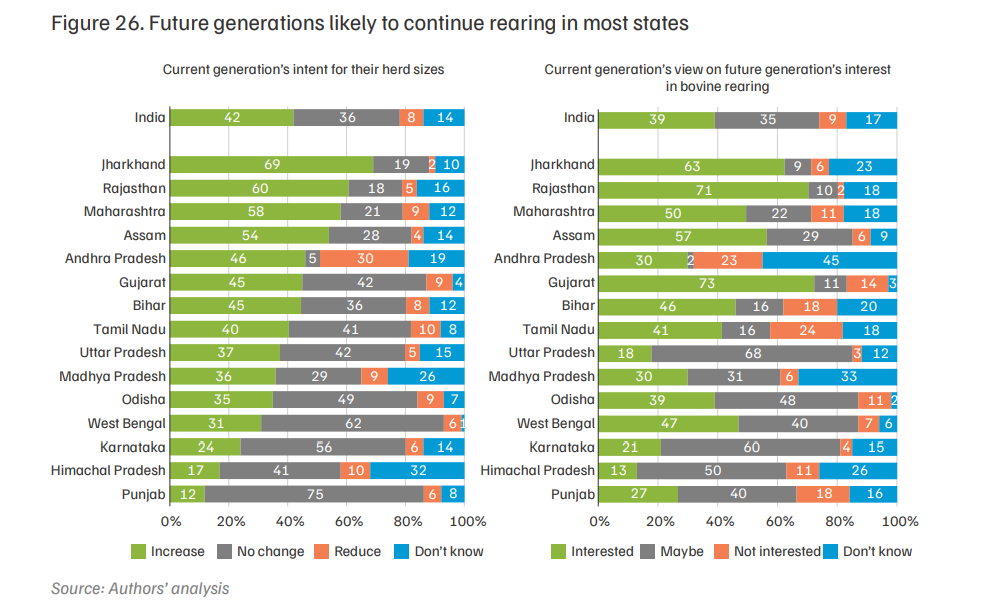
see interesting exceptions in states such as Andhra Pradesh, where around 30 per cent of rearers wish to reduce their herd size, and almost a quarter of rearers in both Andhra Pradesh and Tamil Nadu foresee that their future generations will not continue cattle rearing. Rising fodder costs in Andhra Pradesh, similar fodder-related challenges in Tamil Nadu, and widespread labour shortages are the main factors driving these choices.
Among those intending to expand their herds, around 42 per cent of rearers across most states indicate a preference for the same type of animals they currently own. However, in some states, a clear preference pattern is emerging towards crossbred cattle – except in Rajasthan and Uttar Pradesh, where buffaloes are favoured. Overall, these preferences suggest a likely future scenario of increasing crossbred and exotic cattle populations and declining indigenous breeds nationally.
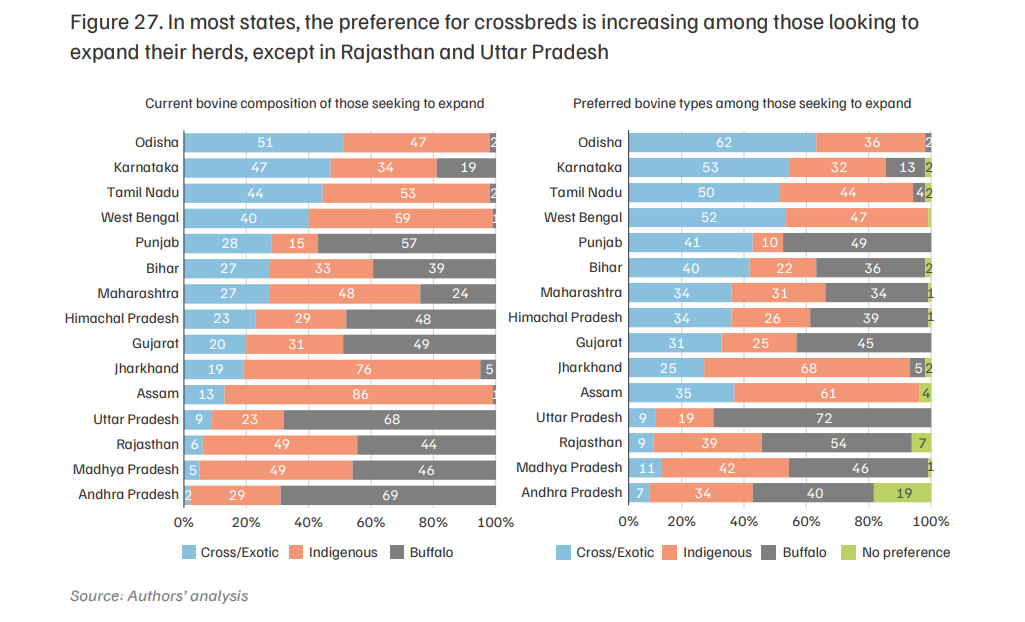
By animal type, 44 per cent of indigenous rearers, 42 per cent of buffalo rearers, and 38 per cent of crossbred rearers expressed an intention to increase their herd size. Notably, the largest share of crossbred owners (16 per cent) reported that their future generations are not interested in continuing cattle rearing, compared to only 8 per cent of indigenous and buffalo owners each. It is noteworthy that while indigenous cattle owners show higher interest in expanding towards crossbred cattle, current crossbred owners are the least likely to foresee continuity of cattle rearing in the next generation.
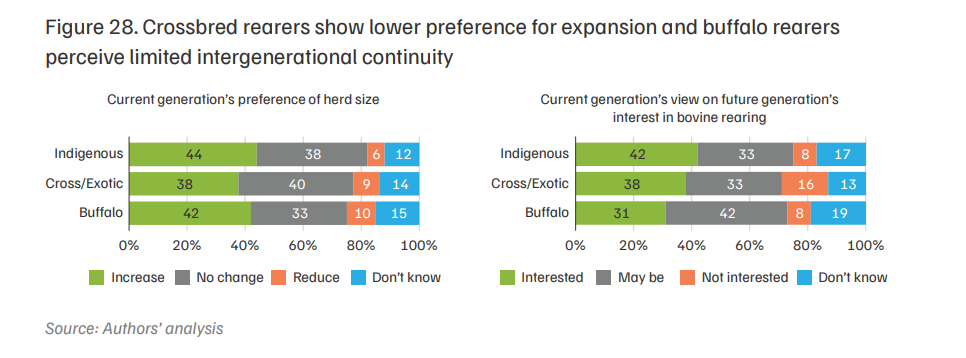
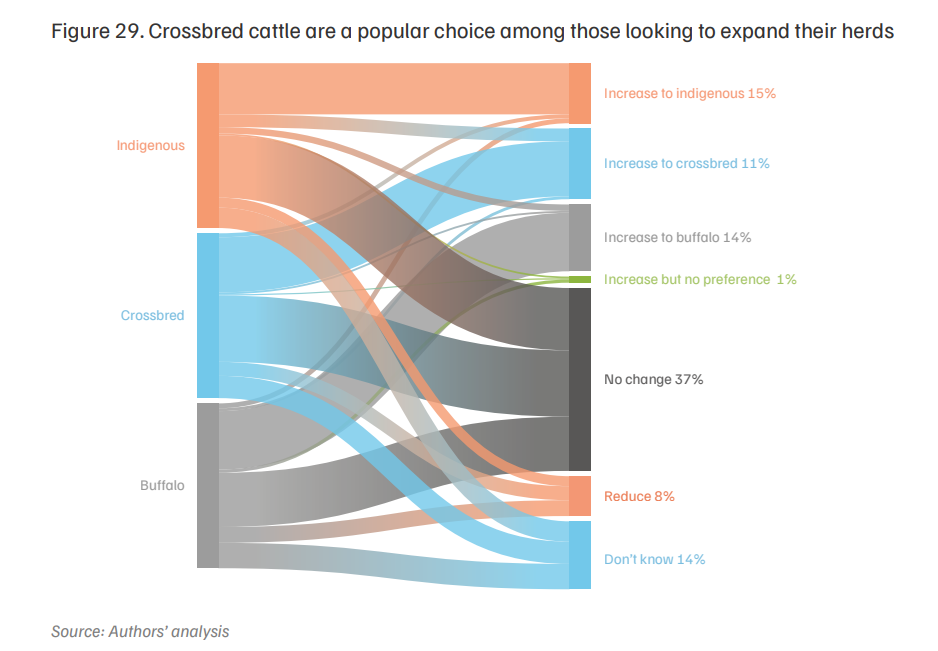
A majority of buffalo rearers who plan to expand their herds indicate a preference for buffaloes only. Conversely, a noticeable proportion of indigenous cattle rearers aim to expand towards crossbred cattle (8 per cent) and buffaloes (4 per cent). We further analysed the motivations driving the expansion choices of rearers of indigenous cattle.
Those choosing to add more indigenous animals are primarily motivated by factors such as better milk quality for household consumption (35 per cent), lower fodder requirements, and better suitability to local conditions. In contrast, those opting for crossbreds or buffaloes are driven mainly by higher milk yield and better market prices due to the higher fat content of their milk. While the inclusion of high-yielding breeds, such as crossbreds and buffaloes, is often motivated by perceived economic gains, these choices involve significant trade-offs in terms of climate-adaptability, as both are less resilient to climatic stress than indigenous cattle. Therefore, state-specific solutions tailored to regional climate risks are essential to ensure that future expansion remains both resilient and adaptive to changing weather patterns. Rearers should be made aware of the housing, cooling, healthcare, and feed requirements associated with different breeds to make informed decisions about transition or expansion. Concomitantly, appropriate services, such as targeted veterinary care and policy support, should be designed and administered.
This projected rise in crossbred/exotic cattle and buffalo populations, coupled with a decline in indigenous cattle, could increase the sector’s vulnerability to climate change. In our survey, the highest share of cattle rearers reporting perceived climate impacts on animals was buffalo owners (54 per cent), followed by crossbred/exotic cattle owners (50 per cent). This may be attributed to buffaloes’ greater susceptibility to heat stress (Sharma et al. 2023) due to their thicker skin (Marai and Haeeb 2010), fewer sweat glands, and limited thermoregulation capacity (Scatà et al. 2024). Their darker skin also absorbs more solar radiation, making them particularly vulnerable during high-temperature conditions (Carus 2024). Among those reporting climate impacts on their animals, buffalo (42 per cent) and crossbred (45 per cent) owners are slightly less inclined to increase herd sizes compared to indigenous owners (54 per cent).
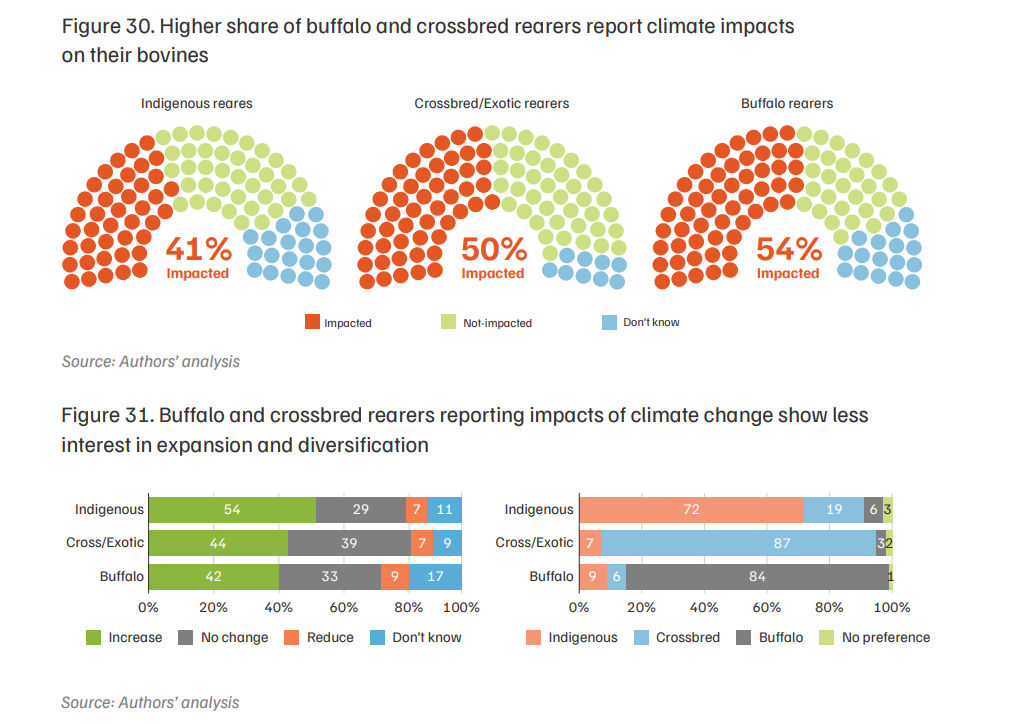
The impact of climate change on bovines can lead to increased disease incidence, restlessness, and mortality, as well as reduced productivity, threatening the livelihoods and nutritional security of cattle rearers (NAAS 2016). Our findings suggest that climate change exacerbates these challenges, particularly among buffaloes and crossbred animals (Banerjee et al. 2023). Several studies also indicate that crossbred and exotic cattle are more vulnerable to the impacts of climate change than indigenous breeds (Sejian et al. 2018; Das et al. 2016; Mote et al. 2014). The resulting disease burden can shorten lactation periods, reduce the number of productive days, and lead to the early retirement of bovines, thereby compounding the issue of stray cattle in the country.
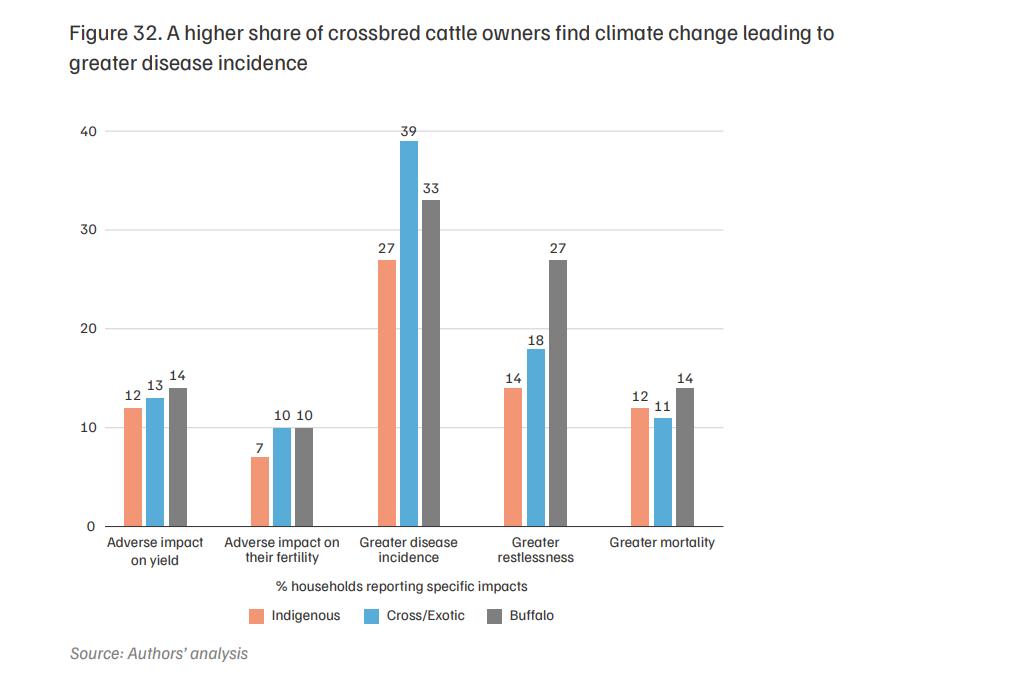
Therefore, the future scenario of rearers switching to crossbred/exotic cattle or buffaloes, or those interested in further expanding their buffalo or crossbred herds, may find themselves becoming more vulnerable to climate change impacts in the absence of adaptation measures. It could potentially threaten their livelihood resilience, especially if relying on only one type of animal.
To manage this shift in animal types, it is increasingly important to expand veterinary services and improve access to feed, fodder, and water resources for effective bovine management. In states where a significant share of rearers exhibit interest in increasing herd size or where future generations are expected to continue cattle rearing, the government should strengthen support infrastructure, including insurance coverage for livestock.
However, despite 64 per cent awareness, insurance adoption remains low at just 12 per cent nationwide (Figure 33). Overcoming barriers, such as inadequate information, limited access to services, high premiums, and delays in claim settlements, will be crucial to improving adoption and ensuring better risk protection for rearers.
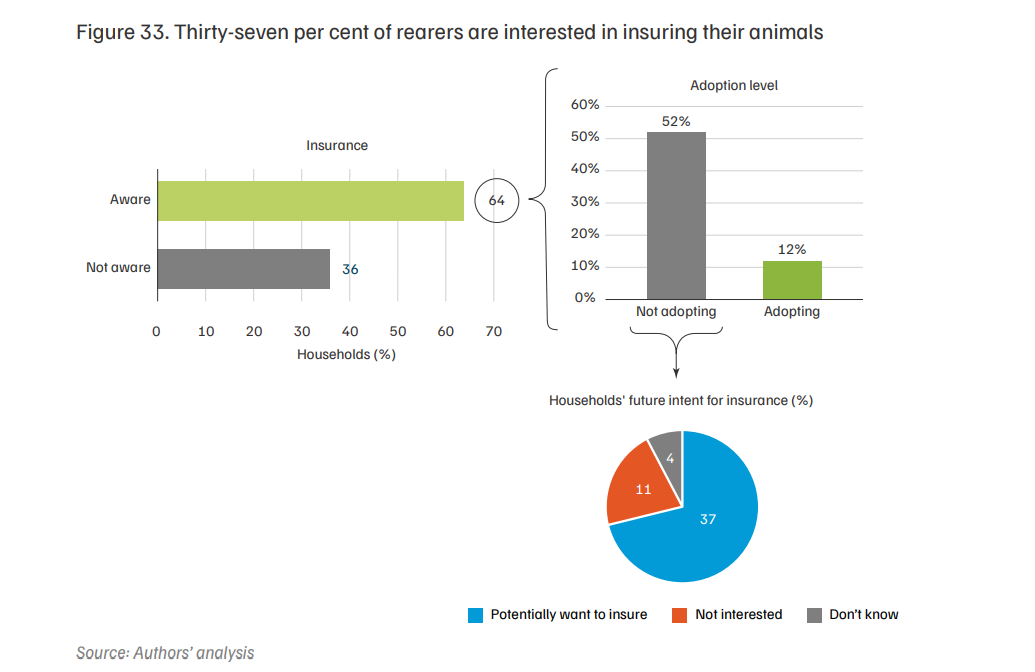
One-quarter of indigenous breed owners are looking to introduce other bovine types into their herds – primarily crossbred cattle or buffaloes – particularly in states such as Assam, Jharkhand, and Maharashtra. As these breeds are more vulnerable to climate impacts, these rearers will require proper training and support to navigate various unfamiliar constraints, such as breed-specific feeding patterns, higher rearing costs, and climate-related challenges, among others. Conversely, buffalo and crossbred rearers in states such as Uttar Pradesh, Rajasthan, Odisha, and West Bengal would benefit from greater awareness of the potential benefits of diversification and the climate resilience of indigenous breeds. This can be achieved in various ways, including demonstration farms, farmer-to-farmer knowledge exchange platforms, local fairs or exhibitions, social media platforms highlighting success stories, and traditional storytelling approaches, alongside targeted training on climate adaptation and mitigation.
India’s cattle-rearing landscape is highly diverse, shaped by regional variations in herd ownership patterns and a wide range of economic, social, and cultural factors. This diversity in motivations, aspirations, and constraints underscores the need for differentiated, context specific policy responses that reflect the realities of India’s diverse cattle-rearing systems. Such tailored policymaking, particularly in a country as large and diverse as India, is both critical and complex. To provide data-driven and evidence-based support for this endeavour, we conducted a first-of-its-kind, large-scale survey covering 7,500 cattle-rearing households across 15 states – representing 91 per cent of India’s bovine population and 87 per cent of its total milk production.
Most Indian rearers own small herds (1–2 animals), yet medium and large herd owners account for the majority of bovine animals and total milk production. Moreover, states with well-developed dairy sectors have larger herd sizes, while eastern and hilly states are dominated by small herds. These insights can help align policies with their intended outcomes. For instance, when the objective is to reach a larger number of households, especially to address equity concerns, policies should prioritise small rearers. Conversely, when the goal is to achieve impacts at scale on cattle, the focus should shift to medium and large rearers, particularly in dairy-developed states.
Indigenous cattle, though declining, remain the dominant animal type, especially in central and eastern India, while buffalo ownership is more prevalent in dairy-developed states. Herd homogeneity in ownership patterns is also relatively high. These patterns offer valuable insights that can guide geographical targeting and breed-based interventions; for instance, to help improve resource efficiency and adoption rates.
Cattle rearing in India is shaped by a combination of economic, nutritional, and socio-religious factors, which in turn shape the diverse motivations and benefits perceived by different groups of rearers. A nuanced understanding of these groups can help answer key policy questions – such as which rearers value what benefits, where specific interventions are most strategic, and how policies can effectively incentivise and influence behaviour – to optimise both economic and social outcomes within various socio-economic contexts. For instance, while milk production is the most frequently reported motivation for cattle rearing, the specific reasons vary depending on whether it is produced for sale, household consumption, or both. Rearers who prioritise milk sales may require different interventions compared to those who primarily value milk for household nutrition.
Beyond milk, bovine animals provide multiple benefits for rearers, including dung for manure or fuel, draught power for farming, and socio cultural or religious value, all of which shape their rearing decisions. Therefore, it is essential to develop value chains that align with these diverse motivations, expanding the policy focus beyond the economic returns from milk sales alone. These motivations also influence rearers’ choice of animal type, knowledge of which can support the design and adoption of various interventions. For instance, while dung-related uses and milk for household consumption are most valued by indigenous owners, the sale of milk is the primary benefit for crossbred and buffalo owners.
Government and community-led initiatives, such as the GOBARdhan scheme, NDDB’s manure value chain, and Bihar’s Sukhet model, demonstrate how bovine by-products – such as cow dung – can become reliable income sources, particularly for rearers with fewer or ageing animals. These diverse facets, though often invisible in GDP metrics, are crucial to understanding the sector’s role in the cattle-rearing economy. A holistic approach that recognises direct (milk, dung, urine), indirect (soil fertility, fuelwood substitution), and non-use values (social status, cultural heritage, religious identity, etc.) can better inform both budgeting and policymaking. Such an approach highlights the sector’s broader contribution, not only to income but also to household nutrition, ecological health, gendered livelihoods, and rural resilience.
Despite the sector’s vital role in India’s rural economy, it faces multiple challenges – feed and fodder being the most frequently reported constraints, followed by issues related to animal shelters, health, and labour, among others. Several interventions and programmes have been implemented to address these gaps, including silage and the RBP for feeding, AI and SSS for breeding, and vaccination and deworming for improved animal health. Although fodder scarcity is one of the sector’s most persistent challenges, awareness and adoption of feeding-related interventions remain low. Even in regions with awareness, adoption rates vary due to local constraints. For example, awareness of silage is higher in Punjab than in Maharashtra, yet adoption rates are higher in Maharashtra. This is likely due to concerns about affordability and accessibility, as reported in the survey. Similarly, in Uttar Pradesh and Assam, satisfaction with natural mating services limits AI adoption, while in Assam, the unavailability of AI services compounds the challenge. Recognising such regional differences in both the incidence and nature of constraints, the survey offers critical and novel insights that highlight the importance of aligning interventions with ground realities. These must address not only infrastructural gaps but also farmers’ preferences and socio-economic constraints. To enhance effectiveness, policies should therefore be context-sensitive and responsive, ensuring that interventions are both practical and widely adopted.
Despite these challenges, many rearers also report aspirations to expand their herd sizes and believe that future generations will continue to rear cattle, underscoring its significance for their livelihoods and household nutrition. However, expansion patterns largely indicate a preference for crossbred and buffalo ownership over indigenous cattle, even though many rearers acknowledge the impacts of climate change on their animals. About a quarter of indigenous rearers seeking to expand are also considering introducing crossbred or buffalo breeds into their herds. This shift persists despite indigenous cattle being relatively more resilient to climate change impacts, as reported by rearers themselves. To future-proof the sector against climate risks, tailored and comprehensive awareness initiatives are needed to help rearers understand the risks and rewards of different animal types. Equipping them with this knowledge can enable more informed, sustainable herd-expansion decisions, ensuring resilience in the face of evolving environmental and economic challenges.
Overall, cattle rearing, beyond its established role in the dairy sector, remains vital to India’s rural economy. It calls for a tailored, inclusive policy approach that aligns with the diverse motivations, constraints, and aspirations of rearers, addressing both economic and non-economic values. Moving beyond a milk-centric perspective, integrating alternative value chains, climate-resilience strategies, and context-specific interventions will be key to fostering a more sustainable, equitable, and resilient cattle rearing economy. As the sector evolves, a multidimensional, evidence-driven, and farmer-centric approach will be essential to unlock its full potential for livelihood security, ecological sustainability, rural transformation, and improved nutrition outcomes at both household and national levels.
Water, Nature, Progress: Solutions for a New India
Understanding Trends in Dietary Diversity in India:
Adapting Agricultural Water Resources Management for a Changing Climate