Council on Energy, Environment and Water Integrated | International | Independent

Suggested Citation: Pal, Ria, Aaditya Malhotra, Tarun Mehta, Vaishvii Goel, Michaël Aklin, Shanti Gamper-Rabindran, Karthik Ganesan, and Gunjan Jhunjhunwala. 2026. Assessing India’s Coal Mine Workers: Skills, Preferences, and Future Opportunities. New Delhi: Council on Energy, Environment and Water.
India's energy landscape is undergoing a decisive and ambitious transformation. Coal continues to light up the nation, contributing to over 69 per cent of total electricity generation. However, the country has set a clear direction through its Nationally Determined Contributions, aggressively ramping up renewable energy to meet its net-zero commitment by 2070. While a gradual transition away from fossil fuels provides a vital window for planning, the closure of unfeasible mines is already having serious implications for workers and communities. This reality points to the urgent need to plan for a worker-centric just energy transition.
For worker-centric planning, several research studies and planning documents have articulated the need to reskill or upskill workers. But, they miss a fundamental starting point – How do coal mine workers actually perceive their own skills and their chances of securing alternative employment without an active intervention? Knowing these baseline skills and personal preferences is a prerequisite for effective job transition planning.
Assessing India's Coal Mine Workers: Skills, Preferences, and Future Opportunities dissects this exact question. By surveying over 700 departmental and contractual workers in the opencast and underground mines of Jharsuguda in Odisha, the research provides a granular look at the workforce. The report evaluates how workers perceive their current skills in relation to employability in other sectors, acquire them, the networks they rely on to find jobs, and the levers that seem sufficient to consider alternative work. It uniquely pairs ground surveys with the AI-driven SMART platform to match existing mining skills with emerging alternative industries. The study recommends building a robust system to accredit prior learning and aligning state-level industrial policies with targeted skill development, and bringing new green manufacturing and heavy industry to coal-dependent regions, so that the socio-economic status of coal mine workers can be protected.
Given the deep socio-economic embeddedness of coal in India’s regional economies, transitioning from coal-based power generation to non-fossil alternatives, however gradual, poses a challenge for coal mine workers as they navigate the job transition this entails. In this regard, this report addresses a missing question in India’s just energy transition discourse: How do coal mine workers perceive their own skills and, therefore, their chances of finding alternative employment without an active just transition policy? This question is the fundamental starting point for any meaningful and actionable just energy transition policy, as knowing the workers’ skills is a prerequisite for effective job transition planning.
This report aims to bring out the nuances of how coal mine workers perceive their skills, assess their agency with respect to locating employment, the networks they rely on for job information and connections, and how their job preferences are influenced by their knowledge of compensation in other sectors. Understanding these mechanisms is crucial to devising a just transition policy that aims to bridge gaps rather than superimpose disconnected solutions. Through this research, we aim to achieve this goal by filling the information gap on coal mine workers’ current skills and job preferences.
To answer this fundamental question about the current skills of coal mine workers and their transferability to alternative sectors, we designed a bespoke methodology that employs a mixed-methods approach, as illustrated in Table ES1. For the purpose of our assessment of workers skills and preferences, we have only covered direct employment, i.e. the employment generated by core coal mining jobs. Direct employment is further disaggregated on the basis of type of contract into departmental and contractual jobs. While the departmental employees are formally employed by state owned enterprises (SOEs), the contractual workers employed by contractors and sub-contractors have both formal and informal employment arrangements. We carried out primary research in the coalfields of Jharsuguda, Odisha.
Coding, grouping, and thematising the data collected in our qualitative survey helped us transform several interviews into clear insights. Following this, we performed descriptive analysis on the raw data from the quantitative survey, which involved creating and analysing contingency tables to explore the underlying relationships between different groups of categorical variables. As the final step, we integrated the qualitative and quantitative analyses, and synthesised the results to derive the following insights about workers' skills, perceptions, and transition preferences.
Table ES1. Qualitative and quantitative research instruments employed to collect primary data
| Research approach | Stakeholders | Key objective/question |
|---|---|---|
| Qualitative—key informant interviews (KII); five semi-structured interviews | Labour union representatives, including current and former Mahanadi Coalfields Limited (MCL) executives, and officials from both opencast and underground mines | To understand the occupational structure of the coal mining workforce, including identifying and mapping core mining jobs to broad areas of mining operations and job hierarchies/levels. |
| Qualitative— survey; 60 semi-structured interviews | Non-executive coal mine workers, including departmental and contractual workers, in both opencast and underground mines | To gather open-ended information regarding workers' demographics, skills, training, social security benefits, the existing alternative employment landscape in the local area, and preferences for employment in alternative sectors. |
| Qualitative—KII; four semi-structured interviews at MCL's training institutes and a government industrial training institute (ITI). | Skill trainers | To understand the types of training, such as safety-related/work-related, available to various categories of coal mine workers on and off the job, along with the content and duration of these training programmes. |
| Quantitative—survey; 734 structured interviews | Non-executive coal mine workers, including departmental and contractual, in both opencast and underground mines | Following the analysis of the qualitative survey findings and collating the insights from KIIs with labour union representatives and skill trainers, we conducted a quantitative survey to capture structured and large-scale data on workers' current skills and their preferences for employment in alternative jobs. To ensure representativeness, the survey included workers across three broad job hierarchies (general mazdoor, operators and technicians, and supervisors), and seven major areas of mining operations. |
| Qualitative— stakeholder consultations; 10 semi-structured interviews | Consultation with employers and sector experts from identified growing alternative (non-coal) sectors in Odisha | To understand the skill background of workers in these sectors, the hiring approaches, any mechanisms for recognising workers' prior skills and work experience, average wage, and non-wage benefits offered. |
Source: Authors’ compilation
1. Coal mine workers possess an array of skills, including technical, soft, and generic, that can be the baseline for upskilling and reskilling them for jobs in alternative sectors. We assessed workers' technical and soft skills by using task performance3 as a proxy. Our assessment, as illustrated in Figure ES1, shows that a general mazdoor, in addition to performing physically intensive tasks, possesses basic technical knowledge of tools, equipment, and machinery, along with soft skills that aid in ensuring effective communication and teamwork. Operators and technicians, the middle-hierarchy workers, demonstrate a strong grasp of technical skills, along with a certain degree of people management abilities. Workers who have advanced through the ranks to become mining supervisors possess technical expertise along with strong people management skills, thus requiring minimal reskilling or upskilling to transition into roles that demand team management and leadership abilities.
Figure ES1. Current skills of coal mine workers can be the baseline for reskilling and upskilling them for alternative sector jobs
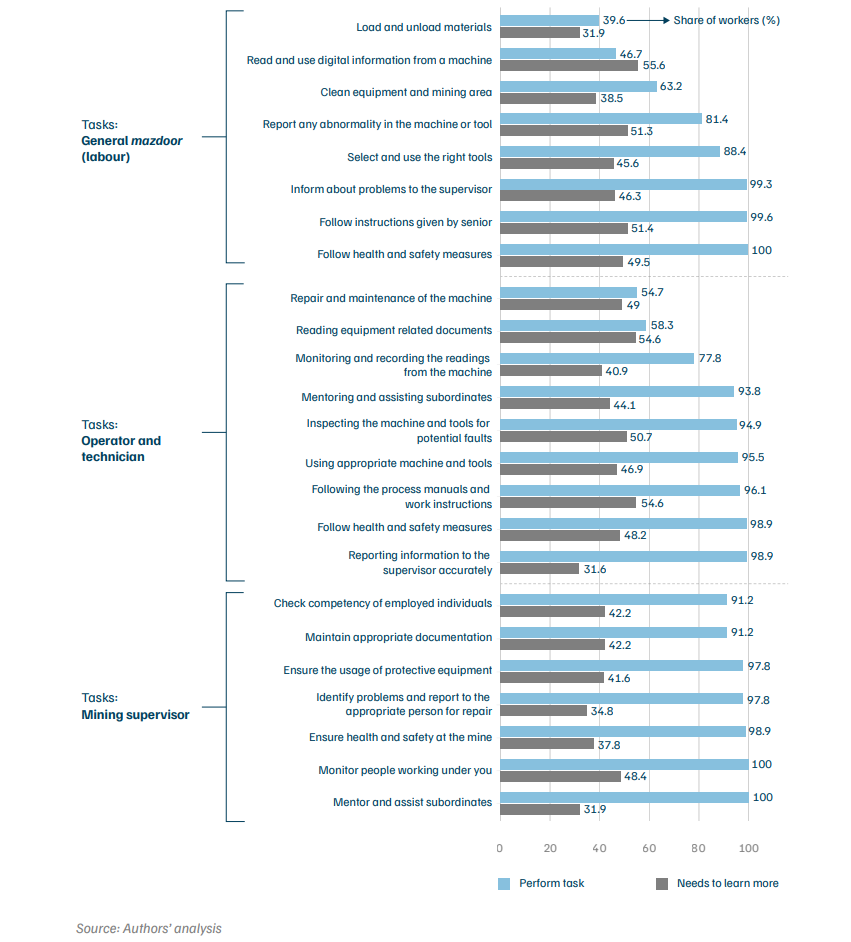
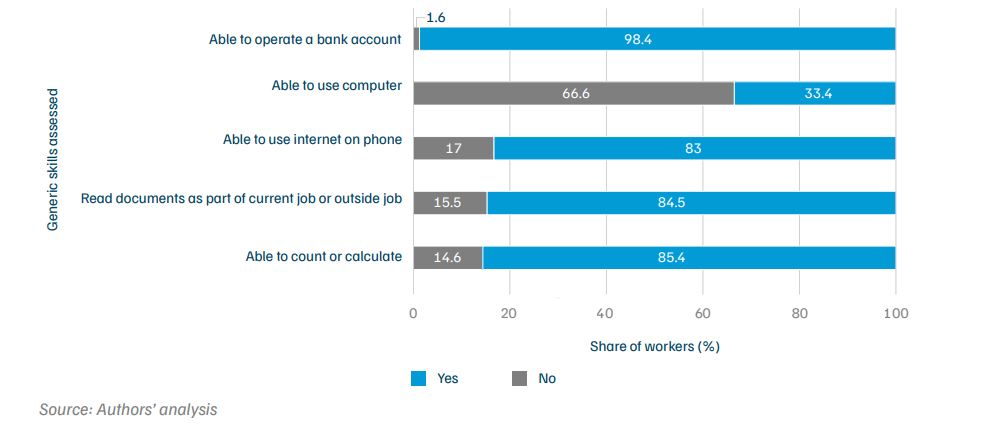
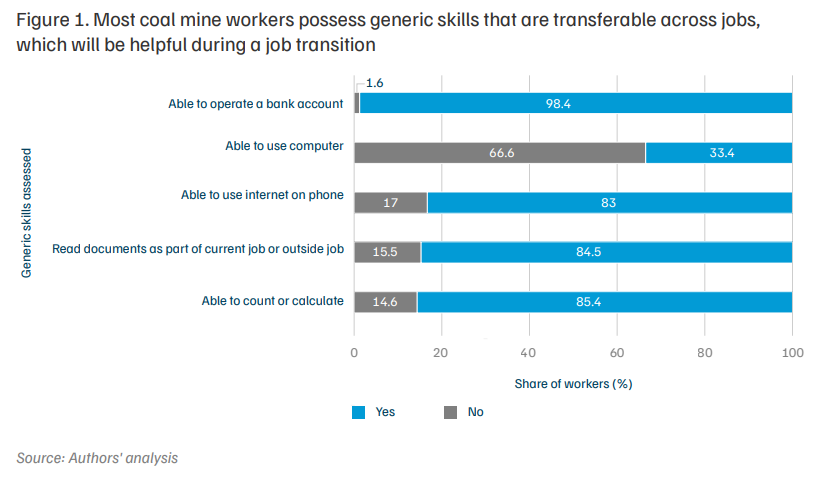
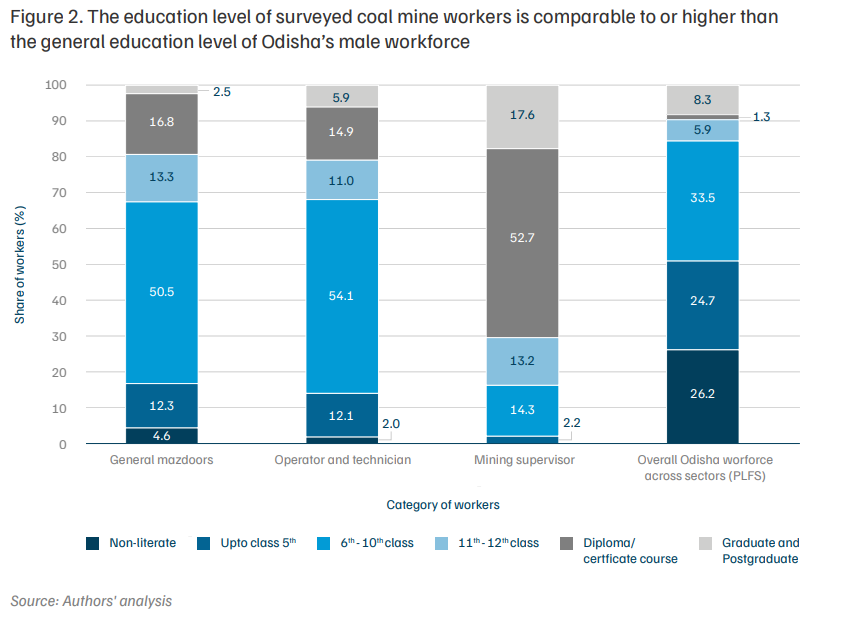
Figure ES2 illustrates that the majority of the surveyed workers can read documents, and are able to count or calculate, and use the internet on their phones, even though only a third are able to use computers. Most workers can also operate bank accounts, indicating that they have transferable skills that can be useful in a job-transition scenario. Moreover, the educational level of the surveyed coal mine workers is comparable to or higher than the general education levels of Odisha's workforce4 , suggesting that education isn’t a factor that is likely to hinder their transition to alternative sectors in the region.
Figure ES2. Most coal mine workers possess generic skills that are transferable across jobs, which will be helpful during a job transition
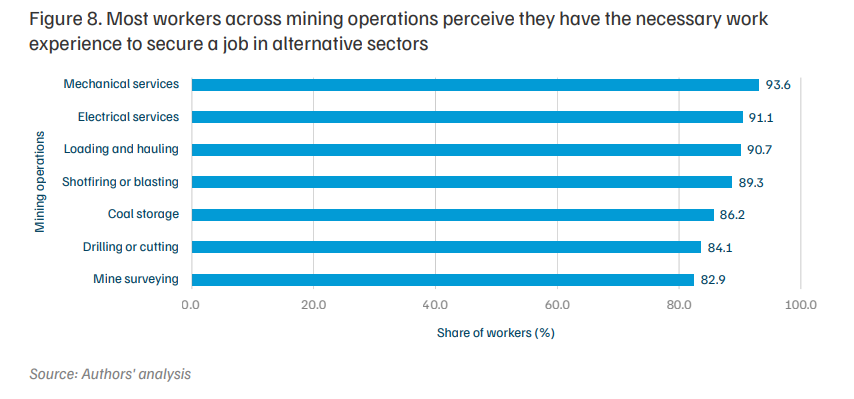
2. Most surveyed workers have gained their skills through peer-to-peer and learning-bydoing methods, and this needs to be appropriately recognised. While the mandatory fresher training focuses majorly on understanding safety procedures, the majority of the workers have developed their technical skills through learning-by-doing and observing their peers at the coal mine. Close to 89 per cent of the surveyed workers reported that they have the necessary work experience if they were to look for a job outside coal mining, indicating that they value this learning and believe it can help them secure jobs in alternative sectors. Our survey data further shows that only one-fourth of the workers undertook formal skills training before their current coal job and thus possess appropriately recognised certifications. The rest of the workers, while equally skilled, do not possess these. Therefore, the skills and work experience of all the coal mine workers should be properly recognised for them to be able to utilise these in securing employment in alternative sectors.
Furthermore, three-fourth of the respondents who have not previously undergone any formal skills training outside their job are now interested in pursuing it. This overall willingness to upskill can be explained by most workers perceiving various benefits from formal skills training, such as better chances of finding suitable jobs, increased earnings, improved job security, and better promotion prospects. Contractual workers, who comprise a larger proportion of young and middle-aged workers, show a greater inclination towards upskilling because they have limited access to specialised skill development opportunities at the coal job as compared to departmental workers.
3. To facilitate a wage-informed transition of coal mine workers, they must be upskilled for higher paying jobs in alternative sectors. Our survey data shows that nearly 79 per cent of the workers perceive that they will earn lower wages outside the coal sector. In line with this, a comparison between the salaries and wages of workers from various sectors of the economy, computed from the Periodic Labour Force Survey (PLFS), and those of the surveyed coal mine workers shows that most coal mine workers are protected against low wages, as illustrated in Figure ES3. A contractual coal mine worker typically earns between INR 20,000 and INR 25,000 per month, while most casual workers earn less than INR 15,000 per month. This suggests that job transitions offering matching wage or exceeding current wage levels will be challenging for coal mine workers, especially for departmental workers who earn significantly more than contractual coal workers. In addition to wages, coal mine workers receive an array of non-wage benefits at their current job, which they perceive are not available in alternative sectors. Due to these factors, workers report high overall job satisfaction, which can serve as a barrier to transition planning. In this scenario, the workers need to be able to secure high-paying jobs in alternative sectors. One way to achieve this is through upskilling for a higher level in the alternative sector that pays better wages than the current level and role in coal mines.
Figure ES3. Coal mine workers are protected from lower wages in their current job, complicating a wage-matched job transition
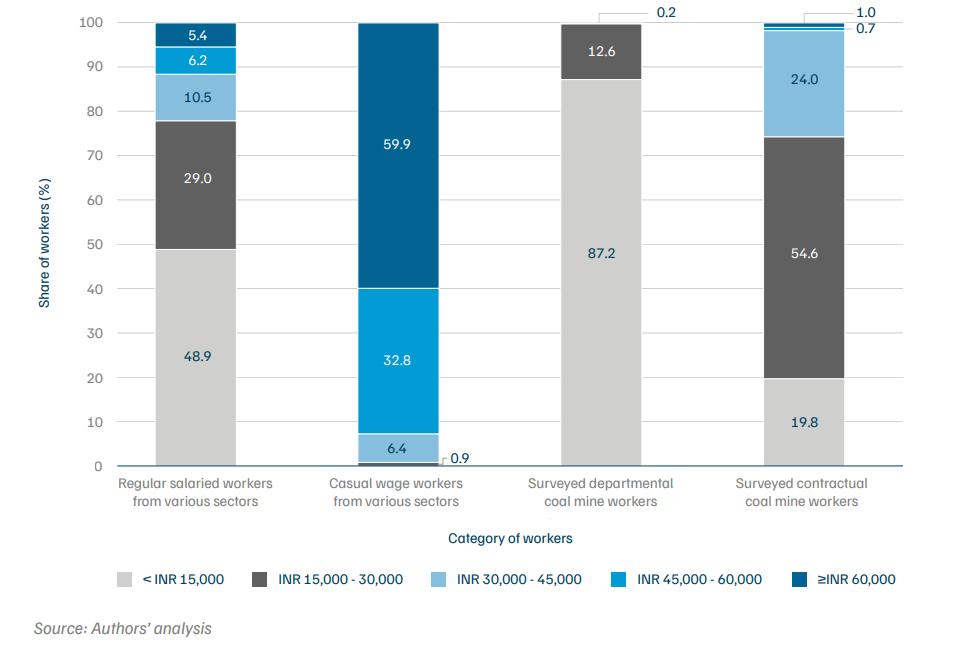
4. Most workers perceive limited alternative (non-coal) employment opportunities in the local area and are not open to relocation, highlighting the need to create jobs in the region. Although workers in certain mining jobs perceive they can work in alternative sectors based on their current skills,nearly 61 per cent of them believe there are limited job opportunities outside coal mining and coal-based industries in the local area. Most alternative jobs in the region are in coal-related industries; other employment options include construction, small shops, and agriculture in the native place. Therefore, economic diversification in the region is needed, and it should focus on creating skillsmatched employment opportunities that offer relatively high wages, decent non-wage benefits, and align with the workers' job preferences. CEEW and ADB’s AI-driven jobs and skills-matching Skills Matching for Accelerated Role Transition (SMART) platform, which utilises semantic embeddings and machine-learning algorithms to find the closest job matches based on skills, indicates that the iron and steel, food processing, and automotive sectors provide a high skills match to mining jobs. Consistent with this, data from our survey shows that coal mine workers in mining operation areas such as mechanical, electrical, and loading and hauling) perceive that with their current skills, they can work in these sectors.
Decarbonising the region’s large ‘grey’ industrial sectors, particularly iron and steel, automotive, and allied heavy manufacturing, is therefore not only an emissions imperative but also a practical pathway to create wage-matched, large-scale employment for coal mine workers. CEEW’s Green Odisha analysis (Jain et al. 2025) shows that targeted interventions—for example, incentives for green manufacturing, deployment of renewable energy and green hydrogen, and clustering of equipment and component production—can unlock sizeable, higher-quality local jobs and attract investment into the region. Aligning mine-closure and worker-transition planning with these green value-chain opportunities, together with RPL accreditation and targeted upskilling, will help convert the skills proximity identified in this study into durable, well-paid alternative employment.
5. Working in an alternative sector is not unimaginable for coal mine workers, as nearly two-thirds of the surveyed workers have previously worked outside of coal mining. Despite the wage gap, limited non-coal jobs in the local area, and reluctance in moving out of the state, coal mine workers show resilience that can aid planning for a just transition. It is crucial to leverage existing enablers and develop new ones for a smoother transition. Our survey data shows that 66 per cent of workers have worked outside of coal mining, and 52 per cent acknowledge access to relevant networks and connections that can aid in securing a new job; however, these may only be useful in helping them secure low- or semi-skilled jobs that do not offer wages equivalent to coal jobs. This suggests that while workers can envision working in alternative sectors and have existing networks outside the coal mining industry, these networks mainly support organic but not necessarily fair job transitions. For instance, our research shows that contractual coal mine workers are especially vulnerable during such organic transitions, particularly when the contract of the contracting company ends, when a worker’s contract period is over, or when there is a mine closure without proper planning for their work arrangements. There is a need to build upon the existing enablers, and connect workers with suitable alternative sector jobs that match their skill level and, consequently, fulfil their wage preferences.
While specific operational contexts and workers' job preferences may vary across regions and companies, the fundamental skill set identified in our study provides a reliable foundation for coal mine workers' existing skills and capabilities.
Building on the insights from our survey presented in the previous section, this section outlines approaches to enabling a skills- and preferences-based just transition for coal mine workers. These interventions aim to create a transition pathway that respects workers’ place-based preferences, expands alternative sector employment opportunities, and ensures that the job transition enhances rather than diminishes their socio-economic status.
This comprehensive approach appropriately recognises the workers’ existing skills, provides targeted reskilling and upskilling aligned with industry needs, and strategically attracts non-coal industries. These interventions can transform coal-dependent regions into diversified, resilient economies, while ensuring that the workers’ job transitions enhance rather than diminish their socio-economic status. Odisha’s recent policy innovations offer a strong starting point, but sustained, district-level action will be essential to transform coal-dependent regions into diversified, resilient, and inclusive local economies.
Coal lights up India, contributing to over 69 per cent of the country's total electricity generation (CEA 2025). The increasing pace of coal production, reflected in higher production targets, announcement of new coal projects, and the reopening of discontinued mines, indicates that coal will continue to play a vital role in the country's energy landscape (MOC 2025, Hook et al. 2025). At the same time, in light of global climate action, there is growing recognition of the necessity to transition to clean energy sources for power generation. Accordingly, India has announced its commitment to achieving net-zero carbon emissions by 2070 (MoEFCC 2023).
India is ambitiously ramping up renewable energy (RE) production to achieve its net-zero targets. As of June 2025, non-fossil fuels contribute 50 per cent of total installed capacity, with RE accounting for 48 per cent (MNRE 2025). Within the fossil fuel-based installed capacity, coal accounted for 47 per cent in the fiscal year 2024-25, down from 55 per cent in 2019-20 (CEA 2025). As per the latest estimates from the Central Electricity Authority (CEA), by 2032, non-fossil fuels are projected to account for nearly 68 per cent of India's installed electricity capacity, with coal-based capacity expected to fall to nearly 29 per cent (PIB 2023, CEA 2023). However, when it comes to electricity generation, the CEA forecasts that coal will still contribute around 50 per cent of the total generation (CEA 2023). Therefore, it is expected that renewables and coal are going to co-exist in the near future to fulfil the country's energy needs (Gupta 2025), with coal declining gradually rather than abruptly (IEA 2021 and Hook et al. 2025).
A gradual decline in coal is good news, as it gives us sufficient time to start planning for a just energy transition. Several experiences from countries that have treaded on a path of energy transition away from coal and towards cleaner energy sources have shown why this is important. One of the key components of successful just transition planning across the globe is that such transitions are inherently long-term and iterative processes, often requiring phased, adaptive, and strategic approaches spanning decades. For instance, the transition planning in the Ruhr Valley region of Germany took place over several decades. Initially, there was resistance, but this gradually transformed into extensive dialogue and coordinated efforts among various stakeholders, including workers, companies, and local governments (Paiva and Zhang 2025). As a result, several long-term plans were developed, including guaranteed pensions for older workers and job opportunities for younger ones (Pai 2021).
1.1 Digging deeper: The lives and livelihoods dependent on coal in India
The Coal India Limited (CIL), which is responsible for over 80 per cent of India's coal production, operates 313 coal mines in eight Indian states, geographically spread over 40 districts (CIL 2024). It is also one of the largest public sector employers in the country, making it a significant contributor to the socio-economic development of various coal mining regions, underpinning livelihoods, regional development, and public revenues. Estimates suggest that nearly 4–20 million people are engaged in coal and allied sectors in India. Close to four million people in India are either directly or indirectly employed11 by the coal mining sector (Pai 2021). In addition to this, there is informal involvement, including illegal dependence on coal mining, which includes local communities scavenging coal for personal use and for sale in markets (Lahiri 2014). This remains largely unquantified; however, estimates suggest that in one coal-dependent district, there are three times more informal workers than formal workers (Bhushan et al. 2020). Beyond the direct contribution of coal to the country's economy and employment indicators, multiple industries, including steel manufacturing and cement production, rely on coal as a key input (Pai 2021). These industries also create their own direct and indirect employment opportunities. According to Dsouza and Singhal (2021), when considering employment estimates in coalbased industries alongside those in coal mining, it is reported that over 13 million people in India are employed across sectors such as coal mining, power, transport, sponge iron production, steel manufacturing, and brick making. They also suggest that if informal coal economy employment is accounted for, the total dependency can rise to approximately 20 million.
For the purpose of our assessment of workers’ skills and preferences, we have only covered direct employment, i.e. the employment generated by core coal mining jobs. Direct employment is further disaggregated on the basis of contract type into departmental and contractual workers. While the departmental employees are formally employed by state-owned enterprises, contractual workers employed by contractors and sub-contractors have both formal and informal employment arrangements.
Given the significant socio-economic embeddedness of the coal sector in the local economies, a progressive reduction in India’s deep reliance on fossil fuel is bound to impact workers and communities in these regions. In fact, planning for the just transition of workers and communities dependent on coal mining is not merely a future consideration; instead, it needs to be focused on now, as mines are being declared abandoned and facing closures in an unplanned manner. In January 2024, a press release announced that the CIL had identified 299 abandoned or discontinued mines for scientific closure (Ministry of Coal 2024).
In Jharkhand, nearly 50 per cent of coal mines are closed, and estimates indicate that the abandonment of 144 mines resulted in approximately 300,000 people losing their jobs (iForest 2021; Vats 2025). The unplanned closure of mines without targeted planning for the job transition of the workforce in coal-rich districts like Jharia and Hazaribagh has forced local communities to resort to scavenging for coal and selling it informally (Srivastava and Nagraj 2023). Additionally, displaced coal mine workers in the Dhanbad district have had to migrate to urban industrial and manufacturing hubs, such as automotive assembly lines in Tamil Nadu, far from their homes, in search of employment following the closure of coal mines in their area (Nagaraj and Srivastava 2023). The closure of mines in Margherita, Assam, without sufficient economic diversification led to thousands of people losing their livelihoods, leaving many without alternative employment options for as long as two years (Chandra et al. 2025). Many displaced mine workers in the region either gradually transitioned to agriculture or took on daily-wage labour and other odd jobs. Some even migrated to distant locations for job opportunities (Chatterjee et al. 2022).
1.2 Moving away from organic job transitions towards worker-centric transitions
Studies have noted that in the history of coal mine closures in India, there have been rare instances of successful social impact mitigation, land rehabilitation, and environmental remediation (Bhattacharjya et al. 2021, Chandra et al. 2025). Displaced coal mine workers predominantly move into agriculture or allied sectors, low-skilled jobs in the informal sector, or migrate to distant industrial centres due to limited local livelihood alternatives (Chatterjee et al. 2022, Nagaraj and Srivastava 2023). The studies that map current coal mine workers' perceptions concerning alternative employment opportunities offer similar insights. Coal mine workers, especially those who have previously engaged in agricultural and allied activities or possess agricultural land, view agriculture as the sector they can return to in case of mine closure (Climate trends and EY 2023, Banerjee 2022). Informal workers who lack formally recognised skills can only think of moving into other low-skilled informal sector jobs, and many other workers consider migration the most suitable option in the event of mine closure (Banerjee 2022).
In our study, we understand that these are the organic job transitions, i.e. the job transitions workers undertake irrespective of just transition policy interventions. For instance, our research shows that contractual coal mine workers are especially vulnerable to such organic transitions, particularly when the contract of the contracting company ends, when a worker’s contract period is over, or when there is a mine closure without proper planning for their work arrangements. The challenges associated with the agriculture sector as an alternative livelihood, such as low and uncertain incomes and high disguised unemployment (Bhattacharjya et al. 2021), underscore the need for targeted efforts to identify alternative livelihoods that are sustainable and lead to the creation of new and inclusive pathways for social and economic development for workers.
Interestingly, there has also long been a thrust towards exploring alternative clean energy jobs as a diversification option for coaldependent regions. However, the spatial disparities associated with India's energy landscape pose serious challenges in executing this idea (Chandra et al. 2025 and Banerjee et al. 2022). This further emphasises the need to study and explore the people and local economy of a region to identify alternative sectors for economic diversification.
Planning for job transition requires developing an understanding of the current skills of the workforce (Autor et al. 2003), and transitioning workers successfully at scale requires maximising the similarity between their current skills and their target jobs (Dawson et al. 2023). Global experiences involving the successful implementation of economic diversification plans for coal-dependent regions acknowledge the importance of identifying region-specific sectors based on workers’ existing skills (European Union 2020). Whether new products or processes are added within the existing key sectors in a region (vertical diversification), or new products or new economic activity are introduced in a region (horizontal diversification), as noted by Pande et al. (2023), a crucial step towards identifying alternative sectors would be to develop an understanding of the existing capabilities of the workforce. In fact, this understanding of workers' existing skills and capabilities can also be used to identify the most efficient mine land repurposing alternative amongst the range of repurposing options proposed by the Ministry of Coal in 2022, such as development of solar parks, eco parks, museums, resorts, golf course, and pumped hydro storage using opencast (OC) or underground (UG) voids and other energy-related infrastructure.
An assessment of coal mine workers’ existing skill sets is also crucial to inform the targeted design of reskilling and upskilling programmes. Without knowledge of the baseline level of workers’ skills, the training may not match their real capabilities or fulfil skills-based requirements of emerging sectors.
In addition, another key component of ensuring a worker-centric job transition is to know the workers’ preferences for employment in alternative sectors. These preferences can help predict and mitigate resistance to transition policies, thereby ensuring a bottom-up approach rather than superimposing a structure (Christiaensen et al. 2022). Region-specific skill assessments and preferences can be used to inform local and regional authorities about the workforce’s capabilities, potential, and willingness to participate in new sectors and industries, thus guiding investment and diversification strategies.
1.3 A skills and preferences based transition for coal mine workers
The existing literature on socio-economic concerns surrounding India’s coal ecosystem focuses mainly on the political economy of coal, the dependence of formal and informal coal mine workers, indirect workers, and induced livelihoods, and local-level planning in the event of mine closure (Lahiri-Dutt 2014; Dsouza and Singhal 2021; Pai et al. 2021; Bhushan et al. 2022). While there has been a constant emphasis on workers’ skills building through reskilling and upskilling initiatives as a critical component of just transition planning, research on the existing skill sets of coal mine workers in India remains underdeveloped. To assess workers’ skills, developing an understanding of the various categories of coal mine workers in India is the starting point. However, the occupational landscape of the non-executive coal mining workforce is fragmented and complex (Chandra et al. 2025). The few documents that provide information on these aspects such as the Nomenclature, Job Description and Categorisation of Coal Employees, developed by Joint Bipartite Committee, Institute for Miners’ and Metalworkers’ Education 1986 are dated. Furthermore, the occupational map and qualification packs12 developed by the Skill Council for Mining Sector are not specific to coal mining, and demand an on-ground contextualisation. Additionally, insufficient attention has been paid to the preferences and choices of the affected workers themselves regarding alternative employment, thereby challenging the worker-centricity of transition planning.
Our study aims to contribute to the discourse on just energy transition planning for coal workers in India by providing insights into the skills possessed by them at present, and their preferences for employment in sectors other than coal mining. We study workers’ agency when locating employment, the networks they rely on for job information and connections, and how their job preferences are influenced by their knowledge of compensation in other sectors. Finally, we examine the transferability of mining workers’ skills to alternative sector jobs using the CEEW-ADB AI-led Skills Matching for Accelerated Role Transition (SMART) platform.
The research objectives of our study include:
• Demystifying the current skills of coal mine workers to prepare for a skills-based just transition.
• Assessing worker preferences for employment in alternative sectors beyond their fallback options.
• Examining the need for economic transformation of the coal region under study.
In the next chapter, we outline the methodology employed for our study. In Chapter 3, we present our research findings and analysis, and in the last chapter, we detail our recommendations for a skills-and preferences-based just transition of coal mine workers.
We used a mixed-methods approach built on both qualitative and quantitative research instruments to meet our research objectives. In section 2.1, we explain the rationale behind the choice of study location, and the methodology employed to conduct several key informant interviews (KIIs) prior to the surveys of coal mine workers. Section 2.2 describes the method for selecting alternative sectors in the region and examining the transferability of coal mine workers' skills to these sectors. Section 2.3 details our approach to conducting a qualitative survey of coal mine workers to build a foundational understanding of the occupational landscape of coal mining in Odisha. Then, results from the KIIs and qualitative survey were used to prepare a sampling plan and design a questionnaire for conducting a large-scale quantitative survey of 734 coal mine workers. Section 2.4 covers the design and execution of the quantitative survey. Section 2.5 addresses research ethics and confidentiality, and section 2.6 highlights the dataset's limitations.
2.1 Study site selection and key informant interviews with coal mining-associated stakeholders
Jharsuguda district in Odisha hosts coal mines operated by CIL subsidiary MCL under its Lakhanpur, Ib Valley, and Orient coalfield areas, with a cumulative production recorded as 45.16 MT (Coal Controller Organisation MOC 2025). In comparison to other prominent coalfields in Odisha, such as Angul and Sundargarh, the Jharsuguda coalfield is unique in that it has both opencast and underground coal mines, whereas the others only have opencast mines (Coal Controller Organisation MOC 2025). In addition, these opencast and underground mines are mechanised and semi-mechanised respectively, offering us an opportunity to assess coal mine workers' skills in a mechanised mining environment.
The non-executive coal mining workforce is deeply fragmented and multi-layered (Chandra et al. 2025). This complexity in the occupational landscape, with the absence of a standardised system for categorising workers, was an obstacle to identifying and eventually assessing the skills of various categories of coal mine workers. Therefore, as a starting point, we supplemented key literature and official government documents with information from several KIIs with the diverse stakeholders associated with coal mining. The information regarding these KIIs is elucidated in Table 1.
| Theme | Stakeholder | Topics of engagement |
|---|---|---|
| Worker distribution in a coal mine | Former CIL executives |
|
| Current MCL officials |
|
|
| Skill development of workers | Vocational training centre (VTC) trainers |
|
| Belpahar Training Institute13 (BTI) staff |
|
|
| Jharsuguda government ITI instructors |
|
Source: Authors' compilation
2.2 Selection of alternative sectors and matching workers’ skills and preferences
To match the coal mine workers’ skills and preferences with opportunities in viable alternative sectors, we selected the high-growth sectors in Odisha and used an AI-led tool to do jobs and skills matching. The steps we followed in this process were:
• We shortlisted high-growth sectors in Odisha based on a review of the state’s economic policies, including the Industrial Policy Resolution (2022), the Odisha Renewable Energy Policy (2022), and the Odisha Economic Survey (2023).
• Based on this, five sectors were selected—food processing, manufacturing (automotive, textiles, handicrafts), renewable energy, steel and aluminium, and tourism.
• To validate these selections, we conducted KIIs with senior officers from the Department of Industries, the Department of Micro, Small and Medium Enterprises (MSMEs), and the Directorate of Mines and Minerals, confirming sectoral priorities and investment climates.
• For each nominated sector, we reviewed the relevant qualification packs (QPs) issued by sector skill councils under the National Skill Development Corporation to map the required competencies against those of coal mine workers. Our survey results, therefore, also reflect the on-ground realities of the skills that coal workers possess vis-à-vis the documented skills they are supposed to possess.
• We then used CEEW and ADB’s AI‑led jobs and skills matching tool, which uses semantic embeddings and machine‑learning algorithms to generate similarity scores, and identify upskilling needs for coal workers transitioning into these sectors.
• Finally, to capture employer perspectives on hiring approaches in alternative sectors, we interviewed representatives from the applicable sector skill councils (SSCs) and human resources officers in each sector.
2.3 Qualitative survey of coal mine workers in Jharsuguda
We conducted a qualitative survey to gather open-ended information from coal mine workers on their demographics, skills, training, social security benefits, and preferences for employment in alternative sector jobs. Using purposive snowball sampling, we interviewed ~60 workers from both UG and OC mines in Jharsuguda. These mines are Orient 1 and 2 (UG), Samaleswari (OC), and Lakhanpur (OC). Our respondents were contractual and non-executive departmental workers14. Executive workers15 were excluded from our survey because of their higher social and financial status, and readiness in terms of their transition planning by the CIL. Section 2.3.1 covers our approach to qualitative questionnaire design, section 2.3.2 presents details on the enumerator training and data collection process, and section 2.3.3 details data analysis.
Questionnaire design
The qualitative questionnaire was developed to conduct in-depth interviews with the respondents. Each question included open-ended prompts to capture the coal workers' narratives and perceptions. Drawing on the survey objectives, we structured the instrument into eight thematic modules and incorporated iterative piloting and translation to ensure clarity, context specificity, and comprehensive coverage. Refer to Annexure 1 for the detailed questionnaire. Table 2 provides an overview of the major sections and themes in the questionnaire.
| Section | Theme |
|---|---|
| A. Interview information | Record demographics, interview metadata, and obtain informed consent for participation and recording. |
| B. Respondent's information | Understand worker roles, tenure, type of employment (departmental/contractual), and migration context. |
| C. General questions and current skills | Identify daily tasks, skill acquisition methods, and skill differences between workers and supervisors. |
| D. Perceptions towards other jobs | Understand aspirations for alternative sectors and factors influencing job-switching decisions. |
| E. Access to non-coal jobs | Explore how workers perceive skill transferability and key motivators for transitioning to non-coal jobs. |
| F. Assessing skills and other factors | Document current wages and benefits, digital and financial skills, and openness to migration for employment. |
| G. Role of labour unions | Examine how unions support workers' welfare, including skill development and job transition facilitation. |
| H. Concluding questions | Collect final remarks, referrals to additional respondents, and connect with key community or union contacts. |
Source: Authors' compilation
Data collection
The survey's fieldwork was conducted between 21 and 27 June 2024. The data collection involved six enumerators, one supervisor, and three researchers. Of the 10 people on the field, six—four enumerators and two researchers—were women. The questionnaire was originally drafted in English but was translated and administered in Hindi and Odia, depending on each respondent's preference.
We trained enumerators in qualitative probing techniques, questionnaire structure, and accurate narrative recording. We also conducted mock interviews to simulate field situations. Subsequently, we conducted a pilot involving ~10 workers in one of the mines to examine the flow, question clarity, and probing strategies specified in the questionnaire. Feedback from the pilot exercise resulted in minor refinements, such as consolidating redundant probes and modifying the translated text of the questionnaire. Each interview took 30 to 45 minutes, and was conducted face-to-face either at the mine or in the labour camps where workers resided. Responses were audio-recorded with consent and supplemented by detailed note-taking to capture non-verbal cues.
Data analysis
We analysed our interview data by first reading through each transcript and assigning codes to meaningful chunks of text. Then, we looked for patterns and grouped related codes into broader themes. We went back and forth between the raw data and our emerging themes, refining them until they were both accurate and distinct. This process of coding and thematising data helped us turn several interviews into a clear set of insights about workers' skills, perceptions, and transition preferences.
2.4 Quantitative survey methodology
Following the analysis of the findings from the qualitative survey, we conducted the quantitative survey to capture structured and large-scale data on coal mine workers’ current skills and preferences for employment in alternative jobs.
The quantitative survey’s fieldwork was conducted between 10 November and 10 December 2024. The data collection involved eight enumerators, two supervisors, and two researchers. We covered 734 workers across four mines in the district of Jharsuguda, Odisha. The survey was translated into Hindi and Odia. To ensure representativeness, it covered workers across three hierarchies and seven major areas of operations in both underground and opencast mines. Section 2.4.1 discusses our sampling strategy, 2.4.2 details questionnaire design, 2.4.3 covers data collection, and 2.4.4 covers data quality checks.
Sampling strategy
We designed our sampling plan to conduct 700 complete interviews with coal mine workers using quota sampling. Our multidimensional quotas consisted of groups based on the following criteria:
a. Mine type: We categorised mines based on their nature of operations—opencast vs underground. Based on our KIIs and proximity of the mines to each other, we selected two opencast (Lakhanpur and Samaleswari) and two underground (Orient 1&2 and HirakhandBundia) mines in Jharsuguda. We could not find any official estimates for the share of workers employed in each mine type. Our KIIs revealed that approximately 80 per cent of all coal mine workers in the district are working in opencast mines, while the remaining 20 per cent are in underground mines. Our sample plan reflects this distribution of workers.
b. Nature of contract: Coal mines employ a combination of departmental and contractual workers. Our KIIs informed that the distribution of workers across these categories depends on the type of mine. Underground mines in Jharsuguda primarily employ departmental workers, while a large share of workers in the opencast mines are hired on a contractual basis. Accordingly, in our sample of underground mines, approximately 17 per cent were contractual workers and 83 per cent were departmental employees. Conversely, contractual workers accounted for 64 per cent of the sample in opencast mines with the remainder, 36 per cent, being departmental employees.
c. Area of operations: We divided mining operations into seven categories based on their output and the nature of tasks performed. We used KIIs with current and former employees of CIL and MCL, and occupations mapping from the Skill Council for Mining Sector (SCMS) to identify the following major areas of operations in a coal mine: mine surveying, shot firing or blasting, drilling or cutting, loading and hauling, electrical services, mechanical services, and coal storage16. We did not include any administrative or executive staff due to their high levels of skill transferability outside of coal mining.
In this case as well, the distribution of workers across these areas of operations is not publicly available. Our KIIs informed us of three key patterns: (1) a large number of workers are employed in mechanical services, (2) mine surveying and coal storage have relatively low employment levels, and (3) the remaining areas of operations employ almost an equal share of workers. Our sample plan incorporated these considerations.
d. Occupational hierarchy: The occupational mapping by SCMS classifies mine workers across 18 levels based on the NCrF. Each level represents a different degree of complexity, knowledge, and autonomy required to perform the necessary tasks in the job. To limit the number of groups, while capturing the differences in the tasks performed by workers at each level of the hierarchy, we merged these levels into three broad categories: (1) general mazdoors and assistants, (2) operators and technicians, and (3) supervisors17. We used data from the PLFS and KIIs to allocate 40 per cent, 48 per cent, and 12 per cent of our sample, respectively, to these three categories.
Due to a very low level of women's employment in core coal mining operations, we did not put any a priori quotas for women. Table 3 presents the final sampling distribution based on complete surveys. In addition to oversampling across the major areas of operations specified in (c), some surveys were also conducted in smaller departments involving health and safety, security, and construction.
| Particulars | Mine surveying | Drilling or cutting | Short firing or blasting | Loading and hauling | Electrical services | Mechanical services | Coal storage and processing | Health and safety | Others | Total completed |
|---|---|---|---|---|---|---|---|---|---|---|
| UG departmental supervisors | 3 | 5 | 1 | 2 | 2 | 3 | 1 | 1 | 0 | 18 |
| UG departmental operators and technicians | 2 | 9 | 4 | 10 | 11 | 12 | 3 | 0 | 0 | 51 |
| UG departmental general mazdoors | 1 | 5 | 10 | 9 | 9 | 11 | 1 | 0 | 0 | 46 |
| UG contractual supervisors | 0 | 1 | 0 | 1 | 0 | 0 | 0 | 1 | 0 | 3 |
| UG contractual operators and technicians | 0 | 0 | 0 | 0 | 0 | 0 | 0 | 0 | 0 | 0 |
| UG contractual general mazdoors | 0 | 4 | 3 | 4 | 3 | 3 | 1 | 1 | 2 | 21 |
| OC departmental supervisors | 3 | 2 | 2 | 3 | 4 | 9 | 1 | 3 | 0 | 27 |
| OC departmental operators and technicians | 10 | 23 | 8 | 21 | 15 | 17 | 4 | 1 | 2 | 101 |
| OC departmental general mazdoors | 9 | 1 | 36 | 0 | 14 | 28 | 0 | 0 | 0 | 88 |
| OC contractual supervisors | 2 | 8 | 8 | 8 | 6 | 8 | 2 | 2 | 0 | 44 |
| OC contractual operators and technicians | 0 | 51 | 4 | 45 | 23 | 40 | 38 | 0 | 3 | 204 |
| OC contractual general mazdoors | 7 | 10 | 29 | 2 | 29 | 51 | 1 | 2 | 0 | 131 |
| Total | 37 | 119 | 105 | 105 | 116 | 182 | 52 | 11 | 7 | 734 |
Source: Authors' compilation
Questionnaire design
The questionnaire is divided into eight major sections, including separate themes for measuring coal mine workers’ current skills, access to skilling opportunities within and outside of work, and preferences for alternative employment as illustrated in Table 5.
| Section | Particulars |
|---|---|
| A | Respondent consent |
| B | Particulars of field operation |
| C | Background details, including demographic information, work and workplace characteristics, and migration |
| D | Preferences for alternative employment |
| E | Access to skilling opportunities |
| F | Generic skills |
| G | Job satisfaction |
| H | Remarks by survey enumerator |
Source: Authors' compilation
The first draft of the questionnaire was designed in English with influences from nine existing national and global surveys on skills and worker transition18. To reduce cognitive load and improve respondent comprehension, we translated the original questionnaire into Hindi and Odia; and used visual aids19 with complicated questions. Minor modifications were made to the original questionnaire after conducting field pilots for four days in both underground and opencast mines. The final questionnaire consisted of 54 questions, including questions related to respondent consent, field operations, and survey quality, and took a median time of 40 minutes for completion.
Capturing the skills of the coal mine workers and their preferences for alternative jobs was among the core research objectives of our study. Below, we detail our approach for identifying worker skills and eliciting responses on their preferences for alternative jobs.
Using task performance as a proxy for worker skills
Tasks are specific and observable activities performed on the job. On the other hand, skills are capabilities required to perform those tasks (Tsacoumis and Willison, 2010). Due to the abstract nature of the skills, their measurement requires specialised and detailed qualitative assessments. Further, respondents, when asked to evaluate their own skills, have been found to inflate their ratings in the past (Morgeson et al., 2004). Due to these difficulties and the quantitative nature of our questionnaire, we used task performance as a proxy for worker skills.
For generic skills, coal mine workers were asked about the performance of literacy-, numeracy-, and communication-related tasks on or outside the job. For technical skills, we used performance criteria (PC) specified in the qualification packs developed by the SCMS. To limit the number of PC in the questionnaire and allow for comparison across workers, we combined PC for occupations within the same level of hierarchy (general mazdoor/operator and technician/supervisors) and standardised them to represent broad tasks across all areas of operations. Further, due to the biases and subjectivity in using the Likert scale for self-rating, we used the workers’ responses on the need for more training as a proxy for their proficiency in each task (refer to Que c_10 in Annexure 2).
Leveraging conjoint experiment design for eliciting worker preferences for alternative jobs
We used a conjoint experiment design to elicit coal mine workers’ preferences for jobs in alternative sectors vis-a-vis their current employment, and analyse the job attributes driving these preferences. Our experiment replicates the design from Blankenship et al. (2022) with slight modifications in job attributes. The rationale behind conducting this experiment is to identify the most important factors among the multiple factors that workers consider when switching jobs.
In a single iteration, each respondent was asked to choose between two jobs, where each job was a combination of six attributes. The experiment was repeated three times per respondent. Table 6 presents the format of a single iteration.
| Types of attributes | Job A | Job B |
|---|---|---|
| Sector | Coal mining | Textile |
| Monthly income in INR | 15,000 | 30,000 |
| Duration of contract on signature | Less than one year | One to two years |
| Training | No new training required | Less than 1 month |
| Location | Within Brajrajnagar/Belpahar (industrial hubs within Jharsuguda) | Within Jharsuguda but outside Brajrajnagar/Belpahar |
| Social security | Housing | Healthcare for self |
Source: Authors' compilation
Each job offered to the respondent was a combination of the following attributes:
a. Sector: In a single iteration, the sector for one of the two jobs was artificially fixed at coal mining. Meanwhile, the sector for the second job was randomly selected from handicrafts and carpets, automotive, tourism and hospitality, construction, iron and steel, textile, green jobs, or food processing.
b. Location: The location for each job was randomly selected from one of the following levels: within the same town (Brajrajnagar/Belpahar) as their current job, within the same district (Jharsuguda) but outside the same town, within the same state (Odisha) but outside the same district, or outside the same state. These levels were designed to capture the workers' migration preferences while looking for alternative jobs.
c. Income: The monthly income for each job was randomly selected from one of the following levels: INR 15,000, INR 30,000, INR 45,000, INR 60,000 or above INR 60,000. These levels were selected based on the existing salaries of the workers captured during the qualitative survey.
d. Social security: Social security benefits for each job were randomly selected from one of the following levels: healthcare for self, food facility at workplace, housing, and utilities (electricity, water, and gas). These levels were selected based on the availability of existing benefits to the coal mine workers, as identified through the literature review and captured during the qualitative survey.
e. Duration of contract: Longer job contracts offer more job security to workers. The duration of contract for each job was randomly selected from one of the following levels to capture worker preferences for job security: less than one year, one to two years, two years or more.
f. Duration of training: On-the-job training provides an opportunity for workers to upskill themselves without losing out on salaries. The duration of training offered on each job was randomly selected from one of the following levels to capture worker preferences for upskilling: no new training required, training duration of less than one month, training duration of one to three months, or training duration of three months or more.
Data collection
Our data collection team comprised eight enumerators, half of whom were women. Half of our enumerators were proficient in Hindi, while the others were proficient in Odia.
We used a combination of classroom training, role-play exercises, and mock interviews to familiarise enumerators with the study objectives, survey instruments, and CAPI (computerassisted personal interviewing) software. To ensure standardised administration of the questionnaire, we also added instructions and clarifications for complex questions. Further, we provided enumerators with a manual listing key terminologies and their definitions in the context of our study.
Similar to the qualitative survey, we identified and interviewed coal mine workers at their workplace, the coal mines, because it was difficult to identify households with members engaged in mining work. This presented us with a number of unique challenges that are usually unobserved in household surveys, including obtaining the necessary permissions and completing the interviews without hindering the work activities in a coal mine.
These challenges required us to proceed with a combination of purposive and snowball sampling while selecting respondents for the interviews. We further implemented the following mitigation measures to facilitate survey completion:
1. Securing permission letters from the local district magistrate and respective mine managers
2. Using assistance from labour union members to establish connections with departmental managers and camp supervisors
3. Establishing rapport with the workers at the mine time keeper’s office, where they usually gather before the beginning of their shifts.
4. Scheduling interviews during lunchtime or before the start of new shifts during the day.
Data quality checks
Use of digital data collection software allowed us to monitor survey progress and quality in real time21. Our data validation checks consisted of a three-tier process. First, we tracked the number of universal responses—“don't know”, “refused to answer”, and “others”—for each question. A high universal response count for any question indicated either that our respondents were not able to understand the question well, or that the primary response options were not adequate. Second, we analysed responses to a handful of selected questions to check if their values were in the expected direction. For instance, we tracked the nature of contracts for all employees to investigate if we encountered any departmental workers with no written contracts or contractual workers with long-duration written contracts. Finally, we conducted daily debriefs to discuss our queries and observations from the first two steps. The debriefs also covered challenges in identifying workers, accessing contractual camps, and discussing enumerators’ field experiences.
2.5 Research ethics and confidentiality
We obtained Institutional Review Board (IRB) approval before starting our field surveys. Enumerators obtained informed consent from all respondents before proceeding with data collection. As part of the consent, respondents were apprised of the purpose of the study, the voluntary nature of participation, and our measures to protect the confidentiality of data. Further, we obtained consent separately for audio recordings.
After conducting the necessary verifications, all audio recordings have been deleted from CEEW's database. Further, to ensure respondent confidentiality, we have withheld information related to their names, phone numbers, and geographical coordinates before releasing data in the public domain.
2.6 Limitations
Users of our primary data from the quantitative survey are requested to note the following limitations:
a. Limited geographical coverage: Our survey covers workers across both underground and opencast mines, various areas of operations, occupational hierarchies, and contract types. Results from our survey accurately capture the workers in coal mines of Jharsuguda. However, to the extent there are differences in the status and preferences of workers across districts and states, users must combine results from our survey with secondary sources while extrapolating them to other geographies in India.
b. Non-random sampling design: In the absence of documented information about the entire coal mining workforce in Jharsuguda and consequent lack of a sampling frame, along with challenges related to interviewing workers at the coal mines, we used a combination of purposive and snowball sampling for data collection. We have also used multidimensional groups quota sampling to improve the representativeness of our survey; however, it may not present unbiased results on a par with randomised data collection methods.
c. Gender: On account of the absence of female coal mine workers among the miners in Jharsuguda, we were unable to survey them, and therefore could not assess their skills and preferences for alternative employment.
This chapter presents our key findings from both the qualitative and quantitative surveys, and our analysis of the different dimensions of a skills- and preferences-based transition for coal mine workers in India. These dimensions are as follows:
• Section 3.1 showcases an assessment of the workers’ current skill sets and capabilities.
• Section 3.2 examines the workers’ perceptions and preferences regarding employment in alternative sectors.
• Section 3.3 assesses local alternative employment opportunities and the role of economic diversification in transition planning, considering the workers’ willingness to relocate.
• Section 3.4 discusses existing and potential enablers to facilitate a just transition, capitalising on the workers’ resilience despite challenges.
3.1 Workers’ current skills and future skilling pathways
There is general awareness about the skills possessed by executive workers in coal mining companies, as these individuals are primarily organised sector workers with specified educational qualifications and job descriptions (MCL 2025). However, ambiguity surrounds the skill sets of non-executive workers, particularly in how they vary across different job occupations. For this reason, this study focuses solely on conducting an inquiry into the skill sets of non-executive coal mine workers. The technical jobs performed by non-executive workers encompass various areas of mining operations, from mine land surveying to coal storage and processing. Most roles are carried out by both departmental and contractual workers, with some exceptions, such as most blasting and land surveying jobs being performed by departmental workers. Additionally, there are ancillary operations that are carried out in and around the coal mines, such as security, and transportation services for moving the extracted coal out of the mines. Given that the skills required for these roles are not typical of the coal sector, this study does not examine the skill sets for this set of jobs and restricts itself to what we refer to as “core mining jobs“ or direct employment in coal mining.
Understanding the existing skills of coal mine workers
Our inquiry into workers’ skills comprehensively assesses a broad spectrum of their capabilities. This ranges from an assessment of foundational generic skills, such as literacy, numeracy, and digital and basic financial literacy, to delving deeper into the technical and soft skills essential for their professional performance.
Most coal mine workers possess generic literacy and numeracy skills, which can be useful for further skill development. Nearly 85 per cent of the surveyed workers self-reported that they can read documents, and 85.4 per cent self-reported that they find it easy to count or calculate either on or outside the job. National surveys such as PLFS and National Sample Survey (NSS) report similar rates22 for literacy, showing that the foundational skills of reading and performing simple calculations among coal mine workers are comparable to those of the average working person in India. This is a positive indicator for the workers’ ability to transition, as it suggests that most coal mine workers are well-positioned to participate in skill development programmes and adapt to alternative sectors of work where basic literacy and numeracy skills are required.
Many coal mine workers lack computer skills, yet most can access the internet on their mobile phones, indicating that workers possess mobile-centric digital skills. We inquired about the workers’ computer and mobile usage abilities to assess their digital skills. Figure 1 illustrates that nearly 67 per cent of the surveyed workers are unable to use a computer, while 83 per cent are able to use internet on their phone. The workers highlighted that they do not possess computer skills as there is no need to use a computer in their current job, and even the workers who are interested in developing this skill set perceive a lack of time to learn computers. This suggests that the workers mainly possess mobile-driven digital skills. Their widespread ability to access the internet on mobile phones can be used as an asset in transition planning by leveraging appbased skilling and online job listings, and digitally spreading awareness about training programmes.
The majority of workers have and operate bank accounts, signalling their readiness for formal employment in alternative sectors. Almost all coal mine workers, as illustrated in Figure 1, are able to operate a bank account, indicating a baseline level of financial literacy and inclusion. In fact, most of them are able to use a unified payment interface (UPI) on their mobile phones. This demonstrates that most workers have the foundational financial and digital competencies, and are not entirely excluded from the systems that are preconditions for formal employment.
The educational background of coal mine workers is comparable to or higher than the general education levels of Odisha’s workforce, suggesting that education is unlikely to hinder their transition to alternative sectors. The majority of general mazdoors, operators, and technicians have reported that their highest level of education is between middle and secondary school (Class 6–10). Figure 2 illustrates that 50.5 per cent of mazdoors and 54.1 per cent of operators and technicians fall within this category, which is higher than the 38.2 per cent among Odisha’s overall male23 workforce (calculated from PLFS). This indicates that coal mine workers have education levels that are on a par with or higher than the average working individual in Odisha. Additionally, the percentage of general mazdoors, operators and technicians, and supervisors holding diplomas or certificates is 16.8 per cent, 14.9 per cent, and 52.7 per cent, respectively, compared to only 1.9 per cent for the overall male workforce in Odisha. This suggests that education is unlikely to be a significant barrier for most workers in transitioning to jobs in alternative sectors within the state.
Furthermore, as compared to workers in other hierarchies, most mining supervisors hold diplomas and certificates, suggesting that transitioning into roles and sectors requiring higher education and certified skills will be easier for mining supervisors.
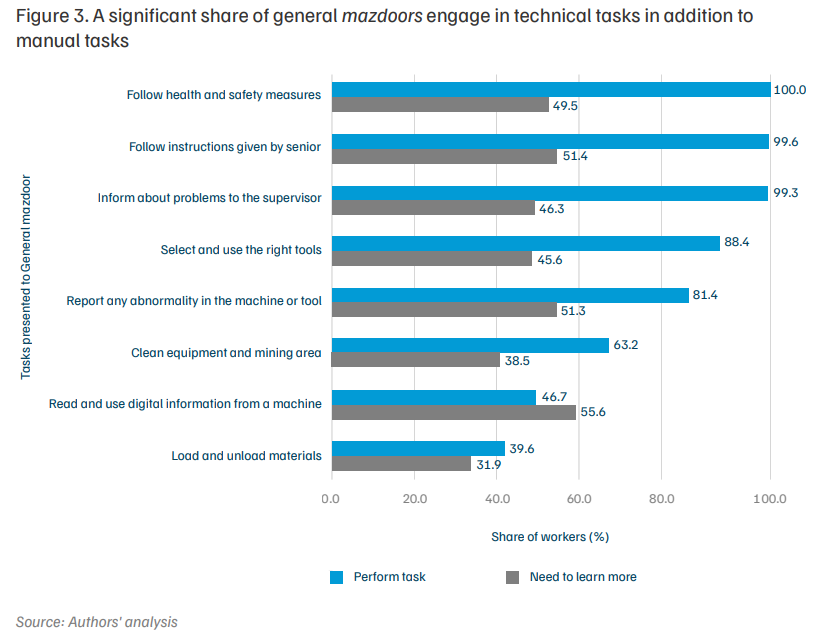
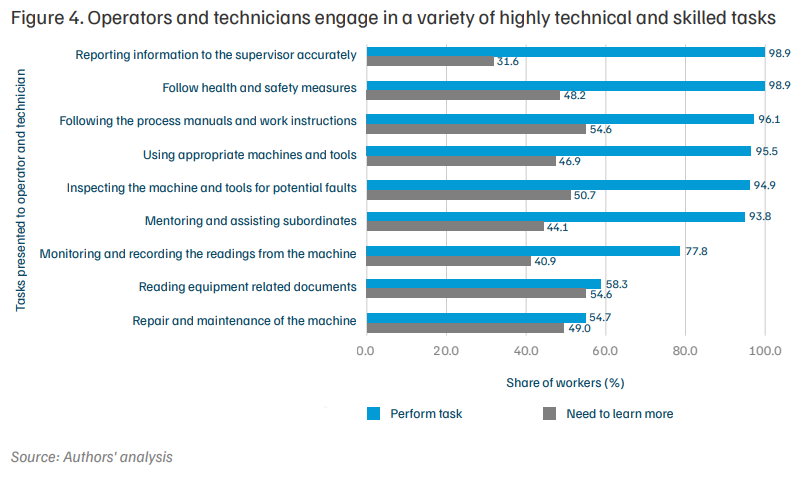
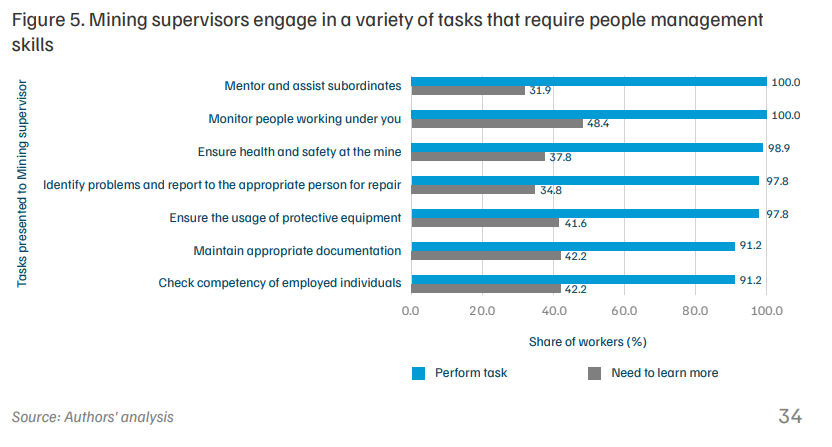
Workers across hierarchies possess significant technical and soft skills that can be the baseline for upskilling and reskilling them for skilled jobs in alternative sectors. While the application of technical skills spans across all hierarchies—from general mazdoor to supervisor—higher positions increasingly require higher-order soft skills and managerial skills blended with technical acumen. An assessment of workers’ routine tasks indicates that general mazdoors, in addition to performing physically intensive tasks, possess basic technical knowledge of tools, equipment, and machinery, along with soft skills in ensuring effective communication and teamwork. Operators and technicians, the middle hierarchy workers, demonstrate a strong grasp of technical skills, along with a certain degree of people management abilities. Mining supervisors possess technical expertise along with strong people management skills, thus requiring minimal reskilling or upskilling to transition into roles that demand team management and leadership abilities. Figures 3, 4, and 5 provide detailed descriptions of the tasks that workers across the three hierarchical levels undertake, along with an account of their self-identified needs for further learning.
General mazdoors carry out several technical tasks as part of their day-to-day job and show a willingness to learn more. They do not simply load and unload materials or clean equipment. In fact, our assessment shows that a relatively lesser share of mazdoors engage in the tasks of loading and unloading, as illustrated in Figure 3, indicating that only a small portion of their job is dedicated to this activity. However, as compared to other tasks, they are most comfortable performing these tasks, requiring limited supervision. A greater percentage of their role can be understood as technical, as it includes comprehending and ensuring the correct usage of tools, identifying and reporting abnormalities in machinery and tools. A notable share of workers indicates a learning need for these technical tasks. Some general mazdoors also have transferable digital skills, although a higher percentage reported needing more assistance in reading and following information from machines digitally. On soft skills, they need support in effectively following instructions from seniors, but are able to follow health and safety measures. They require more training and support for tasks that make up the majority of their activities, i.e., the technical tasks, and are comfortable performing tasks that form a smaller percentage of their role, i.e., the physically intensive tasks.
Operators and technicians demonstrate a strong grasp of technical skills. Our assessment shows that operators and technicians demonstrate hands-on engagement with core operational tasks such as independently operating machines and tools, inspecting equipment for potential faults, carrying out repairs and maintenance, and adhering to safety measures. A moderate share of workers indicated learning needs for these activities. Notably, while a relatively smaller group engages with reading equipment-related documents, the majority within that group reports a need for further training. This suggests that while workers are relatively comfortable in hands-on functions, their ability to follow written protocols and technical documentation remains an area of improvement. On soft skills, they need support in effectively mentoring and assisting subordinates, but are able to communicate and report information to their supervisors.
Mining supervisors develop more people management skills in addition to their technical acumen, while requiring further training and support in monitoring subordinates. They continue to engage with technical processes primarily in oversight, as their daily tasks require a greater application of higher-order soft skills and managerial skills, as illustrated in Figure 5. The majority of the surveyed mining supervisors engage in tasks such as team monitoring, mentoring, assessing subordinates’ competency, ensuring health and safety measures are adhered to, and maintaining documentation. Based on workers’ self-assessment of learning needs, they need more training and support for tasks such as monitoring and assessing the competency of subordinates.
Departmental and contractual workers at a similar hierarchy possess similar skill sets, so future training efforts for workers should be similar and equally targeted at both groups. Our assessment of workers’ skills shows no substantial differences between the task engagement and learning needs self-reported by departmental and contractual workers at the same hierarchy level24. Since the current skill set is similar for both contractual and departmental workers, it indicates that the reskilling and upskilling requirements for both categories of workers should not differ significantly. Any current and future retraining and upskilling initiatives targeted for coal mine workers need to consider training efforts for contractual and departmental workers equally.
Workers receive mandatory safety training that can be useful for many jobs in alternative sectors. The majority of the surveyed workers, 85.4 per cent, reported receiving safety training soon after they start their coal mine jobs. This training, which focuses heavily on conducting mining operations safely, is mandated by the Directorate General of Mines Safety (DGMS). Based on our consultation with employers in alternative sectors such as steel and aluminium, this safety training is valuable and, in a way, cross-sectoral, indicating that safety-related skills are transferable and can be utilised in jobs in other sectors.
The less specific the area of operation in relation to coal mining, the greater are workers’ perceptions of finding employment in alternative sectors. To examine workers’ perceptions of the transferability and continuity of their skills, coal mine workers were asked about the alternative jobs and sectors they feel they can work in based on their current skill set. Workers belonging to operation areas such as mechanical services, electrical services, loading, and hauling, who comprise nearly 53 per cent of the workforce in an opencast mine and 41.1 per cent in an underground mine25, were able to identify the jobs they can undertake in alternative sectors relatively easily as compared to workers in other operation areas, as noted below in workers’ responses.
“We can work for any company that involves excavator machines. We can work in the construction of canals and roads, as well as stone quarries.”
A contractual excavator operator working in an opencast mine.
“I can do electrical-related work in any private company… I can also work in the electric components manufacturing companies as well.”
A departmental electrical supervisor working in an underground mine.
“I can work at places where blasting operations are needed… There is an iron ore mine located in Badbil, Odisha, where blasting is required. I can work there and at any other mineral mine where there is a need for conducting blasting operations.”
A departmental blasting mazdoor working in an underground mine.
This suggests that workers in mining operations that are less specific to mining and more sector-agnostic perceive a higher skill transferability in alternative sector jobs. Conversely, workers in more specialised mining operations such as shot firing, blasting, and land surveying, who perceive fewer work opportunities outside mining based on skills proximity, will require additional skills mapping and retraining support to undertake jobs in alternative sectors. This also showcases that for effective transition planning, differentiating various coal mine worker categories depending on their mining operation background can be beneficial for identifying workers who will require tailored support.
Beyond the transferability of technical skills related to mining operation areas, a few workers, such as supervisors, perceive the transferability of their people management skills to jobs in alternative sectors, as noted in the quote below. Workers recognising the transferability of their people management and soft skills beyond their technical skills can contribute positively towards transition planning, as it broadens the range of transition options for these workers, since these skills are applicable across multiple sectors.
“I started my work in coal mining as a blasting helper, and now I am a blasting supervisor here. I have supervisory skills, so I can apply my experience in supervision to supervise anywhere. This includes various factories and plants, which include shop floors, vehicle lines, transportation, and basically everywhere.”
A contractual blasting supervisor working in an opencast mine
Workers’ access to skill development
Having established that coal mine workers possess a diverse range of skills, it is essential to understand the avenues of skill development through which these skills have been acquired, including both informal and formal methods of training within and outside their current employment in the coal mining sector.
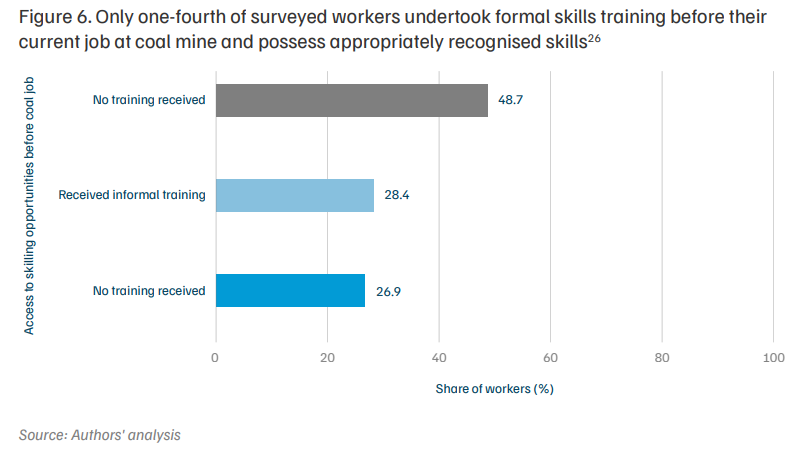
A small proportion of workers underwent formal skills training before working in coal mines and possess appropriately recognised and certified skills. Figure 6 illustrates that 26.9 per cent of the surveyed workers reported having undertaken formal skills training before working in the coal mine. Among these, the incidence of formal skills training is highest for mining supervisors (62.6 per cent), followed by general mazdoors (22.8 per cent) and operators and technicians (20.8 per cent). Additionally, 39 per cent of departmental workers reported having undertaken formal training before their current coal job as opposed to 17 per cent of contractual workers. This indicates that only some workers, particularly mining supervisors, appropriately recognised credentials for their skill sets, which can aid them in securing employment in a sector outside of coal mining.
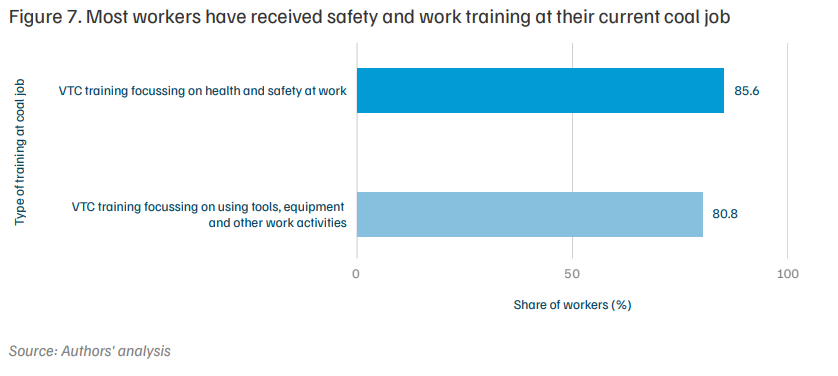
According to the Mines Vocational Training Rules 1966, mine workers are required to undergo training at the vocational training centres (VTC) established by the mining companies. Data from our survey, as illustrated in Figure 7, shows that most of the coal mine workers have received health- and safety-related training and work training at VTCs. However, this type of job-specific training is not sufficiently recognised or acknowledged outside the coal mining sector, and may not aid workers in securing employment outside of coal mines.
A significant number of workers have acquired skills through informal training and experiential learning at their current coal mining jobs and previous workplaces, and these need to be appropriately recognised. The majority of coal mine workers, as illustrated in Figure 6, have reported not undergoing any formal skills training before working in coal mines and are still able to perform their required tasks. This indicates that they have gained their skills through peer-to-peer learning at their current workplace, and even at previous jobs, as indicated in the quotes below.
“Initially, we used to watch others doing it, how they were working, how they were tightening screws, and how they were installing things. We learnt by observing.”
A contractual electrician working at an opencast mine
“I learnt this work as a helper to the other operators who were working here. From seeing the others work and the way they work, I have learnt the work.”
A contractual dozer operator working at an underground mine
Data from our research shows that workers value this experiential learning, as evidenced by 89 per cent of workers perceiving they possess the necessary work experience to secure a new job in an alternative sector. This perception is held by workers across various mining operations, as illustrated in Figure 8. This underscores a need to appropriately recognise the skill sets of coal mine workers that they perceive will be useful should they seek employment outside the coal mining industry. Furthermore, in our consultations with employers in the growing alternative sectors of the state, we noted that large-scale manufacturing and service enterprises in economic sectors such as metals and automotive consider workers’ experience letters from previous employers when hiring for semi-skilled and skilled roles. This further emphasises the need to appropriately recognise workers’ skills developed through work experience at the coal mines.
Workers’ perceptions regarding upskilling
A significant proportion of coal mine workers demonstrate a willingness to upskill, which can be utilised while designing effective just transition pathways for workers. Nearly 61 per cent of the surveyed workers indicated a need for further training to enhance their skills for their current roles at the coal mine. Additionally, nearly 75 per cent of workers, who have not previously undergone any formal skills training, have shown interest in undertaking formal training now. Workers show an overall willingness to undertake formal skills training as they perceive several benefits, as illustrated in Figure 9.
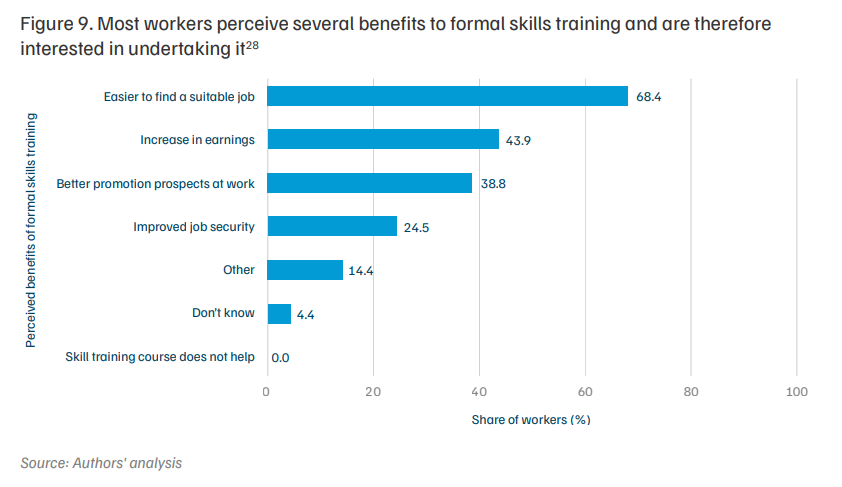
Despite most of the surveyed workers being middle-aged, they are open to further training. Middle-aged workers (30 –45 years) comprise 46.3 per cent of the workers in our sample, while 27 per cent are between 18 and 29 years, and 26.7 per cent between 46 and 60 years. Literature notes that middle-aged workers often struggle to balance family responsibilities and maintain income, which makes it difficult for them to undertake long-term retraining programmes (Future Skills Centre 2023). In line with secondary literature, our survey shows that at least 11 per cent of the workers reported no time due to work and family responsibilities as barriers that prevent them from participating in formal skills training programmes. Despite this, most workers, including those who are middle-aged, recognise the benefits of formal training, as illustrated in Figure 9, and express interest in pursuing it. This indicates that upskilling and reskilling programmes for coal mine workers should be designed to accommodate their work schedules during their training.
Contractual workers show a greater inclination towards further training and upskilling opportunities. Data from our survey, as illustrated in Figure 10, shows that a greater share of contractual workers have expressed a need for more training for their current role at the coal job and also in undertaking formal skills training, including training opportunities outside the job.
This greater interest stems from the limited access to such opportunities for contractual workers, both prior to and during their employment at coal mines. While 39.2 per cent of departmental workers reported receiving formal training before their current job, only 17 per cent of contractual workers had similar experiences. Although basic VTC training is mandatory for contractual workers, they are not required to undertake any other additional specialised training, unlike departmental workers, who primarily benefit from specialised training at institutions like the Belpahar Training Institute. Furthermore, the inherent job insecurity and career uncertainty faced by contractual workers incentivise their participation in formal training programmes aimed at skill enhancement.
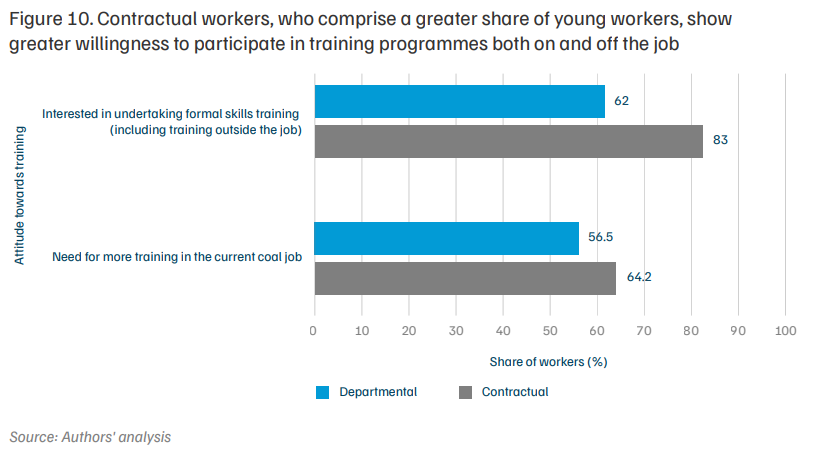
3.2 Informing job transition through worker preferences
This section examines workers’ preferences and perceptions regarding employment in alternative sectors. Subsection 3.2.1 offers an analysis of how various interconnected factors— such as coal mine workers’ current compensation, their perceptions of wages and benefits in alternative sectors, and job satisfaction in their present roles—collectively shape their preferences and influence their willingness to pursue job opportunities in those alternative sectors. Subsection 3.2.2 presents findings from our conjoint experiment conducted during the survey. Together, these analyses shed light on the key factors that can ensure a worker’s preferences-based job transition in a just transition context.
Workers’ wage and non-wage preferences
Most coal mine workers perceive that they will earn lower wages outside the coal sector, thereby complicating a wage-matched transition. An assessment of workers’ responses regarding what local people of the same age group earn in alternative sectors indicates that most coal mine workers earn more than those working in other sectors in the region, or even in their hometowns. Building on this knowledge, the majority, nearly 79 per cent of the surveyed workers, perceive that they will earn lower wages if they work in any other job besides coal mining today. In fact, most coal mine workers, regardless of their contract type, i.e., 82 per cent of departmental and 76 per cent of contractual workers, hold the perception that wages are lower in alternative sectors. Data from our survey in Figure 11 illustrates this further for workers across various mining operations.
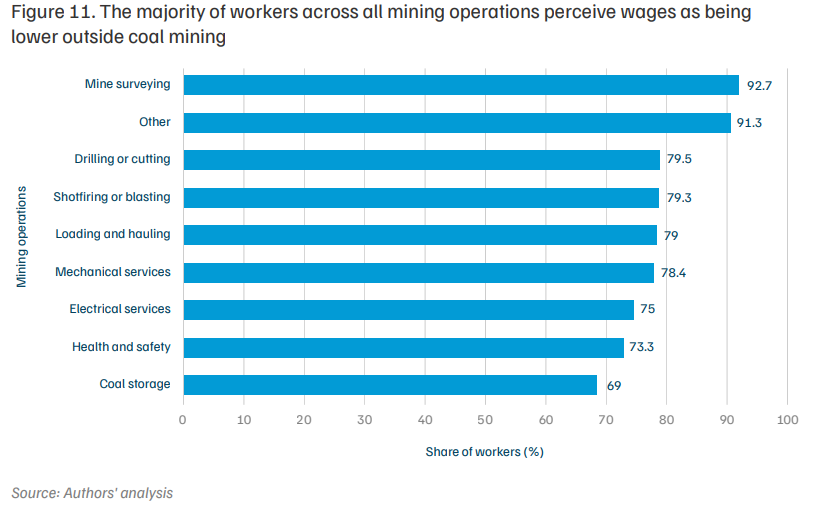
Furthermore, our survey data on coal mine workers’ perception that they will earn lower wages outside coal mining aligns with wage data from the PLFS. We compared the monthly salaries and wages of the surveyed coal mine workers with the salaries and wages of workers from different sectors of the economy using data from the PLFS. Figure 12 illustrates this comparison.
Compared to regular salaried and casual wage workers employed in various sectors of the economy, a significantly smaller proportion of surveyed coal mine workers earn INR 15,000 or less per month—none of the departmental workers and 19.8 percent of contractual workers. Departmental workers clearly earn more than their counterparts in other sectors, with a typical departmental worker earning over INR 60,000. While contractual coal mine workers earn substantially less than their departmental counterparts, they still earn more than casual workers in other sectors of the economy. A contractual coal mine worker typically earns between INR 20,000 and 25,000 per month, whereas most casual workers earn less than INR 15,000. This indicates that most coal mine workers earn more than their counterparts in other sectors; contractual coal mine workers are protected against lower wages as well.
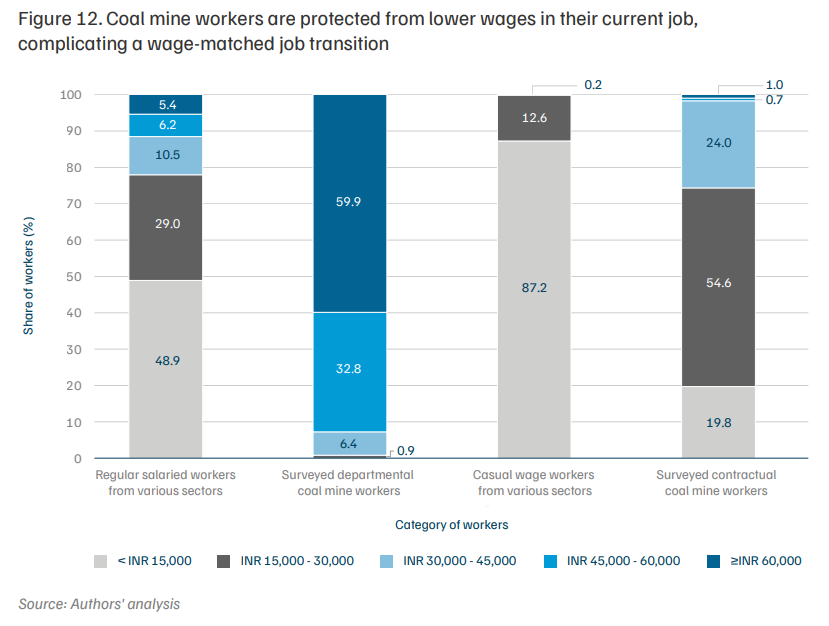
Our survey data reveals that, among other factors, the prospect of higher pay is a crucial consideration for coal mine workers when thinking about switching jobs. However, the workers’ perceptions in our survey and the PLFS data both indicate that coal mine workers earn relatively more than their counterparts in other sectors. This presents a challenge in ensuring a fair job transition that offers wages comparable to or higher than coal mine workers’ current earnings.
“If we get good facilities, then we will go, but no one can pay more than what a coal mine pays.”
A departmental mechanical fitter working at an opencast mine
“If any company gives us INR 2,000 more, we will not go. We have been with this company for more than five years. Unless there is a huge salary increase, we won’t be interested in going to other places.”
A contractual dozer operator working at an opencast mine
The primary reasons for coal mine workers being paid more include positioning their pay as a premium for the hazardous and dangerous work they do daily, and the fact that workers have greater bargaining power due to collectivisation and unionisation.
Coal mine workers will need to secure high-paying jobs in alternative sectors to fulfil their wage preferences. Workers have expressed their preference to transition to alternative sectors that offer higher wages. Given that the current earnings of most coal mine workers surpass those of workers in comparable alternative sectors, it is imperative to establish mechanisms that enable them to achieve their desired wage levels. One way to achieve this is through upskilling, which can enable workers to transition into roles that require a higher level of skill than their current positions. This advancement not only increases their competencies but will also position them to earn wages that surpass those of their existing jobs. Workers involved in mining operations that are less specific to the mining sector, such as electrical, mechanical, loading, and hauling services, who perceive greater transferability of their skills to other sectors, can be upskilled for higher-paying jobs. Conversely, workers involved in mining operations such as blasting, land surveying, drilling, and cutting, who perceive the transferability of their current skills as limited, will need extensive reskilling support. This reskilling should focus on helping them secure better-paying jobs in alternative sectors. Other than upskilling and reskilling workers to secure jobs with higher pay, other measures, such as forming workers’ collectives to bargain for better wages, can also be explored.
Contractual workers earn much less than departmental workers, giving them more wagematched employment options in alternative sectors. The monthly salary distribution data from our research, shown in Figure 13, reveals significant disparities between the income levels of departmental and contractual workers, to the extent that the monthly salary range for departmental workers begins where it ends for contractual workers.30 Nearly 90 per cent of contractual workers earn between INR 10,000 and INR 40,000 per month, with the largest share of workers (21 per cent) earning between INR 15,000 and INR 20,000. In contrast, over 90 per cent of departmental workers earn more than INR 40,000 per month, with the largest share of workers (27 per cent) earning more than INR 80,000. As departmental workers earn significantly more than contractual workers at the same hierarchical level, locating alternative job opportunities where the salary matches or is higher than the current pay will be much more difficult for this category of workers.
Furthermore, data from our research shows that departmental workers comprise a greater share of middle-aged and older workers in comparison to contractual workers, who include a greater share of young workers. In this context, offering voluntary retirement options with associated benefits and suitable pension packages can be an effective solution to minimise wage-related disruption for departmental workers, particularly those nearing retirement. Given that coal demand in India is projected to peak within the next two decades, most of the older workers will likely retire before the full implementation of the transition plan. Therefore, the transition planning should prioritise the mid-aged and younger workforce.
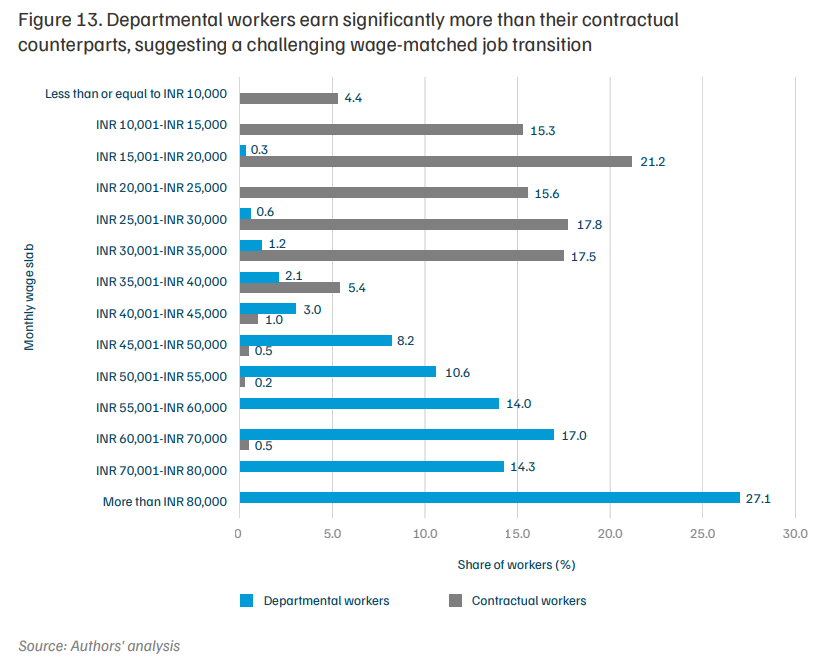
Coal mine workers receive a variety of non-wage benefits, suggesting that jobs in the alternative sector will need to offer at least similar benefits. Most of the surveyed coal mine workers reported receiving a variety of non-wage benefits, such as a provident fund, healthcare facilities for self and family, housing facilities, utility services such as water, electricity, and gas, education allowances for children, bonuses, and travel allowances. Furthermore, our research shows that most workers perceive that their counterparts in alternative sectors within the region do not receive comparable benefits. This suggests that for workers to transition, jobs in the alternative sector must provide non-wage benefits comparable to those currently received, as these benefits are a significant part of their overall compensation.
Figure 14 illustrates the benefits received by contractual and departmental workers. Compared to departmental workers, a lower proportion of contractual workers reported receiving benefits, particularly in areas related to family support, such as education for children and healthcare for family members. Even the quality of these benefits varies significantly; for instance, within housing, departmental workers receive a quarter, while contractual workers must make do with an allocated bed space in a cramped room shared among 6–10 workers. However, most contractual workers believe that the benefits they receive at their coal mine jobs are not available in other sectors.
“If we move for a job anywhere else, we won’t get better facilities than here. We have so many facilities here… we get food, a vehicle comes daily to take us and bring us back, and everything is provided.”
A contractual blasting helper working in an opencast mine
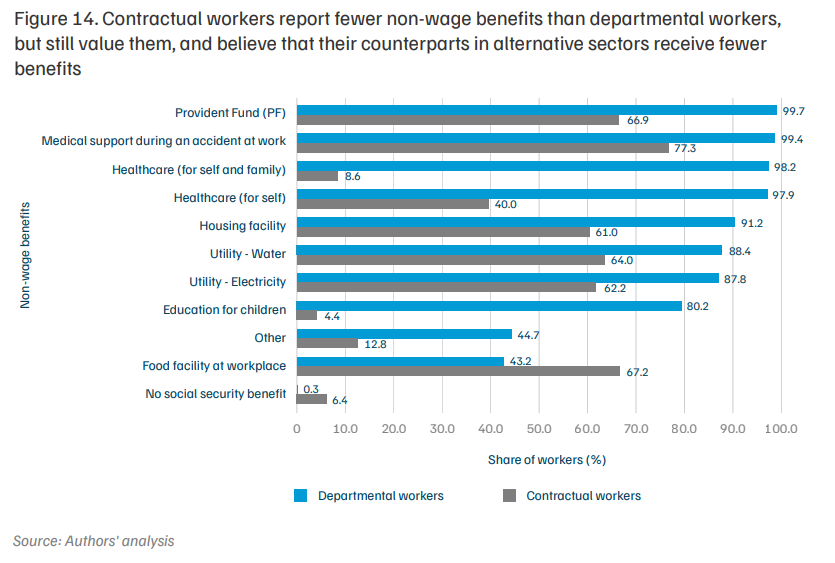
Employment opportunities in the alternative sector will need to become attractive to coal mine workers, who indicate high overall job satisfaction in their current roles. Figure 15 illustrates that the majority of workers, including both departmental and contractual, have reported satisfaction with their current job at the coal mine. This is a challenge for transition planning as it indicates difficulty in identifying alternative employment opportunities that these workers would find equally or more appealing than their current roles in coal mining.
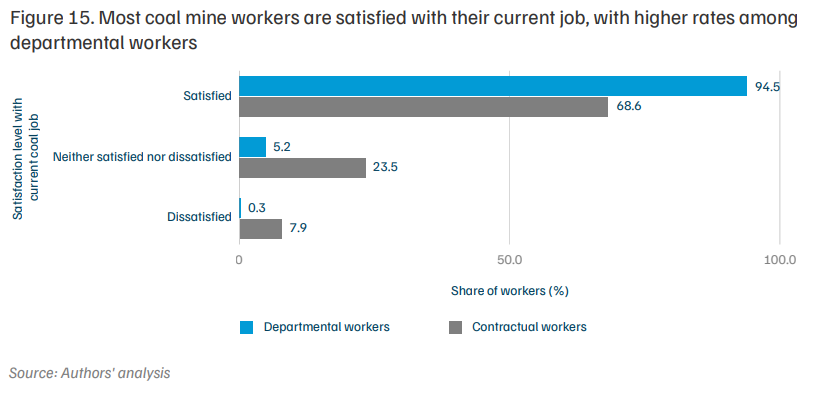
Our research further breaks down workers’ satisfaction into specific job characteristics. A significant proportion of the surveyed workers, as illustrated in Figure 16, expressed satisfaction with various factors, including timely wage payments, job security, work hours, wages, benefits, workplace safety, training opportunities, the distance between their home and workplace, prospects for promotion, and the presence of a labour union. While the satisfaction rate among contractual workers is lower than that of departmental workers (among whom nearly all workers report satisfaction), the majority of contractual workers still express satisfaction with most job characteristics. In particular, satisfaction with benefits and the labour union is relatively lower amongst contractual workers.
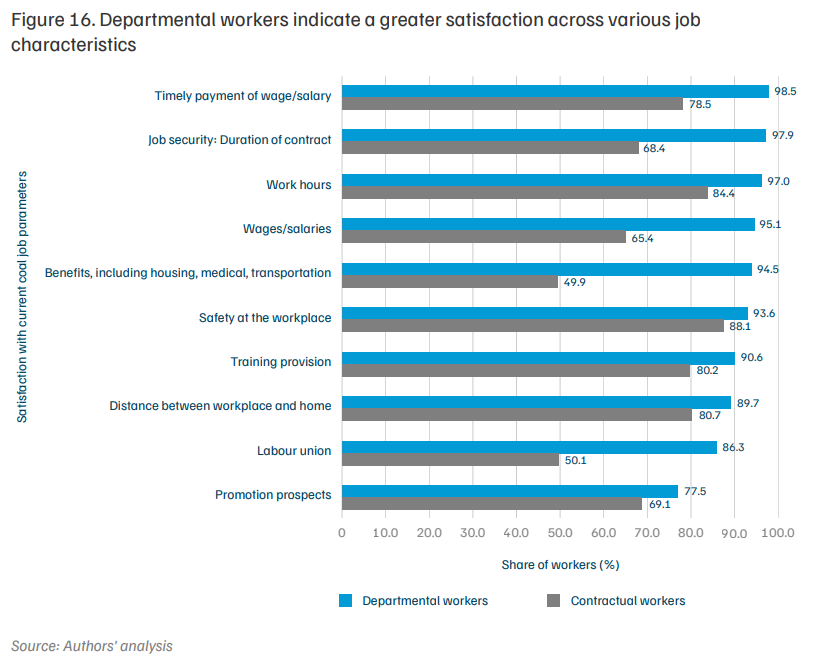
Key factors that inform coal mine workers’ job preferences
We conducted a conjoint experiment to understand and analyse workers’ preferences for jobs in alternative sectors vis-a-vis their current employment. This experiment involved asking coal mine workers to choose between two hypothetical job profiles. Each job profile presented to the workers for selection had descriptions of six job-related features (or attributes) that varied randomly along a finite set of choices (or levels), as described in the methods chapter.
Analysis of workers’ choice from the experiment, as illustrated in Figure 17, indicates that:
• Workers show a preference for the coal sector over any alternative included in our experiment, such as handicrafts and carpets, automotive, tourism and hospitality, construction, iron and steel, textile, green jobs, and food processing. While the odds of a coal mine worker picking an alternative sector over coal fall across all options, the strongest preference to not work in an alternative sector is observed for the construction sector. The odds of job selection decrease by 94 per cent when a coal mine worker is offered a job in the construction sector, compared to a job in coal mining. It should be noted that this preference of workers is exclusively their sectoral preference, which may be rooted in their sense of belongingness to the coal sector and the inertia attached to it.
• We found that workers are sensitive to their monthly income. Compared to a job paying INR 15,000 per month, a job paying over INR 60,000 a month has 264 per cent higher odds of being chosen by a coal mine worker.
• Workers prefer jobs with longer contract duration. The odds of job selection increase by 38 per cent with a contract of two or more years as compared to a job where the contract duration is less than one year.
• Workers prefer jobs that offer training. The odds of choosing a job increase by 28 per cent when a coal mine worker is offered an opportunity with training requirements of three months or more, compared to a job with no training.
• Regarding workers’ location preferences, the odds of job selection decrease by 54 per cent when a coal mine worker is offered a job outside the state (Odisha) compared to a job within the same town.
• Workers prefer jobs that offer healthcare benefits for themselves. The odds of job selection increase by 11 per cent when a coal mine worker is offered a job with healthcare for self, compared to a job offering utility benefits (electricity, water, and gas).
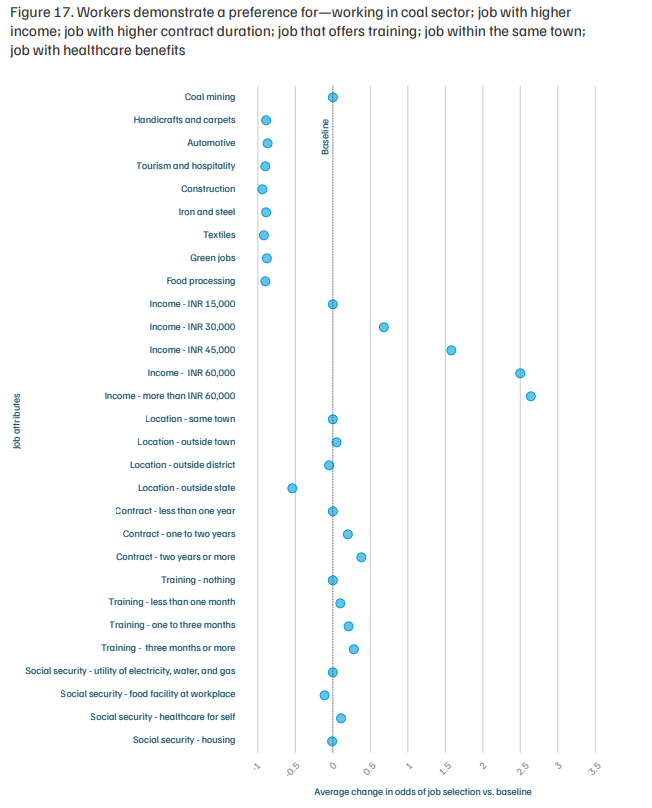
3.3 Examining the need for economic diversification
Building on the skills and preferences outlined for job transition in the previous sections, Subsection 3.3.1 examines the alternative employment opportunities available in the local area around coal mines. Subsection 3.3.2 further combines this discussion with the workers’ stated openness or reluctance to relocate for work, thereby helping to understand the role that economic diversification can play in enabling localised job transition.
Existing employment landscape in the region
Although workers in certain mining jobs think they can work in alternative sectors based on their current skills, they perceive job opportunities as being limited outside coal mining and coal-based industries in the local area. Jharsuguda’s economy has long been shaped by its mineral wealth, most notably coal, along with other minerals such as quartzite and fire clay. The presence of these minerals has anchored the district’s industrial development and economic growth for decades. Since its establishment, the Mahanadi coal belt has supplied raw materials to local industries while engaging a significant portion of the local workforce (Jharsuguda District Profile n.d.). Consequently, our research indicates that employment outside of coal mining is primarily concentrated in coal-related industries such as steel, aluminium, and brick kiln factories in the region. Table 7 shows the most common responses workers mentioned regarding the work or sectors that local people in the region are involved in, besides coal mining. Very few of the surveyed workers talked about the existence of jobs in manufacturing, food processing, packaging, and hotels. Similarly, only a few workers mentioned green jobs like those in the solar industry and hydropower, suggesting limited employment opportunities in these sectors in the region. Building on this knowledge, data from our quantitative survey shows that nearly 61 per cent of the surveyed workers perceive that there are not enough work opportunities in the local area if they were to seek employment outside of coal mining today.
| Existing work opportunities in the region reported by workers | Sector |
|---|---|
| Vedanta, Aditya Birla, MSD, Tata Steel, and Bhushan Power and Steel Limited (BPSL) | Metals—aluminium and steel |
| Tata Refractories Limited | Brick kilns |
| National Thermal Power Corporation (NTPC), Odisha Power Generation Corporation Limited (OPGC), along with power plants operated by Vedanta, Aditya Birla, Tata Steel, BPSL | Thermal power plants |
| Construction jobs | Construction |
| Small shops and businesses, including general and convenience stores, restaurants, and stationery shops | Self-employment |
Source: Authors' compilation
Building local alternative opportunities aligned to skills and preferences
A notable share of workers is not open to relocating for a new job, highlighting the need for economic diversification in the region. Nearly 45 per cent of the surveyed workers are natives of the same district, i.e., Jharsuguda, followed by 20 per cent from different districts in Odisha. The rest, 35 per cent, are migrants from different states. Literature notes that workers’ migration preferences are shaped by their migration history and ties to their native place, with prior migrants more open to relocation than those rooted locally (Shilpi and Harris 2021). Data from our survey shows that nearly 49.5 per cent of the surveyed workers are not open to relocating to a different place for a new job. In line with observations made in secondary literature, nearly 70 per cent of these workers are natives of Odisha, i.e. they are from Jharsuguda or a different district within Odisha. This suggests that relocation constraints are stronger for Odisha natives who have mainly lived and worked locally, and they may require localised alternative work arrangements. Furthermore, on disaggregation across type of contract, our survey data shows that nearly 68 per cent of the workers who are not open to relocation are departmental workers, the majority of whom, nearly 81 per cent, are workers from Odisha.
In conclusion, we note that despite a significant share of workers perceiving alternative job opportunities as being limited locally, many workers, especially natives of the state, demonstrate a preference not to relocate for employment. This underscores the need for targeted efforts to diversify the regional economy in the district, while ensuring workers’ livelihoods are central to these efforts. This can be achieved by identifying alternative sectors to diversify into, based on the coal mine workers’ existing skills and their wage and non-wage preferences.
“I do not want to leave this place… those who came from far away might go because they are staying away from home anyway… but we locals won’t go. Our homes are nearby, so why go elsewhere?”
A contractual blasting helper working at an opencast mine
3.4 Discussion on challenges and enablers for ensuring smooth job transition
Transition planning for coal mine workers requires a comprehensive approach that prioritises their interests. Despite the wage gap with other sectors, limited local alternatives, and reluctance of workers to relocate, there are also signs of resilience and adaptability among coal mine workers that can be harnessed to enable transitions. It is crucial to identify and resolve these challenges and vulnerabilities while simultaneously utilising existing enablers to facilitate a smoother transition for these workers. This section examines these challenges and enablers, and discusses ways to, respectively, resolve and build upon them.
Working in an alternative sector is not a new prospect for coal mine workers, as nearly two-thirds of the respondents have previously worked outside of coal mining. These include departmental and contractual employees across the different levels of hierarchy (general mazdoors, operators and technicians, and supervisors). This suggests that a notable share of coal mine workers have experience navigating work opportunities and shifting jobs across sectors.
The alternative employment options most readily available to workers based on past work experience are either unfeasible or undesirable. Figure 18 illustrates the sectors where these workers have previously worked, and shows that 31 per cent have worked in agriculture, and 24 per cent in construction. The next largest category, at 22 per cent, is ‘Others’; most of the workers who opted for this were self-employed. Fewer individuals have worked in sectors such as food processing, green jobs, and textiles. This indicates that if workers in coal mining need to transition to a non-coal sector, most are likely to find opportunities in the agriculture and construction sectors.
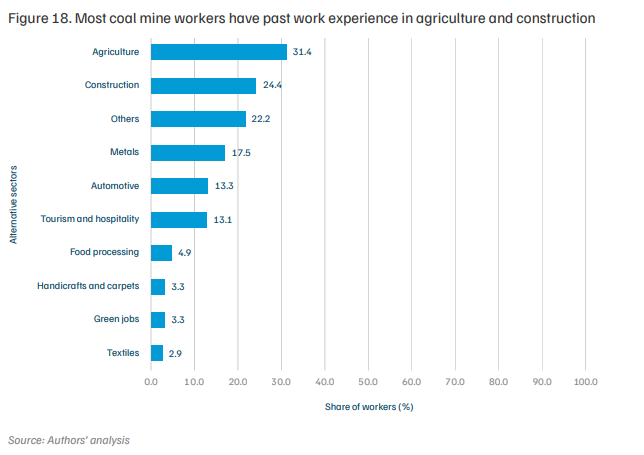
In fact, it has been noted in literature that many coal mine workers displaced by mine closures, including in Assam, shifted to agriculture in the absence of other local employment opportunities (Chatterjee et al. 2022). Additionally, coal workers in Jharkhand have identified agriculture and allied sectors as their first choice if the mines they work at close (Climate Trends and EY 2023). This suggests that agriculture has been one of the major fallback alternative employment options for coal mine workers, due to their existing agrarian roots as well as the lower entry barriers compared to any other organised sector. However, there are challenges associated with agriculture as an alternative employment option for coal mine workers, given factors like high disguised unemployment, and lower and uncertain incomes (Bhattacharjya et al. 2021). Furthermore, as noted in Section 3.2.2, our conjoint experiment indicates that coal mine workers demonstrate a strong preference for not working in construction despite transferable skills and prior work experience in the sector.
However, the positive implication of many workers having worked outside coal mining is that they have experience moving across sectors. Literature indicates that informal social networks— friends, family, and acquaintance with labour contractors—often facilitate this cross-sector labour mobility (Afridi and Dhillon 2022 and Munshi 2014). In line with literature, our survey data shows that 52 per cent of workers continue to maintain access to contacts, networks, and references that can aid in securing a new job, and 64 per cent have the access to the means that can help in finding out about job vacancies, such as job adverts in newspapers and through mobile phones. However, it should be noted that, compared to their departmental counterparts (39.8 per cent), a higher proportion of contractual workers (62 per cent) have reported access to informal social networks, which can be useful in connecting them to alternative employment opportunities. Data from our survey further reveals that close to 60 per cent of general category workers reported having access to contacts, networks, or references if they were to look for a job outside of coal mining today. In comparison, 43 per cent of workers in the Scheduled Caste (SC) category, 44.6 per cent among Scheduled Tribes (STs), and 54 per cent in the Other Backward Classes (OBC) category workers reported the same.
Employers use a variety of methods, including local informal social networks, to locate and hire workers, but this is mostly for unskilled and semi-skilled roles in some of the alternative economic sectors, such as metals (iron, steel and aluminium), automotive manufacturing, and food processing, within the medium and large-scale enterprises in the state31. This suggests that while many workers, especially contractual workers, have access to local social networks for finding and securing alternative employment, these options may not be preferred. This is because unskilled, low-, and semi-skilled jobs often offer lower wages than their current coal mining positions. Therefore, it will be necessary to connect workers with suitable alternative sector jobs that match their skill level and, consequently, fulfil their wage preferences.
This indicates that while workers can envision working in alternative sectors and possess existing networks outside the coal mining sector, these networks can primarily facilitate an organic job transition and not necessarily a fair transition that enhances the workers’ socio-economic status. Therefore, it is essential to diversify the economy and develop attractive alternative employment opportunities in sectors that are aligned with workers’ skills and preferences, rather than relying solely on existing fallback alternative employment options. One way to enable and approach a skill-based job transition for workers is by leveraging digital infrastructure and the workers’ widespread ability to access the internet via mobile phones.
Drawing inspiration from this use case, we have built the Skills Matching for Accelerated Role Transition (SMART) platform at the CEEW in collaboration with the ADB. This AI-driven jobs- and skillsmatching platform utilises semantic embeddings and machine-learning algorithms to identify near-skill adjacencies between declining and emerging sectors32 (CEEW 2025). It indicates that the iron and steel, food processing, and automotive sectors, amongst the growing alternative sectors in Odisha as identified in our study, provide a high skills match for mining sector jobs, as illustrated in Figure 19.
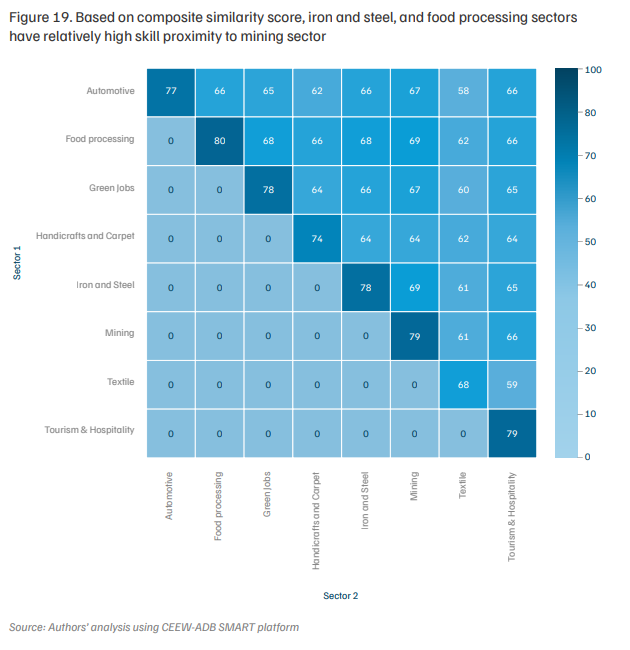
As an illustrative example, we used the SMART platform to present the closest-matching jobs for certain coal mining roles in the identified emerging alternative sectors of Odisha in Table 8.
| Mining job | Alternative sector | Closest matching job title | Similarity score |
|---|---|---|---|
| Mining mate / sirdar | Automotive | Electric vehicle service technician | 74 |
| Food processing | Sugar processing operator | 76 | |
| Green jobs | Solar photovoltaic (PV) installer | 72 | |
| Handicrafts | Quality checker—stonecraft | 72 | |
| Iron and steel | Housekeeper—mechanised equipment | 80 | |
| Textile | Jute manufacturing technician | 52 | |
| Tourism | Food & beverage service assistant | 75 | |
| Assistant—opencast | Automotive | Automotive conventional machining tech | 75 |
| Food processing | Assistant sorter and grader—fruits & veg | 78 | |
| Green jobs | Biomass depot operator | 76 | |
| Handicrafts | Assistant leather toy maker—artisan | 79 | |
| Iron and steel | Helper—plant operations & maintenance | 89 | |
| Textile | Open-end spinning tenter | 80 | |
| Tourism | Kitchen helper | 78 |
Source: Authors' compilation
This suggests that decarbonising the region’s large carbon intensive industrial sectors, particularly iron and steel, automotive, and allied heavy manufacturing, is therefore not only an emissions imperative but also a practical pathway to create skills and wage-matched, largescale employment for coal mine workers. CEEW’s Green Odisha analysis (Jain and Jhunjhunwala 2025) shows that targeted interventions—for example, incentives for green manufacturing, deployment of renewable energy and green hydrogen, and clustering of equipment and component production—can unlock sizeable, higher-quality local jobs and attract investment into the region. Aligning mine-closure and worker-transition planning with these green valuechain opportunities, together with recognition of prior learning (RPL) accreditation and targeted upskilling, will help convert the skills proximity identified in this study into durable, well-paid alternative employment.
Departmental workers have access to higher financial capital, which can help them during the job transition process. Conversely, contractual workers have limited access to financial resources and will need greater financial support during the job search. Data from our quantitative survey shows that 86.2 per cent of the workers perceive that they will face financial difficulties during a job search in alternative sectors. According to what the workers have highlighted, these financial constraints extend beyond the loss of current wages, and encompass the potential need to pay bribes to secure new positions through informal networks. The possibility of facing such financial constraints actively shapes workers’ decisions and their ability to pursue new employment opportunities (Kaur et al. 2022).
“My friends who work at steel factories in the region told me that the recruiters ask for bribes in return for a job. Giving bribes for a job is a major problem that people face in this region.”
A departmental operator at an opencast mine
“The major difficulty that people in this area face while looking for a job is the need to pay bribes.”
A contractual welder in an underground mine
Furthermore, our survey data shows that the majority of the surveyed workers, 94.3 per cent, depend on coal mining as their only source of income, irrespective of the contract type. In addition, many workers are the sole earners in their families. This highlights the coal mine workers’ extensive vulnerability to transition: without diversified income sources, the workers will find it challenging to absorb the uncertainties that come with switching sectors, forgoing wages during their job search and while undergoing training.
Departmental workers earn significantly more than their contractual counterparts, and benefit from formal written job contracts. Notably, the majority of them—64 per cent—reported having the financial means to start their own businesses. This financial security positions them advantageously as they navigate potential job transitions. In stark contrast, contractual workers face greater financial constraints. With relatively lower earnings and a lack of job security, they possess limited financial resources, making them more vulnerable during periods of change.
Coal mine workers from marginalised castes are more vulnerable to a job transition in the context of energy transition, which calls for dedicated transition planning for them. A fourth or 25 per cent of our study sample comprises general-category workers, while 75 per cent is from backward and marginalised castes, including 37.5 per cent OBCs, 24.4 per cent STs, and 12.3 per cent SCs. As we disaggregated the workers’ caste categories across the three broader job hierarchy levels identified in our study, we found that the STs (38.6 per cent) and OBCs (30.5 per cent) constitute a significant share of general mazdoors, with only 15.8 per cent of general mazdoors reporting being from the general category, as shown in Figure 20. Among mining supervisors, meanwhile, 42 per cent are from general category, and 39.6 percent from the OBCs, 9.9 per cent from the SCs, and 6.6 per cent from the STs.
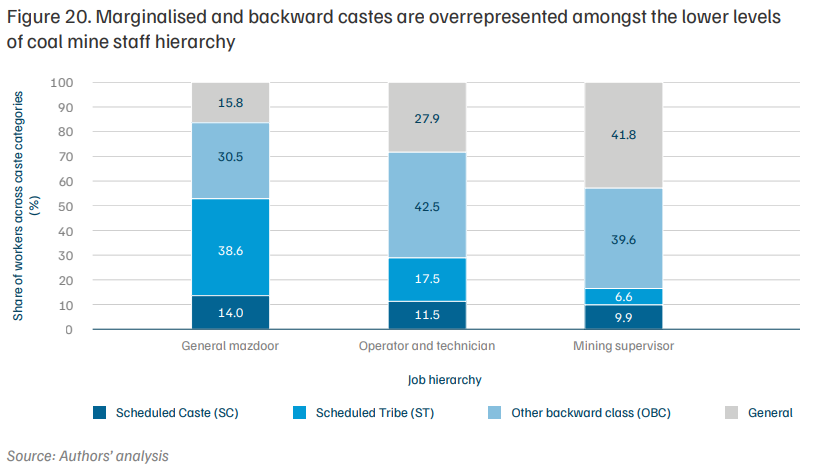
Figure 21 showcases the findings that emerge when we disaggregate educational attainment on the basis of caste category. It shows that STs constitute the greatest share of respondents who reported themselves as non-literate—45 per cent—with the group forming only a 10.8 per cent share among the graduate respondents.
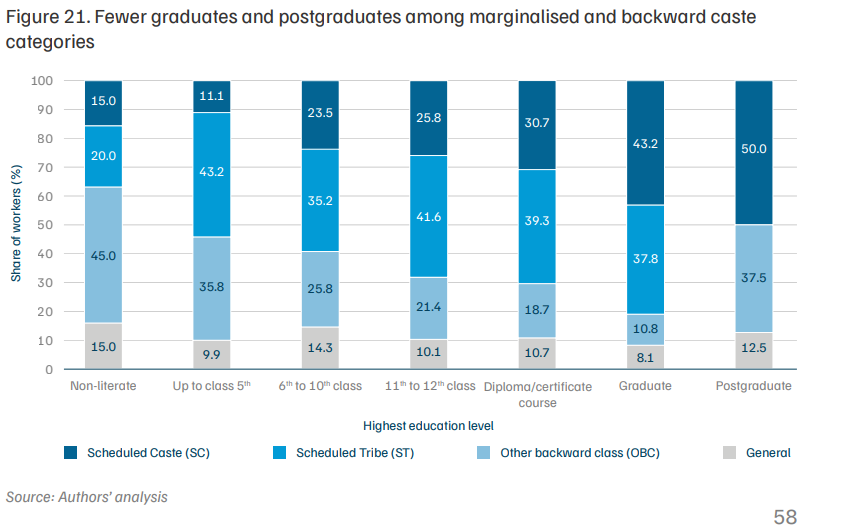
Furthermore, workers from the Scheduled Tribe category constitute nearly half of the surveyed workers in the monthly income slab of INR10,000 or lower and nearly 17 per cent in the INR80,000-and-over category. In comparison to workers from other caste categories, a relatively lower share of Scheduled Tribe workers reported receiving facilities such as housing, water, electricity and healthcare.
This suggests that marginalised communities, especially Scheduled Tribes, enter coal jobs at the lowest rung of the hierarchy and are the least recognised and underrepresented at higher levels of the hierarchy. Their educational attainment, current wages, and social security benefits, and access to contacts, networks, and references, influenced by caste status, will further be a factor that makes fair job transitions in the context of a just energy transition difficult for them. If workers from a certain caste background are unrecognised or less-recognised in their current coal job, then it suggests that their vulnerabilities may be exacerbated as they look for alternative employment, and this demands dedicated transition planning.
The findings of our study underscore the critical importance of a holistic approach to just transition planning, particularly given the heavy economic reliance on coal-related incomes. To ensure effective support for all coal mine workers during this transition, targeted financial assistance mechanisms are essential. However, it is crucial to recognise that contractual workers require more substantial support and social protection as they navigate job transitions. Tailored programmes designed to address their unique vulnerabilities will help facilitate a smoother transition, and foster a more equitable shift away from coal dependency.
While specific operational contexts and workers' job preferences may vary across regions and companies, the fundamental skill set identified in our study provides a reliable foundation for coal mine workers' existing skills and capabilities throughout India. Drawing on the insights and analysis in this chapter, we offer tailored recommendations in the following chapter.
Building on the insights from our survey, this chapter outlines approaches to enabling a skills and preferences based just transition for coal mine workers. These interventions aim to create a transition pathway that respects the workers’ place-based preferences, expands their alternative employment opportunities, and ensures that the job transition enhances, instead of diminishing, their socio-economic status. Each recommendation leverages existing policy frameworks and institutional mechanisms to maximise feasibility and implementation potential.
1. Improve coal mine workers’ mobility across sectors by appropriately recognising their existing skills and learnings. Recognising the existing skills of coal mine workers will increase their mobility across sectors by helping them signal complementary skills and capabilities to employers in alternative sectors. Most of the surveyed coal mine workers have completed primary education, possess basic literacy and numeracy skills, as well as generic skills that position them well to transition into alternative sectors. However, there are limited standardised ways for most of these workers to signal their skills and capabilities to alternative-sector employers. This limitation is particularly relevant since only one-fourth of the surveyed workers underwent formal skills training and possess recognised certification before their coal mining job. To address this, we recommend the following:
• Leverage National Credit Framework for RPL: Currently, CIL conducts recognition of prior learning (RPL) assessments on a need basis for its workforce through the Skill Council for the Mining Sector (SCMS). While useful within the coal sector, they have limited value when workers seek employment elsewhere, since they do not signal the transferability of underlying skills. A comparison of Mine Electrician QP and Smart Grid Technician QP illustrates this gap as both include the employability skills NOS (DGT/ VSQ/N0101) as a compulsory component, indicating that mine workers already hold cross-sectoral skills yet have no mechanism to signal them (SCMS Mine Electrician n.d. and Power Sector Council Smart Grid Technician n.d.). Thus, we recommend a creditbased approach as highlighted by the RPL guidelines 2023. It provides an approach wherein individuals will accrue credits through their participation in RPL aligned to the National Credit Framework (NCrF) principles. Each level of the NCrF corresponds to a set of credits earned by the learner based on learning outcomes rather than learning hours. This provides a nuanced and modular way of recognising skills, rather than relying solely on sector-specific QPs, thus allowing coal mine workers to signal transferable skills and competencies. The guidelines further suggest that credits earned through the RPL assessment should be deposited into the employer’s Academic Bank of Credits (ABC) accounts (MSDE 2023), enabling aggregation of a complete skill portfolio across sectors. This integration of coal mine workers into the digital ecosystem is feasible and recommended, as it utilises their mobile-led digital skills and connectivity, as indicated in our research data. The SCMS should therefore work with CIL to implement the NCrFaligned accreditation of RPL assessments and storage of earned credits in workers’ ABC accounts.
• Strengthening the implementation of on-demand RPL: The Government has started implementing on-demand RPL for workers through Project Implementing Agencies (PIAs). PIAs can be any legal entity, such as Sector Skill Councils (SSC), an industry association, a training partner, or a government body recognised by the National Skill Development Council (NSDC) or MSDE. To incentivise institutions to implement RPL projects, the PIAs receive a payout in the range of INR500- INR1700 per candidate. While this is a baseline incentive, based on our discussion with the stakeholders, it may not be sufficient to make RPL execution economically viable for PIAs. Therefore, we recommend that the funding gap be filled through District Mineral Foundation (DMF) funds, ensuring that RPL is financially feasible for PIAs in coal districts. One method of incentivising the PIAs is to set a floor or baseline amount for a minimum number of participants. For instance, in the Suryamitra Skill Development Programme (SSDP) under MNRE, implementing agencies or training centres receive fixed funding based on batch sizes with a defined minimum number of participants to ensure economies of scale and program viability.
2. Establish collaboration between the state’s industrial development and skill development systems. To prevent skill mismatches in the absence of a skills taxonomy and increase employment outcomes for workers seeking job opportunities beyond the coal sector, stronger coordination and collaboration between the state’s industrial development and skill development systems is imperative.
• The Industries Department, Government of Odisha, in collaboration with industry associations such as the Confederation of Indian Industry (CII), the Odisha Chamber of Commerce, the Utkal Chamber of Commerce and Industry, and district-level agencies such as district industries centres, should undertake systematic mapping of existing and emerging non-coal based industrial clusters at the district level. In parallel, the state’s nodal skill development authority, the Odisha Skill Development Authority (OSDA), should conduct a statewide skill assessment of coal mine workers, focusing on non-executive staff to document their current roles, employment preferences, and technical, generic, and soft skills.
• The findings from both these exercises should be jointly analysed to identify skill complementarities as well as gaps between workers’ existing skills and capabilities and the requirements of local emerging alternative industries. To identify these skill complementarities, AI-led digital tools such as the SMART platform, co-developed by CEEW and ADB, can be used. It can highlight the specific skills workers need to be trained in to transition to an alternative job. For instance, the platform showcases that a Heavy earth moving machine (HEMM) Electrician in the mining sector is proficient in skills related to handling of goods and communicating at the workplace, required to become a solar PV electrical installer. However, they need to upskill in sector-specific skills pertaining to working with specialised machinery and maintaining necessary documentation34. These skills can be imparted through short-term training courses, such as micro-credential (30-40 hours) and nano-credential (5-10 hours) courses.
3. Generate job opportunities in alternative sectors and enhance the attractiveness of the non-coal economy in the region. The surveyed coal mine workers demonstrate strong regional attachment, as nearly two-thirds are native to Odisha, and almost half of the total respondents do not want to migrate to a different place for a new job. Moreover, 61 per cent of the surveyed workers perceive insufficient job opportunities in alternative sectors within the local area.
• The local governments must attract non-coal sectors in the region and build alternative employment opportunities in non-coal sectors. The district administration of Jharsuguda, in collaboration with Odisha’s Industries Department, needs to identify sectors that are feasible in Jharsuguda. The SMART platform can be useful in this process as well.
• Once sectors have been identified, they should leverage Odisha’s industrial policies, such as the Industrial Policy Resolution (IPR) 2022. The IPR provides higher incentives, such as capital investment subsidies (20–30 per cent), and exemptions from stamp duty and electricity duty for certain priority and thrust sectors. Both iron and steel (ancillary and downstream sectors of the metal sector) and the automotive sectors, which indicate a high skill proximity with the mining sector in our research, are included in the lists of priority and thrust sectors (Government of Odisha 2022). Coal mining regions of Jharsuguda and other coal-dominant districts of Odisha should be included under the IPR’s incentive framework and the region-specific industrial development lens, and the policy should be extended to non-coal industries planning to invest in these areas.
• Another policy is Odisha’s MSME Development Policy 2022, which seeks to boost MSMEs through infrastructure support, cluster development, and financial incentives. It also incentivises the formalisation of the workforce by providing 100 per cent reimbursement of employers’ contribution towards the employee provident fund for five years. The district administration of Jharsuguda should extend this policy to all existing and emerging noncoal industries in the district to incentivise employers and encourage the formalisation of the workforce in alternative sectors.
• Another approach Jharsuguda can adopt to make the alternative sector attractive for informal and contractual coal mine workers is by minimising the wage gap between the coal and non-coal sectors. The Government of Odisha, as part of its Apparel and Technical Textiles Policy 2022, is providing a monthly incentive of INR7,000 per female worker and INR6,000 per male worker for a period of five years to eligible industrial units. Such incentives can be extended to existing and new non-coal industries in Jharsuguda and other coal-dominant regions.
A just and equitable coal transition will not only require creating new sources of employment but also ensuring that coal mine workers are able to access them with dignity and fair compensation. Economic diversification in coal districts must be paired with strong skilling and recognition systems that enable workers to carry their capabilities into alternative industries. By strategically attracting sectors with high skill proximity to mining, reskilling and upskilling the workforce for futureready roles, and certifying their prior learning to make skills portable across industries, policymakers can safeguard workers’ livelihoods while advancing the clean energy transition. Odisha’s recent policy innovations offer a strong starting point, but sustained, district-level action will be essential to transform coal-dependent regions into diversified, resilient, and inclusive local economies.
The report aims to address a critical gap in India's just energy transition discourse by understanding how coal mine workers perceive their own skills and their chances of finding alternative employment. Knowing these baseline skills and personal preferences is a prerequisite for effective job transition planning. The study focuses on assessing the skills, preferences and future opportunities of non-executive workers across both opencast and underground mines in Jharsuguda, Odisha.
Workers across various hierarchies possess a strong foundation of generic, technical, and soft skills. The vast majority are financially and digitally literate, meaning they can operate bank accounts and easily access the internet on their mobile phones. General mazdoors carry out basic technical tasks and adhere to safety measures. Meanwhile, operators and technicians demonstrate a firm grasp of complex machinery, and mining supervisors blend this technical expertise with strong people management abilities.
Most of the workforce has developed its technical capabilities organically through learning by doing and peer-to-peer observation at the mines. Only a quarter of the surveyed workers had undergone formal skills training before taking up their current jobs, leaving the majority without officially recognised credentials. Implementing the National Credit Framework for the recognition of prior learning is therefore highly recommended. This will allow workers to aggregate a formal skill portfolio and significantly improve their mobility across different economic sectors.
Coal mine jobs generally offer much higher compensation and better non-wage benefits compared to casual work in other industries. For example, a contractual coal worker typically earns between INR 20,000 and INR 25,000 per month, whereas most casual workers in other sectors earn less than INR 15,000. Departmental workers earn even more, making a wage-matched transition difficult. Consequently, nearly 79 per cent of the surveyed workforce naturally expects to earn lower wages if they move outside the coal sector.
Nearly 61 per cent of the surveyed workers feel there are limited job opportunities outside of coal mining in their local area. Furthermore, a significant portion of the workforce, particularly those native to Odisha, shows a strong reluctance to relocate for new employment. To address this, the report stresses the need to strategically attract non-coal industries to these districts. Using the AI-driven SMART platform, the study identified the iron and steel, food processing, and automotive sectors as having a high skill proximity to mining roles. Decarbonising and expanding these heavy industries locally could provide viable, well-paid alternative livelihoods.
Scaling Green Manufacturing in India

Roadmap of the methodology to assess the climate co-benefits of the SUP ban in Maharashtra
A Financier's Guide to Assessing Viability of Clean Energy-Powered Rural Livelihoods: