Council on Energy, Environment and Water Integrated | International | Independent

Suggested Citation: Kesh, Christi, Srishti Singh, Darshna Singh, Aparna Sharma, Vaibhav Chaturvedi, and Asitava Sen. 2026. How can Carbon Markets Scale Durable Carbon Removal in India? New Delhi: Council on Energy, Environment and Water and Carbon Removal India Alliance.
Achieving the goals of the Paris Agreement will require more than emissions reduction, as legacy carbon dioxide already accumulated in the atmosphere will continue to drive warming unless it is actively removed and durably stored. Durable carbon dioxide removal (CDR), including pathways such as biochar, enhanced rock weathering (ERW), BECCS, and DACCS, is therefore essential alongside deep emissions cuts to meet long-term temperature goals.
Despite growing global momentum, durable CDR deployment remains extremely limited, with less than 0.1 per cent of removals coming from durable methods and high costs constraining scale. Carbon markets can play a critical role in addressing this gap by strengthening demand signals, aggregating finance, and enabling predictable revenue streams for project developers.
India is emerging as a potential supply-side leader in durable CDR, with significant biomass and geological advantages and growing activity in voluntary carbon markets. However, durable CDR remains poorly integrated into national climate policy and market frameworks.
This issue brief examines how carbon markets can enable the scaling of durable CDR in India by addressing key challenges related to definitions, finance, MRV, and policy, while outlining approaches to integrate durable removals into voluntary markets, Article 6 mechanisms, and the evolving Indian Carbon Market.
Achieving the goals of the Paris Agreement will require more than emissions reductions alone. Even under rapid mitigation scenarios, legacy carbon dioxide (CO₂) already present in the atmosphere will continue to drive warming unless it is actively removed and durably stored. The precise scale and role of carbon dioxide removal (CDR) in India’s net-zero pathway remain uncertain beyond afforestation. However, global assessments increasingly conclude that durable CDR, such as biochar, enhanced rock weathering (ERW), bioenergy with carbon capture and storage (BECCS), and direct air carbon capture and storage (DACCS), will be necessary alongside deep emissions cuts to meet long-term temperature goals.
Although large-scale deployment of CDR is expected to become critical closer to mid-century, pathways consistent with the Intergovernmental Panel on Climate Change (IPCC) indicate the need for early investment and scaling in the 2020s to reduce costs, build infrastructure, and avoid future lock-in risks. However, today, less than 0.1 per cent of carbon removals come from novel, durable methods (S. M. Smith et al. 2024), and less than 4 per cent of validated credits for sale on major registries are from durable removals (Carbon Direct 2024); the rest are from avoidance and reduction projects. Durable CDR is therefore scarce in today’s markets, with breakeven costs currently at USD 140–340 per tonne and market prices typically at USD 180–430 per tonne (OPIS (a Dow Jones company) ,CDR.fyi 2025). In this context, carbon markets can play a pivotal role in bridging the financing gap by strengthening price signals, aggregating demand, enabling advance purchase commitments, and deploying complementary policy instruments that improve revenue certainty for durable CDR projects.
India is emerging as a credible supplier in the nascent durable CDR market, with estimates suggesting the country could ultimately provide 10–30 per cent of global durable CDR capacity by 2050 (CRIA 2023), driven by abundant biomass resources, suitable geology, agroclimatic advantages, and large agricultural systems. Durable removal projects – especially biochar and ERW – are reaching early commercial scale. To date, around 2,14,000 durable removal credits have been issued, roughly 1,14,000 tonnes have been sold through offtakes, and about 3,60,000 tonnes were transacted in 2024 alone, primarily to international buyers (Allied Offset 2025).
Globally, CDR is increasingly being integrated into national climate strategies, with several jurisdictions adopting explicit CDR targets and policy frameworks. Evidence suggests that incorporating durable CDR into long-term mitigation pathways can reduce the overall cost of achieving net zero while delivering co-benefits, such as rural income generation, improved soil health, and industrial innovation. Despite growing international momentum and India’s emerging-market position, durable CDR remains poorly integrated in India’s current climate policies. It is referenced only generically in India’s Long-Term Low-Emissions Development Strategy (LT-LEDS), is not explicitly integrated into its Nationally Determined Contribution (NDC), and remains absent as a distinct category in the evolving Carbon Credit Trading Scheme (CCTS).
To identify the entry points for policy action on durable CDR, this issue brief synthesises global policy experience (including developments in the United States [US], European Union [EU], United Kingdom [UK], Japan, and voluntary markets), emerging scientific and market data, and insights from a stakeholder consultation convened by the Council on Energy, Environment and Water (CEEW) and the Carbon Removal India Alliance (CRIA). Stakeholders included project developers, buyers, policymakers and technical experts working on durable CDR in India. The analysis focuses on three cross-cutting challenges- (1) clarifying definitions and taxonomies, (2) strengthening finance and demand predictability, and (3) enhancing monitoring, reporting, and verification (MRV) processes and permanence safeguards. Then we examine how India can embed durable in voluntary markets, Article 6 cooperation, and, in the longer term, within the broader Indian Carbon Market (ICM) architecture.
To meet its net-zero goal, India must develop a National Carbon Removal Strategy (NCRS) that explicitly situates durable CDR within national development outcomes and long-term mitigation strategy. This approach will support India’s development priorities by treating CDR as more than just a mitigation instrument or export opportunity, and by prioritising projects that deliver local co-benefits, such as enhanced rural livelihoods, improved soil health, increased farmer participation, and strengthened local capacity. In the Indian context, approaches such as biochar and enhanced rock weathering offer the potential to combine durable removals with agronomic benefits, air pollution reduction, and domestic value-chain development. Embedding the significance of these outcomes within carbon removal policy design can support credible scaling while ensuring that durable CDR deployment aligns with broader national development priorities. Elements that should be included under the NCRS:
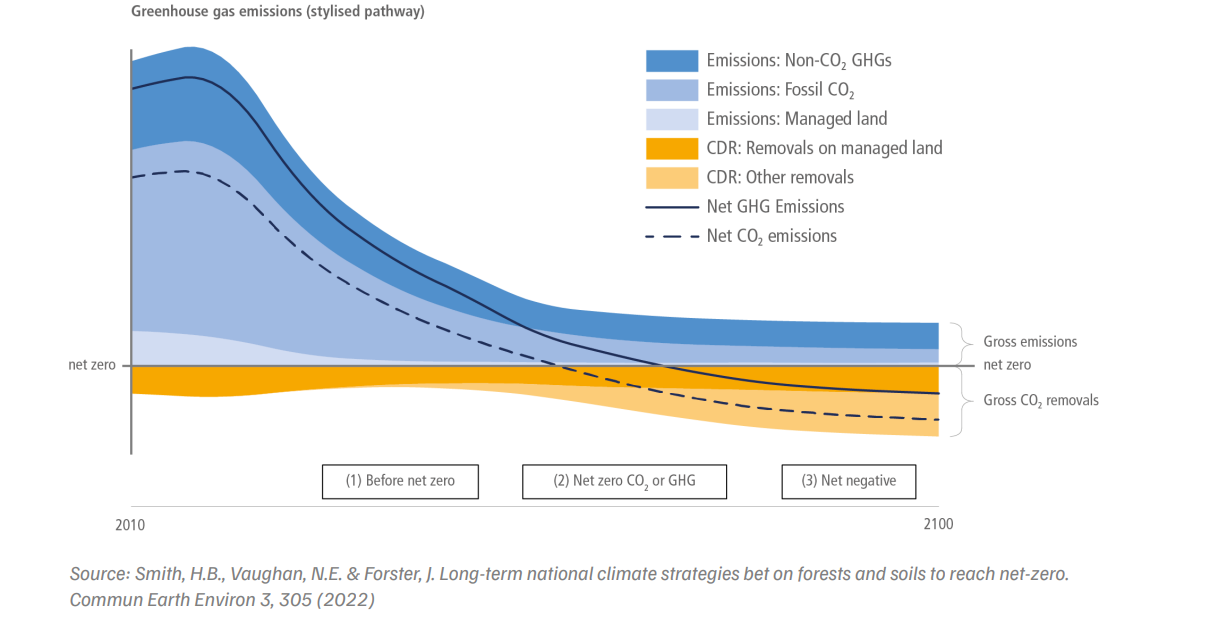
The Intergovernmental Panel on Climate Change (IPCC) defines carbon dioxide removal (CDR) as anthropogenic activities that remove CO2 from the atmosphere and durably store it in geological, terrestrial, or ocean reservoirs or carbon negative products. This includes existing and potential anthropogenic enhancements of biological or geochemical sinks, as well as direct air capture and storage, but excludes natural CO2 uptake not directly caused by human activity (IPCC 2018) Carbon dioxide removal can serve three key functions at 3. Integrate durable CDR into carbon markets, including voluntary markets, such as the CCTS offset mechanism, Article 6 market approaches, and, eventually, as a limited percentage within the CCTS compliance mechanism for obligated entities in the long term. 4. Create enabling conditions for domestic, privatesector-led durable CDR deployment and scaling, aligned with broader development objectives. the national and global levels (H. B. Smith, Vaughan, and Forster 2024).
Figure 1. Carbon dioxide removal (CDR) pathways at the national and global levels
As with project-based voluntary carbon market initiatives, CDR projects must demonstrate the durability of carbon storage and the risk of reversal (permanence) to ensure that the removal is considered truly additional (CRIA 2023). Among these, permanence and additionality remain critical factors to consider in any CDR project. Permanence refers to the duration over which removed carbon remains out of the atmosphere without risk of reversal (IPCC 2022; Allen et al. 2022).
Additionality here refers to the concept that the CO2 removal activity should result in carbon sequestration that would not have occurred in the absence of the intervention. It ensures that credited removals represent real, incremental climate benefits beyond legally mandated or economically inevitable actions.
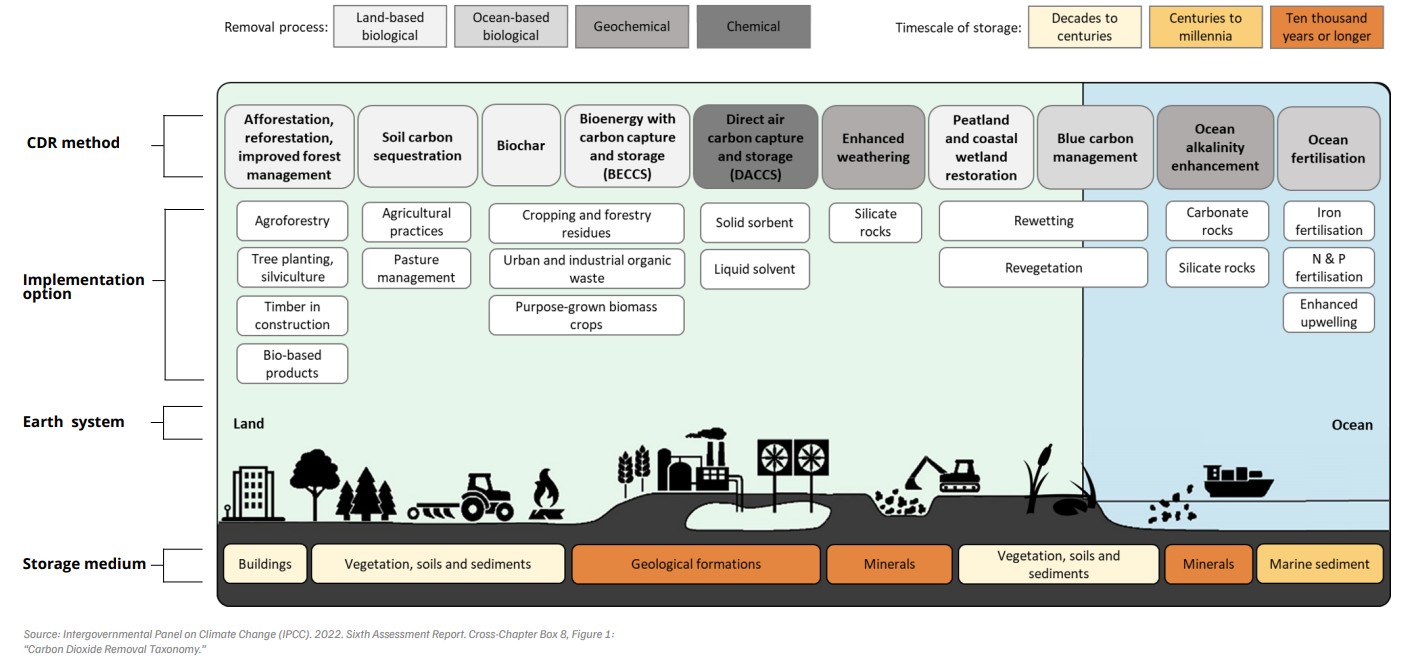
Carbon dioxide removal methods vary based on removal processes, carbon storage duration, technological readiness, mitigation potential, costs, co-benefits, potential adverse effects, and regulatory requirements (IPCC 2022). The literature classifies these methods in various ways, emphasising different characteristics. Some distinctions include nature-based versus engineered/technological approaches, temporary versus permanent storage, and conventional versus novel methods (H. B. Smith, Vaughan, and Forster 2024). The classifications are demonstated in Figure 1
Nature-based or conventional CDR methods are well established, implemented at scale, and commonly reported by countries under land-use, land-use change, and forestry (LULUCF) activities (H. B. Smith, Vaughan, and Forster 2024). This category encompasses afforestation and reforestation, agroforestry, forest management, soil carbon sequestration in croplands and grasslands, and restoration of peatlands and coastal wetlands. Technological or novel methods include all other CDR approaches that store carbon in geological formations, oceans, or products. These methods are less mature and more expensive to implement than conventional approaches, and therefore are currently deployed at a limited scale. Examples include biochar, enhanced rock weathering (ERW), direct air carbon capture and storage (DACCS), ocean alkalinity enhancement, and bioenergy with carbon capture and storage (BECCS).
There is currently no clear scientific or policy consensus on the minimum storage durability required for an approach to qualify as CDR. While millennial-scale storage is often considered the benchmark, guaranteeing such permanence is challenging in practice (H. B. Smith, Vaughan, and Forster 2024). Short-term storage can still contribute to climate goals; however, it is widely accepted that processes that re-release carbon within a year (indicating a high risk of reversal) do not qualify as (Strobel et al. 2023) Existing government policies and voluntary standards set minimum storage thresholds of 25–100 years (H. B. Smith, Vaughan, and Forster 2024). Figure 2 illustrates distinctions among CDR types based on methods, durability, and applications.
Figure 2. CDR methods are categorised by removal process (grey shades) and storage medium (yellow/brown shades), with corresponding storage timescales
Innovative or novel CDR methods offer significant potential to address challenges related to land-use competition, verifiability, and the permanence of sequestration, while also providing distinct societal and environmental co-benefits (CRIA 2023). A diversified portfolio of CDR technologies will be necessary, as different approaches are better suited to different contexts. Shorter-duration, largely nature-based removals can play an important transitional role by lowering near-term atmospheric CO₂ concentrations while durable CDR technologies scale up. India is particularly well-positioned to deploy a mixed portfolio, combining durable methods such as biochar and ERW with cropland management and agroforestry, given its extensive agricultural landscapes and intact ecosystems. Moreover, nature-based removals warrant investment beyond their carbon value alone, as they generate significant biodiversity, livelihood, and development cobenefits.
Currently, novel methods account for less than 0.1 per cent of carbon dioxide removal — approximately 1.35 million tonnes of CO₂ per year, compared to around 2 gigatons (GtCO₂) per year of total CDR deployment (Smith et al. 2024). By 2050, median estimates across multiple Intergovernmental Panel on Climate Change (IPCC) net-zero scenarios limiting warming to below 1.5°C suggest that nearly 10 Gt CO₂ may need to be removed annually from the (“WEF” 2024). Across IPCC’s 1.5°C-aligned mitigation pathways, cumulative carbon removal requirements by 2100 are estimated at 20–660 Gt CO₂ (IPCC 2022). These pathways assume the implementation of CDR at a scale far beyond current deployment levels. Assessments by IPCC indicate that all 1.5°C and 2°C-aligned pathways require large-scale CDR, with cumulative removals of 450–1,100 Gt CO₂ over 2020–2100 alongside deep emissions cuts (Tandon 2024). In contrast, current CDR deployment is around 2.2 Gt CO₂ per year, of which over 99.9 per cent comes from conventional methods.
Durable CDR methods provide benefits beyond carbon removal. Approaches such as biochar and ERW directly impact soil health, crop yields, and water retention (CRIA 2023). Biochar, which is alkaline, and silicate rocks naturally elevate soil pH, thereby reducing soil acidity and boosting plant growth (Beerling et al. 2020). An increase in soil pH increases soil cation exchange capacity, thereby enhancing nutrient retention and availability (Kabir, Kim, and Kwon 2023). Improved soil quality increases crop productivity and helps address concerns about food security. The development and development of CDR approaches also have the potential to generate employment and broader economic benefits (CRIA 2023). Waste resources, such as biomass and construction dust – key feedstocks for biochar production and ERW – if redirected into durable carbon removal pathways, offer substantial potential to avoid emissions and decrease air pollution(Srishti Singh and Ishan Sahajpal 2025) These methods convert high-emission waste streams, such as agricultural residues, organic waste, and rock or construction dust, into productive alternatives, helping reduce biomass burning, absorb atmospheric CO₂, and deliver agronomic benefits.
The global transition to net zero is revealing a critical truth: emissions reductions alone will not be sufficient to limit global warming. Two well-established scientific realities define this challenge. First, rapid and deep emissions reductions remain essential because a substantial share of emitted CO₂ persists in the atmosphere for centuries, continuing to trap heat. Mitigation, therefore, remains the highest priority, addressing the root cause of the problem. Second, the large stock of legacy emissions already accumulated in the atmosphere will continue to raise global temperatures even if new emissions were to cease entirely. This climate–carbon asymmetry demonstrates that mitigation alone cannot limit global temperature rise without being complemented by durable carbon removal (Inman 2008; Solomon et al. 2009).
Scientific clarity of the need for CDR has strengthened over time, and removals have increasingly entered international climate policy. Under the Kyoto Protocol, CDR was first incorporated through afforestation and reforestation activities within the Clean Development Mechanism at the Ninth Conference of the Parties (COP) to the United Nations Framework Convention on Climate Change (UNFCCC) in 2003. Its scope later expanded to include carbon capture and storage (CCS), marking the first compliance-market pathways for engineered removals. The Paris Agreement subsequently embedded removals as central within long-term mitigation by establishing a balance between anthropogenic emissions and removals in the second half of this century (UNFCCC 2015).
Durable CDR is gaining traction in the voluntary carbon market, reflecting its large-scale deployment needs within the global climate regime. Projections indicate strong future global demand (up to 100 Million tonnes of CO2 by 2030) from governments and corporations, driven by the Science Based Targets initiative (SBTi) and corporate net-zero standards (Parry et al. 2024). Despite the growing scientific and policy foundation, deployment of durable CDR remains limited and costly. Developers of engineered and mineralisation-based removals, including biochar, ERW, BECCS, and DACCS, estimate breakeven costs of USD 140–340 per tonne of CO₂ removed, with credit prices commonly at USD 180–430 per tonne (OPIS and CDR.fyi 2025). Current buyer willingness to pay for durable CDR remains far below these levels, creating a significant financing gap. Carbon markets can therefore play a critical enabling role by converting verified removals into predictable revenue streams that can mobilise private capital while complementing public procurement.
At carbon credit prices of around USD 100 per tonne, the global annual market potential for durable CDR is estimated at USD 470 billion to nearly USD 1 trillion (CRIA 2023). For perspective, the upper end of this range (in monetary terms) is about 10 times the trading volume of the EU Emissions Trading System, 5 times global official development assistance, and slightly above 1 per cent of global gross domestic product (GDP).
As global economic activity expands towards midcentury, demand for durable CDR is expected to grow alongside net-zero commitments. Modelling exercises suggest that by 2050, demand for durable removals could exceed supply by 2.7–6.3 times (Mistry et al. 2023), indicating the emergence of a large and potentially supply-constrained market (Goldman Sachs Economics Research 2022).
India is beginning to participate in this emerging durable CDR market. The country is positioned to benefit from both the voluntary carbon market channels and the evolving Indian Carbon Market (ICM), which includes the Carbon Credit Trading Scheme (CCTS) and its offset mechanism. Historically, India accounted for around 20 per cent of registered CDM projects worldwide (UNFCCC CDM Database 2023), making it the second-largest host after China and providing Indian developers with decades of operational experience in carbon markets prior to the Paris-era mechanisms. Available market data indicate that approximately 2,14,000 durable carbon removal credits have been issued from Indian projects, with around 1,14,000 tonnes associated with biochar, largely within voluntary carbon market registries (Allied Offsets 2025). Biochar and ERW now collectively account for most new supply entering the Indian market (Pandey 2025). As of August 2025, there are 49 CDR projects in India, comprising 34 technicalremoval companies and 15 nature-based projects. Project development has been steadily increasing over the past few years, showing a clear upward trend and momentum (Allied Offsets 2025). Estimates suggest that India has the potential to supply 10–30 per cent of global durable CDR capacity by 2050 (CRIA 2023), positioning the country as a potential supply-side leader in a rapidly growing global industry. In the short term, India’s interest lies in mobilising climate finance through durable CDR. To realise this opportunity while maintaining safeguards for high-integrity market development, India must establish clear policy and market frameworks to guide credible and economically feasible scaling.
Different carbon removal approaches play complementary roles across time horizons and deployment contexts. Nature-based and other transitional removals, including afforestation, soil carbon enhancement, and agroforestry, can support near-term climate mitigation by increasing land-based carbon stocks while delivering co-benefits for local communities. Over longer time horizons, durable CDR pathways become essential to address residual emissions and contribute to global-scale long-term temperature stabilisation. India is well positioned to deploy integrated approaches, given the scale of its agricultural systems, including approximately 28 million hectares under agroforestry and extensive cropland suitable for integrating durable methods, such as biochar and ERW, within agricultural and agroforestry landscapes. This highlights the importance of identifying which durable CDR approaches are most relevant for India and how they can be deployed efficiently without displacing investments in nature-based removals or weakening development outcomes.
This issue brief builds on a stakeholder consultation convened by the Council on Energy, Environment and Water (CEEW) in collaboration with the Carbon Removal India Alliance (CRIA), bringing together project developers, policymakers, buyers, and technical experts working on durable CDR in India. We synthesise these discussions with emerging global research to assess India’s readiness and outline actionable policy and market recommendations for scaling high-integrity carbon removals.
Carbon dioxide removal has gained significant momentum following the Intergovernmental Panel on Climate Change (IPCC) Sixth Assessment Report (AR6), which highlighted the need for large-scale deployment of CDR to achieve the Paris Agreement goals. Additionally, CDR must be systematically integrated across climate, land-use, agriculture, biodiversity, energy, and industrial policy domains. While progress has been made in governing research and development for novel CDR approaches, additional policies are required to prevent potential risks, ensure responsible deployment, and foster public participation to meet stakeholder expectations.
Globally, policies are beginning to support CDR on both the supply side (through research and development [R&D], innovation funding, certification, and infrastructure) and the demand side (including targets, market inclusion, compliance mandates, and procurement). Although levels of mobilisation vary, momentum is building rapidly. Scaling CDR will require well-defined, actionable policy sequencing that translates current momentum into concrete development and deployment strategies.
This section explores the global CDR policy landscape and examines how India can leverage these insights to shape its own approach.
United States (US)
Recent legislative changes in the United States have significantly altered the landscape for durable CDR, particularly following amendments to the Inflation Reduction Act (IRA) of 2022. The One Big Beautiful Bill Act (OBBBA), enacted in July 2025, includes modifications and restrictions to the 45Q tax credit — removing several climate-related provisions previously introduced under the IRA while retaining core support for carbon capture ( Library of Congress 2026). Under the updated 45Q structure, projects capturing CO₂ from industrial and power facilities receive a credit of USD 85 per metric ton, while direct air capture (DAC) projects earn USD 180 per metric ton (Carbon Capture Coalition 2025). These credit values apply irrespective of the end use of captured carbon, though new restrictions on foreign entities and slightly reduced incentives apply to certain project types.
As a result, while overall climate ambition in the US has shifted, durable CDR remains supported through direct air capture and utilisation projects. However, due to the changing political economy, it now faces greater uncertainty and lower financial impetus than originally anticipated under the IRA. The USD 3.5 billion Direct Air Capture Hubs Programme has not been officially terminated, but widespread Department of Energy (DOE) staff cuts and a funding freeze have left the initiative in a state of uncertainty (Carnegie Endowment for International Peace 2025).
Several states, notably California, New York, and Washington, are embedding durable CDR purchase requirements within their net-zero and carbon market frameworks, creating explicit long-term demand for highquality removals. California has set a net-zero target for 2045, with 15 per cent of emissions reductions expected to be achieved through CDR (CARB 2022).
In New York, the Carbon Dioxide Removal Leadership Act (CDRLA) establishes a CDR target of 0.1 million tonnes (Mt CO2) for 2025. This target is to increase by 100 per cent annually until 2030, 25 per cent annually during 2030–39, 20 per cent annually during 2040–44, and 10 per cent annually thereafter until mid-century (New York State Senate 2022). Washington’s Climate Commitment Act sets the state’s net-zero target for 2050 and mandates that the State Department of Ecology establish rules requiring allowance (tradeable carbon credit) auctions to include consigned CDR credits (Washington State Legislature 2021).
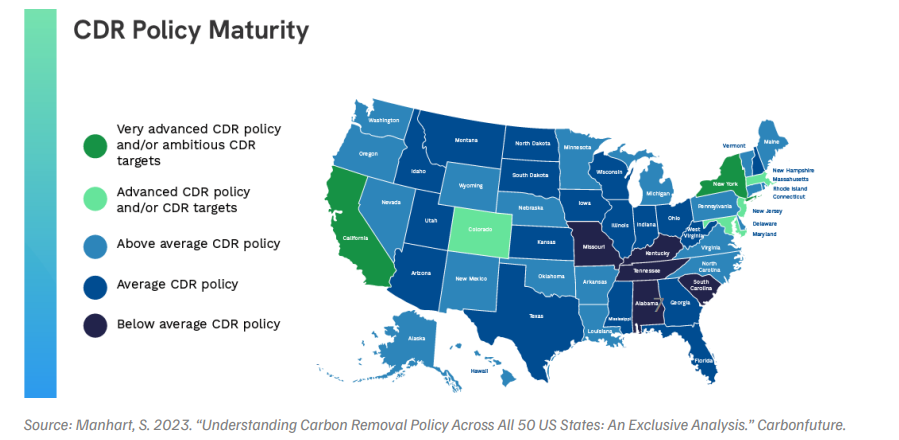
Therefore, while state-level action continues to advance CDR through a set of ambitious policies, federal support is now more limited and vulnerable to political shifts. Figure 3 presents a consolidated map of CDR policy maturity across all 50 states. Recent policy developments in the USA emphasise that sustained progress on durable CDR will require bipartisan consensus, transparent regulations, and continued investment, even as flagship federal support fluctuates.
Figure 3. Map of the 50 US states showing high CDR policy momentum
European Union (EU)
The EU’s approach to CDR is defined by robust standard-setting and targeted innovation, albeit with comparatively lower financial incentives than in the US. The adoption of the Carbon Removal Certification Framework (CRCF) in late 2024 established the world’s first regional standard for certifying and monitoring CDR – including permanent carbon removals (>100 years of permanence), carbon farming (>5 years of permanence), and carbon storage in products (>35 years of permanence). Its goal is to promote the adoption of high-quality carbon removals and soil emissions reductions while aligning with the EU’s biodiversity and zero-pollution (European Commission 2024). This regulatory foundation aims to harmonise approaches across member states and provide a reliable foundation for future market integration and climate accounting.
At the innovation level, the EU Innovation Fund supports innovative technologies, such as carbon capture and use (CCU) and carbon capture and storage (CCS). The fund has awarded competitive grants to demonstrationscale projects, supporting novel CDR technologies within a broader portfolio that also covers CCS and energy storage. In 2021, only one project (BECCS) focused on CDR. Overall, CDR-specific awards still represent a small fraction of the total funding, and most efforts remain at the pilot stage (Eloisa Viloria et al. 2026) Between 2020 and 2023, the EU allocated approximately EUR 657 million to directly support CDR methods through programmes such as Horizon Europe, the LIFE Programme, and the Innovation Fund. This accounts for only about 0.1 per cent of the EU’s total projected climate action budget for 2021–27 (Eloisa Viloria et al. 2026).
A few member states have taken particularly proactive steps on CDR
Denmark has set a target to reduce greenhouse gas (GHG) emissions by 110 per cent by 2050 through a combination of carbon reduction and carbon removal methods. It has already allocated approximately EUR 350 million to negative emissions through its through its Negative Emissions Carbon Capture and Storage (NECCS) Fund).
Switzerland aims to achieve net-zero emissions by 2050. Its long-term climate strategy sets targets to remove 7 Mt CO2 equivalent (CO2e) (annually within the country – 5 Mt through biogenic CCS and 2 Mt through CDR approaches such as BECCS – and 5 Mt CO2e annually abroad, with particular emphasis on DACCS (Carbon Gap 2022)
Sweden’s long-term climate goal establishes that the country must reach net zero by 2045, with 85 per cent achieved through reduction efforts and 15 per cent through supplementary measures, including CDR (Government of Sweden 2026). The government has committed EUR 3.3 billion to a 20-year subsidy programme for bio-CCS beginning in 2026 (Carbon Gap 2022).
Across the EU, market demand for CDR currently remains largely voluntary, with the CRCF paving the way for its future acceptance in compliance markets. The integration of CDR credits into the EU Emissions Trading Scheme (EU-ETS) is under review, with the European Commission required to provide an update by July 2026. In the interim, voluntary markets and national-level procurement continue to account for the majority of actual demand.
United Kingdom (UK)
The UK has positioned itself as a leader in supporting early-stage CDR innovation, allocating GBP 100 million in innovation funding for DACCS, ERW, biochar, and BECCS (Government of UK 2021). The UK government has committed to deploying at least 5 million tonnes of CO₂ annually through engineered removals by 2030 and is developing cluster-based carbon contracts for difference (CCfDs) to provide bankable, long-term revenue streams for these projects (Velev 2025).
The government is also considering integrating engineered CDR into the UK Emissions Trading Scheme as early as 2028, with the aim of ensuring long-term demand (UK Government, et al. 2026). Currently, most domestic demand for CDR remains voluntary, though regulatory signals increasingly point towards future compliance obligations.
Japan
In 2024, Japan became the first country to incorporate durable CDR into its national emissions trading system. The Green Transformation Emissions Trading Scheme (GX-ETS), launched in 2023 and set to become mandatory in 2026, includes BECCS, coastal blue carbon, and DACCS (Trendafilova 2024). Future integration is under consideration for enhanced weathering, ocean alkalinity enhancement, ocean iron fertilisation, and macroalgae cultivation, though these methods remain at early stages of development (CDR. fyi 2024). Meanwhile, biochar is currently recognised under Japan’s domestic J-Credit Scheme through the ‘biochar addition to mineral soil in cropland/grassland’ methodology (CDR.fyi 2024).
The Japanese government has also expanded investment in CDR demonstration projects, infrastructure, and market development, having committed USD 1 trillion over 10 years to support a wide range of projects, including CDR both domestically and internationally (Carbon Direct 2024). Multinational companies in Japan are already adapting their carbon management strategies in response, with early indications of potential linkages with other global carbon markets as standards evolve.
Emerging economies
Developing economies largely lack formal CDR policies comparable to those in the developed world. However, several Global South countries are emerging as frontrunners in voluntary supply-side CDR activities, leveraging their vast natural resource potential to become leading global suppliers of durable removals. Countries such as China, Brazil, and Kenya are increasingly recognised for their significant natural and geological resource potential, positioning them as prospective leading suppliers of durable removals to global markets.
Brazil’s regulatory recognition of rock remineralisers under its Ministry of Agriculture, Livestock and Supply (MAPA) framework has indirectly enabled the scaling of ERW by providing legal clarity for agricultural application. At the same time, Kenya has emerged as a hub for project development and ecosystem-building initiatives, such as Carbon Removal Kenya (CRK). In parallel, engagement across the Global South is strengthening through international demand signals and partnerships, including initiatives such as the Japan CDR Coalition, highlighting the growing role of developing economies as early movers in supplying high-quality, durable CDR – even in the absence of comprehensive domestic policy support.
In India, most CDR interventions remain conventional or nature-based, with the national climate strategy heavily centred on enhancing forest and vegetation sinks. Under its 2022 NDC, India commits to creating an additional carbon sink of 2.5–3 billion tonnes of CO₂e through increased forest and tree cover by 2030. Official tracking shows growth in forest and tree cover and associated carbon stocks, reflecting this focus on nature-based removals (Government of India 2022). Table 1 illustrates India’s reliance on the LULUCF sector as a removal option, as reported in the (India BUR 4 2024)
The LULUCF sector is expected to deliver a substantial share of carbon removals, primarily through the restoration and management of natural ecosystems, including forests and wetlands (Chaturvedi et al. 2024). Most national mitigation strategies therefore place significant emphasis on nature-based removals. A review of long-term low-emissions development strategies (LT-LEDSs) from 41 countries indicates that forest and soil carbon sinks remain central to planned mitigation efforts. At the same time, an expanding body of literature highlights that the long-term effectiveness of terrestrial carbon sinks may be constrained by biophysical factors, land-use competition – where studies suggest 4–6 per cent of land in India will be utilised for power generation alone (Chaturvedi et al. 2024), and increasing climaterelated stressors, such as rising temperatures, droughts, and wildfire risk (de-Miguel et al. 2025; Mean, Him, and Horn 2025). In this context, durable CDR is increasingly viewed as a necessary complement to land-based sequestration, particularly for sustaining global carbon removal capacity as warming intensifies and managing residual emissions in alignment with global net-zero objectives over the long term (IPCC 2023).
| GHG sources and removals |
CO2 emission |
CO2 removal |
CH4 | N2O | HFC 23 |
CF4 | C2F6 | SF6 | CO2 equivalent |
|---|---|---|---|---|---|---|---|---|---|
| Energy | 2181012 | NO | 1523 | 82 | NO | NO | NO | NO | 2238409 |
| IPPU | 201044 | NO | 232 | 8 | 2 | 1 | 0.27 | 0.004 | 238556 |
| Agriculture | NO | NO | 14290 | 342 | NO | NO | NO | NO | 405983 |
| LULUCF | 9369 | -532357 | 41 | 1 | NO | NO | NO | NO | -521933 |
| Waste | NO | NO | 2726 | 58 | NO | NO | NO | NO | 75641 |
| Memo Items | 802846 | NO | 0.09 | 0.11 | NO | NO | NO | NO | 802882 |
| Total Emission | 2382535 | - | 18771 | 489 | 2 | 1 | 0.27 | 0.004 | 2958589 |
| Net Emission | 2391904 | 532357 | 18811 | 490 | 2 | 1 | 0.27 | 0.004 | 2436656 |
Abbreviation: NO - Not Occurring.
Source: MoEFCC.(2024). India: Fourth Biennial Update Report to the United Nations Framework Convention on Climate Change. Ministry of Environment, Forest and Climate Change, Government of India.
In India’s current net-zero framework, durable CDR is referenced only as one of several strategic options, without dedicated sector-specific targets (“Climate Action Tracker- Net Zero Targets of India” 2025). Beyond conventional removals, India’s carbon removal sector has begun to enter early commercialisation over the past two years, utilising the voluntary carbon markets. In 2024 alone, tech-based developers, such as Varaha, Mash Makes, and Alt Carbon, collectively transacted roughly 3,60,000 tonnes of durable CDR credits, with the majority purchased by international buyers – an indication that global demand is already helping finance India’s emerging supply (S&P Global Commodity Insights 2025).
Several notable milestones have recently occurred. In January 2025, Google signed a contract with Varaha for 1,00,000 tonnes of biochar-based carbon removals. In January 2026, Microsoft entered into a similar agreement with Varaha for an additional 1,00,000 tonnes. Together, these agreements represent the world’s largest biochar offtake commitments to date (TechCrunch 2025; Reuters 2025; Watson 2026). Moreover, Mati Carbon was awarded the USD 50 million grand prize in the 2024 XPRIZE Carbon Removal competition, selected from over 1,300 teams across more than 80 countries (Mati Carbon 2024).
On the policy front, under the forthcoming CCTS, the Bureau of Energy Efficiency (BEE) has notified the first set of offset methodologies under the CCTS offset mechanism, with an initial focus on emissions reduction, avoidance, and resource-efficiency activities (BEE 2024). In this early phase, activities relevant to durable carbon removal remain under development and consultation. Similarly, although India has identified a list of 13 potential activities for participation under Article 6 cooperation, durable CDR pathways are not yet explicitly articulated as a distinct category in India’s publicly communicated Article 6 engagement to date. By contrast, CCUS activities are referenced under removals. This absence does not preclude future inclusion, but it highlights the importance of the policy and methodological treatment of durable removals. Conflating durable drawdown removals with compensatory removal activities can affect accounting integrity, MRV design, permanence considerations, and long-term market architecture. These issues are discussed further in Sections 5.1 and 5.3.
The stakeholder consultation conducted by CEEW in collaboration with CRIA included 23 stakeholders representing a diverse set of actors: (i) industry associations, (ii) academia and research institutions, (iii) civil society bodies, (iv) project developers, (v) certification bodies, (vi) credit rating agencies, and (vii) Indian government representatives. The consultation highlighted several persistent issues dominating the uncertain market environment. These issues are discussed in this section.
A coherent language for CDR is a prerequisite for credible carbon markets and transparent policy design. A key concern that emerged from consultations is that emissions reductions and carbon removals continue to be treated interchangeably in policy and market discourse, leaving communication around CDR ambiguous. Many industry stakeholders noted that the distinction between drawdown removals, which directly withdraw CO₂ from the atmosphere, and compensatory removals, such as CCUS, which capture CO₂ at source, remains unclear. This lack of differentiation and clarity when communicating the role of removals risks weakening investment signals for removal and complicating accounting under the Paris Agreement, including the mutual recognition of credits across jurisdictions.
A related concern is that, within removals themselves, the boundary between short-term biological sequestration (e.g. afforestation and soil carbon) and long-duration storage (e.g. biochar, ERW, BECCS, and DACCS) is not consistently defined across standards, methodologies, and market instruments. While this ambiguity is not yet widespread in India due to the early stage of durable removal deployment, stakeholders noted that it may acquire practical significance as markets mature. If both short-lived and durable removal pathways are credited under a single ‘removal’ category and priced similarly, markets may fail to differentiate permanence, potentially discouraging investment in long-duration storage needed to neutralise residual emissions over time.
Another key challenge arises for biochar-based interventions. Within biochar lifecycle accounting, emissions reductions from avoided biomass decomposition, reduced soil N₂O emissions, or displaced carbon-intensive practices should be treated separately from carbon removals achieved through durable storage of biogenic carbon in biochar. This distinction is reflected in leading certification frameworks, such as Puro. Earth , which issues CO₂ removal certificates (CORCs) only for long-term carbon storage in biochar and excludes avoided emissions from removal crediting (Puro.earth n.d.). Clear differentiation is therefore necessary to accurately value climate benefits and avoid ambiguity.
The IPCC (2018) provides a specific definition of CDR. However, many national frameworks and voluntary standards obscure this distinction. The EU’s CRCF, for example, classifies peatland rewetting and carbon storage in products as ‘removals’, although these primarily represent emissions-reduction activities (European Commission 2024). Similarly, the US’ Inflation Reduction Act and Section 45Q tax credit treat carbon capture from industrial sources alongside direct air capture within the same incentive category (US DOE 2023), conflating ‘capture from emissions’ with ‘removal from the atmosphere’ rather than separating them into distinct policy instruments. Such institutional bundling, even where technical thresholds differ, risks reinforcing societal and stakeholder perceptions, particularly beyond expert communities. Industry stakeholders and The IPCC (2018) provides a specific definition of CDR. However, many national frameworks and voluntary standards obscure this distinction. The EU’s CRCF, for example, classifies peatland rewetting and carbon storage in products as ‘removals’, although these primarily represent emissions-reduction activities (European Commission 2024). Similarly, the US’ Inflation Reduction Act and Section 45Q tax credit treat carbon capture from industrial sources alongside direct air capture within the same incentive category (US DOE 2023), conflating ‘capture from emissions’ with ‘removal from the atmosphere’ rather than separating them into distinct policy instruments. Such institutional bundling, even where technical thresholds differ, risks reinforcing societal and stakeholder perceptions, particularly beyond expert communities. Industry stakeholders and scholars note that this can blur conceptual boundaries in public and corporate discourse, where mitigation activities might be framed implicitly or explicitly as equivalent to atmospheric removals, despite fundamental differences in permanence, reversibility, and justice implications (Carton, Lund, and Dooley 2021) . In this way, even without formally labelling industrial capture as ‘removal’, incentive structures themselves can contribute to narrative slippage between emissions avoidance and atmospheric drawdown, particularly in policy communication, corporate claims, and public understanding. Empirical assessments confirm this ambiguity. (Buck et al. 2023) find that national and corporate CDR plans frequently combine avoidance, reduction, and removal activities under a single category, complicating global comparison. In a policy review across Organisation for Economic Co-operation and Development (OECD) members, (H. B. Smith, Vaughan, and Forster 2024) report that only a minority of national long-term strategies clearly distinguish between ‘reductions’ and ‘removals’. These inconsistencies hinder the development of credible, removal-based carbon markets, because credits based on temporary storage may be priced equivalently to those representing permanent atmospheric withdrawal.
Beyond technical definitions, public perception also plays an important role in shaping durable CDR deployment. Awareness of CDR is generally low; one study finds that fewer than one in five surveyed respondents across countries report prior familiarity, making early explanations, labels, and framings disproportionately influential in shaping public understanding (Bellamy and Raimi 2023). This is especially important when communicating the role of CDR within the broader climate regime. A study by (Cox and Edwards 2019) shows that when CDR is communicated transparently as complementary to, rather than a substitute for, emissions reductions, support for investment increases significantly across all political and social groups. Stakeholders similarly noted that this risk must be proactively addressed and that communication should follow a hierarchy for the implementation of durable CDR. Absent explicit sequencing and ambiguous language can reinforce moral-hazard narratives in which removals are implicitly treated as substitutes for emissions reductions rather than complements to them. Embedding this hierarchy in policy formulation, alongside awareness of corporate climate goals and public education on the role of durable CDR in managing residual emissions, can help normalise durable CDR as a long-term complement to deep decarbonisation rather than an alternative to it.
For India, definitional clarity is therefore a strategic imperative within the carbon removal debate. Although empirical evidence on public perceptions of CDR in India remains limited, low awareness reinforces the importance of precise policy language, as early institutional framings are likely to shape both investor expectations and future public discourse. While CCUS is listed under India’s Article 6 activities as a removal pathway, similar to the examples mentioned previously, it represents point-source capture rather than atmospheric withdrawal, adding to existing ambiguity. Therefore, durable CDR approaches, such as biochar, should be classified separately to ensure clarity about their distinct climate functions. Without a harmonised typology, India risks inheriting inconsistent terminologies from international schemes, complicating alignment between its national GHG inventory, MRV systems, and prospective Article 6 transactions. Lessons from other jurisdictions offer useful guidance. In Japan’s Green Transformation Emissions Trading Scheme (GX-ETS), CDR and CCUS activities are clearly differentiated, allowing removal credits (e.g. biochar and BECCS) to carry distinct accounting and liability provisions (Carbon Herald 2024). Establishing a similar classification at an early stage could prevent market confusion, strengthen investor confidence, and attract more climate finance.
Accordingly, a national-level carbon removal taxonomy document can clarify the role of CDR within carbon markets by establishing a shared vocabulary, thereby strengthening coherence across India’s domestic carbon market design, voluntary crediting initiatives, and international trade in high-integrity removal units. This is discussed in greater detail in Section 6.
Scaling durable CDR will require more than technological readiness; it depends on predictable demand, bankable revenue streams, and risk-sharing mechanisms that convert today’s high costs and long development timelines into investable projects. Across corporate and government policy globally, three broad strategies are emerging to translate policy intent into purchase commitments and, ultimately, financeable cash flows
First, functional CDR markets will require credible and predictable demand. Both private and public buyers are beginning to underwrite early demand through multi-year offtakes and advance market commitments (AMCs). Frontier, for example, has created a coalition including Stripe, Alphabet, Shopify, Meta, and McKinsey; this coalition has committed USD 925 million through 2030 to guarantee future purchases of durable removals, providing suppliers with confidence to invest in capacity (Frontier 2022). Public procurement mechanisms are also being piloted. The US DOE’s Carbon Dioxide Removal Purchase Pilot Prize allocates USD 35 million to purchase verified CDR credits and test procurement, delivery, and verification pathways that could later be scaled.
Second, stable pricing is critical to reducing investment risk. To address this, Europe is experimenting with contracts for difference (CfDs) and carbon CfDs tailored to early-stage decarbonisation and removal projects. Sweden, for instance, also secured EU approval for a EUR 3 billion bio-CCS scheme to contract long-term negative emissions through competitive processes, explicitly designed to provide reliable revenue streams for investors (European Commission 2023). Similarly, Denmark’s NECCS Fund allocates approximately EUR 350 million to support negative-emissions CCS alongside broader subsidy mechanisms (Clean Air Task Force 2022). These measures reduce revenue uncertainty and improve project bankability.
Third, beyond voluntary markets, compliance-linked demand can create a predictable long-term market pull. High-durability removals could, in principle, be incorporated as offsets within carbon trading schemes. However, this largely depends on a country’s longterm strategies and the costs of reducing or mitigating emissions in hard-to-abate sectors.
Stakeholders noted that in India, viable voluntary corporate demand is likely to be the primary market driver. Following various global policy signals on durable CDR, multinational companies (such as the Frontier coalition) and Indian companies (such as cement industry leaders) are actively seeking high-durability credits. However, for a voluntary carbon market to function effectively, transparent market data, credible registries, and public dashboards (e.g. CDR.fyi) that provide information on purchases, deliveries, and retirements across different CDR methods are essential to build confidence in the emerging market. These systems emphasise credibility and help bridge the gap between technical capacity and financial scale.
Stakeholders emphasised that integrity and trust are central to scaling CDR. Beyond technical definitions, communication, and market barriers, there exists an institutional foundation on which the durable CDR market depends. Monitoring, reporting, and verification serves as a governance tool that determines how credible, scalable, and equitable CDR deployment can become. A well-designed MRV system not only validates carbon removal claims but also signals where resources and policy attention should be directed. In the short term, this transparency ensures that verifiable data guide markets and public finance mechanisms; subsequently, in the long term, it determines how CDR approaches integrate into national GHG inventories and NDCs (Lebling, Riedl, and Leslie-Bole 2024). Today’s MRV ecosystem for durable CDR, both globally and domestically, remains highly fragmented across geography, methodology, and institutional structures. The EU’s CRCF has taken early steps towards harmonisation by focusing on standardised certification for durability and sustainability. In contrast, the US has pursued a more decentralised approach that emphasises innovation and market readiness, as evidenced by the divergence in national strategies between the UK and the US. The UK is prioritising the establishment of a robust MRV foundation before scaling CDR activities, with government-supported projects required to meet interim quality thresholds and undergo third-party verification. The US, by contrast, is prioritising rapid deployment through funding mechanisms, such as the Inflation Reduction Act, while gradually integrating MRV through initiatives such as Sensing Exports of Anthropogenic Carbon through Ocean Observation (SEA-CO₂) and the DOE’s pilot purchasing rules, which emphasise permanence and additionality. Together, these developments reflect the different evolving approaches to MRV and certification that could influence global standards going forward (University of Oxford’s Smith School of Enterprise 2024). These divergent approaches illustrate a broader governance dilemma: whether MRV should be technology-agnostic and adaptive, or prescriptive and standardised.
Another fundamental challenge lies in the proprietary nature of durable CDR. Many developers of DACCS or BECCS operate with limited public transparency, making independent verification difficult. This commercial opacity creates governance risks: without open data, claims cannot be cross-validated, and the legitimacy of credits remains uncertain. Any emerging framework must therefore promote data transparency and public registries to avoid dependency on unverifiable private claims. One such initiative is the TRACEcdr tool, developed by the Grantham Research Institute and AlliedOffsets, which aims to provide a transparent, visual interface for mapping the complex and evolving CDR ecosystem. This tool acknowledges that almost all engineered and durable CDR technologies remain nascent and face significant governance risks in the absence of open data for cross-validation, reinforcing transparency as a foundational principle to avoid flawed or unverifiable claims (Zakkauor 2025).
Equally critical is the scientific credibility of MRV methodologies. Conventional and durable CDR differ not only in measurement complexity but also in permanence profiles. Soil carbon and afforestation projects face natural variability and reversal risks, whereas DACCS and BECCS face quantification challenges due to limited data on capture efficiency and lifecycle emissions. Therefore, MRV must evolve from static accounting to dynamic net-flux assessment, integrating reversibility and long-term monitoring.
Cost and scalability present an additional, dual challenge. Developing low-cost, high-integrity MRV frameworks that leverage remote sensing, digital reporting, and probabilistic modelling is essential to ensure inclusivity and scalability without compromising accuracy (Mac Dowell, Reiner, and Haszeldine 2022). discussed by Michaelowa et al. (2023), the next generation of MRV should incorporate adaptive learning mechanisms that evolve alongside technological maturity, rather than relying solely on rigid standards.
Finally, permanence remains a key scientific and governance frontier. Therefore, MRV frameworks must adopt differentiated permanence standards that recognise the temporal nature of storage without disincentivising land-based solutions. Early governance that distinguishes between temporary and durable removals can prevent over-crediting and moral hazard while aligning incentives with long-term climate integrity (Marvic n.d.). A coherent global MRV architecture, grounded in transparency, adaptive learning, and social safeguards, will ultimately determine the quality of netnegative outcomes delivered by durable CDR.
Based on the literature and stakeholder concerns, we recommend that the Government of India formulate an NCRS explicitly anchored in development outcomes and long-term mitigation strategies. This section highlights the criticality of a development framework aligned with the key elements of this strategy.
Despite numerous barriers, emerging durable CDR solutions in India are gaining popularity not only for their mitigation potential but also for the sustainable development co-benefits and market opportunities they may offer. In recent years, development outcomes have become an increasingly central determinant of the value and credibility of carbon offset credits within the voluntary carbon market (VCM). Evidence suggests that carbon credits associated with substantial local co-benefits – such as job creation, biodiversity enhancement, improved agricultural systems, air pollution abatement, additional rural income, and gender inclusion – command significantly higher market prices than those lacking such linkages. (Lou et al. 2022) find that carbon offset projects with the highest co-benefit ratings received, on average, 30.4 per cent higher prices than those with the lowest ratings, reflecting a measurable premium for projects that deliver tangible social and environmental benefits. A companion global dataset covering 534 projects across 186 companies further shows that voluntary market buyers increasingly favour credits that directly contribute to the Sustainable Development Goals (SDGs), particularly those linked to livelihoods and ecosystem services (Lou et al. 2022).
Similarly, the Climate Policy Initiative (2025) observes that development-linked carbon projects are emerging as a key pathway for bridging domestic finance gaps in developing countries, as they attract blended and concessional finance due to their dual mitigation and adaptation value. The Voluntary Carbon Market Integrity Initiative (VCMI) (VCMI 2025) likewise reports that financial institutions and corporate buyers now routinely assess carbon credits not only on permanence and additionality but also on their contribution to local employment, biodiversity, and resilience outcomes.
For durable CDR specifically, development outcomes are already emerging as an important indicator of sustainable projects on the ground. An International Carbon Reduction and Offset Alliance (ICROA) metastudy of 59 carbon projects worldwide estimates that every tonne of CO₂e reduced or removed can generate up to USD 664 in additional economic, social, and environmental value, including health, livelihood, and ecosystem benefits, especially in the agricultural sector (ICROA 2014). Empirical evidence from ERW field trials in the US Corn Belt demonstrates further crop yield increases from the application of silicate rock dust to cropland, with almost 15.4 tCO₂ per ha sequestered over four years. The results show increases of 12–16 per cent in maize and soybean yields (Beerling et al. 2023).
Taken together, these findings suggest that durable CDR delivers not only mitigation benefits but also broader developmental benefits. India’s strategy on durable CDR should therefore place this framing at the centre. Building on this framing, we highlight the key elements that should form part of the NCRS.
(a) Clarifying the role of removals in India’s NDC and LT-LEDS: As outlined in Section 4, India’s LTLEDS acknowledges the role of CDR technologies but does not yet provide a detailed accounting of how removals will contribute to its long-term net-zero goal or present a transparent removal inventory pathway. These elements are crucial to understanding the phase-wise role of removals as defined under the IPCC’s carbon-balance framework. Although voluntary markets can operate without this level of long-term planning, such strategic clarity will become increasingly important as removal technologies may integrate into Article 6 market mechanisms for India and into the compliance framework for hard-to-abate industries on their pathway to net zero. Accounting for removals will also be important for overshoot management as India approaches its 2070 climate-neutrality mark. This translates to Paris Article 4’s mandate to report on anthropogenic emission sources and sinks and to account for them in India’s NDC. Other jurisdictions, such as the UK, have embedded engineered removals into their net-zero strategies, committing to a minimum of 5 MtCO₂ per year by 2030, thereby signalling the development of a removal-based market framework and the role it will play in achieving climate neutrality.
(b) Adopting a carbon removal taxonomy: India should adopt a national carbon removal taxonomy, analogous to the climate finance taxonomy currently under development by the Ministry of Finance. Such a framework should encompass all definitions, including permanence, leakage, and distinctions between various approaches and their typologies. Furthermore, it should clearly differentiate between emissions reduction, emissions avoidance, and emissions removal approaches, aligning with IPCC definitions to ensure conceptual coherence. In addition, there should be a clear distinction between CCUS activities and durable CDR.
(c) Embedding durable CDR within carbon markets: Durable CDR should be integrated into the voluntary market, Article 6, and India’s CCTS offset mechanism. India requires a robust technical foundation for CDR approaches to facilitate credible deployment on the ground. A best-practice guidebook should be published under the NCRS to enable VCM project developers to aggregate information and access India-specific MRV standards, integrated digital tracking systems, tailored methodologies, and local community incentivisation mechanisms. India should also identify a priority list of durable CDR approaches for inclusion under Article 6.2 (bilateral) and 6.4 (centralised UN mechanism), and determine the appropriate extent of exports to preserve domestic availability. The NCRS should inform all baseline-setting protocols aligned with IPCC guidance and international best practice to prevent over-crediting. Prioritisation criteria should favour high-durability methods, thereby reducing the risk of market dilution and maintaining India’s reputation as a supplier of high-quality removals (IPCC 2023). The NCRS should further embed equitable finance-linked integration into Article 6 exports by mandating that a share of revenues is returned to local communities and project developers. In addition, it should align domestic MRV and certification standards with the Integrity Council for the Voluntary Carbon Market (ICVCM) Core Carbon Principles and the VCMI Claims Code to ensure that credits meet international buyer expectations, even if the Article 6.4 guidance remains delayed (VCMI 2025). Over the long term, durable CDR can play a carefully regulated role within India’s CCTS, but only once the sector matures and high-integrity removals become commercially viable as a complement to, rather than a substitute for, deep decarbonisation. A phased approach is therefore essential. The initial phase should function primarily as a system-testing period, enabling India to strengthen MRV frameworks and pilot removal verification under the NCRS. Only after market integration – contingent on technological readiness, cost competitiveness, and robust governance – should India consider permitting restricted, capped use of durable removals to fulfil a percentage of compliance targets, supported by a clear roadmap for integrating verified removal credits into the compliance pool. Such sequencing, anchored in explicit alignment with the LT-LEDS and governed by the BEE, will ensure that CDR reinforces, rather than undermines, core national mitigation efforts in obligated sectors while preparing India’s compliance architecture for the eventual role of durable removals in achieving net zero and managing long-term overshoot risks.
(d) Creating enabling conditions to facilitate private sector actions: The private sector has a critical role to play in the NCRS. The government could take at least three key actions to facilitate private-sector participation.
First, it could support the creation of a ‘data commons. A key enabler for scaling CDR through the VCM is the availability of field-level pilot data that new market participants can reference. Such data would support compounded learning across projects by aggregating information on costs, energy inputs, process parameters, carbon yields, stability metrics, field application rates, measured removals with associated uncertainties, leakage accounting, and cradle-to-gate lifecycle assessments. However, this vision must contend with the realities of a private-sector-led voluntary market, where commercial sensitivity, uneven documentation, and data quality issues prevail. A practical solution is a ‘data commons’, supported by civil society accelerators and market associations, that publishes de-identified, schema-consistent pilot summaries under clear versioning and consent rules. This would mirror transparency norms in leading initiatives, such as Frontier’s learning reports (Frontier 2022), the US DOE’s CDR Purchase Pilot, and the European Biochar Certificate’s standardised stability testing and reporting (US DOE 2024; EBO 2022).
Second, the NCRS could establish a voluntary purchasing facility that utilises milestone-based prepayments and multi-year offtake agreements, explicitly modelled on AMCs, such as those deployed by Frontier. This could small-scale public procurement pilots designed to discover prices and validate delivery and MRV processes, similar to the US DOE’s CDR Purchase Pilot Prize, which both validates delivery/MRV and signals durable demand.
Finally, the NCRS should create capacity-building and accelerator platforms. Scaling durable CDR solutions increasingly depends on enterprise accelerators and purchase alliances explicitly designed to bridge the gap between laboratory proof of concept and commercial deployment. Programmes, such as RMI’s Third Derivative (including the First Gigaton Captured cohort), and accelerators, such as ‘remove India’, provide structured pipelines of seed and follow-on finance, deep technical mentorship, policy and regulatory navigation, and access to testing infrastructure. In contrast, buyer coalitions, such as Frontier and the First Mover Coalition, complement this support with advance offtake agreements that stabilise revenues and reduce counterparty risk. By coupling early-stage capital with credible demand, these platforms also impose rigorous technical validation and continuous innovation in MRV, thereby strengthening overall market integrity.
India is well positioned to adapt this model by leveraging its low-cost biomass residues, expanding its renewable energy base, and rapidly growing its climate-tech ecosystem. Anchored in blended finance instruments, state or sovereign advance-purchase commitments, and harmonised certification standards, such an acceleratorplus-offtake architecture could enable first-of-a-kind deployments, compress learning curves, and establish India as a regional hub for high-integrity, durable CDR credits.
India stands at a critical juncture in shaping the future of durable CDR. With early commercial uptakes and field-level deployment already emerging in biochar and ERW, India now has a window of opportunity to establish a structured, development-aligned national pathway before the market expands rapidly.
This issue brief outlines a sequenced approach centred on a National Carbon Removal Strategy (NCRS) as India’s ‘primary policy priority’. The NCRS, as suggested, focuses on two broad streams of recommendations. The first adopts an economy-wide perspective, embedding removals within India’s overall climate strategy. The second considers their integration within the ICM. The broader objective focuses on clarifying definitions, establishing MRV and permanence standards, outlining India’s removal inventory, and defining where and how durable CDR fits within the LT-LEDS, NDCs, and long-term planning. Together, these elements form the technical and institutional foundation for integrating removals into India’s voluntary markets, Article 6 cooperation, and, over time, the domestic compliance market.
Within the ICM approach, India should proactively position itself in Article 6 markets by identifying priority CDR methods for export, establishing regulatory procedures for additionality, and ensuring fair community-level benefit sharing. Over the long term, durable CDR may play a limited and carefully regulated role within the CCTS. Any inclusion must ensure that removals complement, rather than offset or delay, sectoral decarbonisation. A phased approach, informed by international experience, will be essential.
The brief also highlights the critical role of civil society and industry bodies in building data commons, transparency mechanisms, early-stage accelerators, and technical capacity that allow ecosystem-wide scaling, ensuring it remains unfragmented and accessible for further growth. Their contributions will determine whether India develops a fragmented market or a coherent, high-integrity CDR sector aligned with national priorities.
Finally, a significant gap remains in the available literature on durable CDR. This will require sustained, evidence-based policy research, particularly on permanence metrics, lifecycle assessments, co-benefit quantification, land-energy–water trade-offs, and Indiaspecific MRV protocols. Without these frameworks and transparent learning systems, durable CDR cannot be scaled credibly.
Durable carbon removal presents India with a threefold opportunity: to support its national net-zero trajectory, to develop a development-aligned durable carbon removal solution, and to position itself as a global supplier of high-integrity removal credits. With clear policy direction, credible standards, and a whole-ofecosystem approach, India can lead the next generation of climate solutions while ensuring that durable CDR advances national development, community resilience, and global climate ambition.
The study proposes a National Carbon Removal Strategy (NCRS) to guide the scaling of durable carbon dioxide removal (CDR) in India by aligning it with long-term climate goals and development priorities. Targeted at policymakers, industry, and market stakeholders, the NCRS focuses on clarifying definitions, strengthening demand and finance through carbon markets, and building robust MRV systems to enable credible, large-scale deployment of durable CDR.
Durable CDR refers to methods that remove CO₂ from the atmosphere and store it for long durations, ranging from decades to millennia.
Because residual and legacy emissions will continue to accumulate, requiring permanent removal to achieve net-zero and limit warming.
Carbon markets can enable scaling by creating demand signals, aggregating finance, and providing predictable revenue streams through mechanisms such as advance purchase commitments, voluntary markets, and future compliance integration.
Key challenges include high costs, limited domestic demand, unclear policy positioning, lack of definitional clarity, and fragmented MRV and integrity frameworks for durable removals.
Durable CDR approaches such as biochar and enhanced rock weathering can generate co-benefits, including improved soil health, rural income, waste management, and industrial innovation, supporting broader development outcomes.
The study recommends integrating durable CDR into voluntary markets, Article 6 mechanisms, and, over time, into the Indian Carbon Market (CCTS), supported by clear taxonomies, MRV standards, and policy.
Sustainable rice cultivation in India
EU Carbon Border Adjustment Mechanism

Roadmap for a Net-Zero Power Sector in Gujarat
Challenges to Deep-Decarbonization to Achieve Net Zero for India: A Review