Council on Energy, Environment and Water Integrated | International | Independent

India’s rural economy, comprising 119 million male and female farmers and 34 million microenterprises owned by men and women, is constrained by unreliable electricity access; more than four million microenterprises mention lack of reliable electricity as the biggest challenge to their business. The electricity gap for the rural economy could be addressed through clean energy innovations, having a market potential of over $50 billion. Currently, very few such innovations exist, with deployment limited to hundreds. They are struggling to scale due to a lack of policy and financial support, and are unable to unlock support due to a lack of evidence, creating a vicious circle.
Given the above context, CEEW and Villgro Innovation Foundation have jointly rolled out a novel initiative “Powering Livelihoods”, with a vision to bolster India’s rural economy through the scaling up of clean energy solutions. The initiative is providing capital, technical and sectoral growth support to enterprises to enable large-scale commercial deployments of clean energy-powered livelihood appliances.
In August 2020, a cohort of six enterprises was officially launched under the Powering Livelihoods (PL) initiative, and currently, the programme supports about nineteen enterprises in its programme. Over five years from the official launch, the initiative aims to continue capturing and measuring the impact of DRE livelihood solutions on its end-users. Round I and II of the Impact Assessment have been completed, involving over 700 and 800 end users of clean energy-powered livelihood technologies, respectively. We are now preparing to conduct Round III of the Impact Assessment study in two parts, targeting around 2000 end users (~1500 end users for Impact Assessment and ~500 end users for Sales Funnel Insights study).
Research objectives
We aim to conduct a primary survey (quantitative) of end-users who are indirectly supported through the programme. Basic details of the end-users have been captured through the Know Your Customer (KYC) exercise at the time of equipment sale for the impact study. These details will be fed into the respective questionnaire. Moreover, KYC information will be used to sample respondents for the survey. Below are the details of the study that shall be conducted in this exercise as part of the programme -
‘Impact Assessment’ survey - Quantitative
A survey of around 1500 end-users (Cross-Sectional) in 18 states of India (Major states to be covered would be Telangana, Tamil Nadu, Karnataka, Maharashtra, Assam, Uttar Pradesh, Gujarat, Odisha) is planned for the study. The majority of respondents are in rural areas. The survey will be administered in the local language of each state.
Languages: Survey will be conducted in at least 8 Indian languages
Rolling Survey: We are looking to conduct a mix of telephonic and field surveys for impact study, with 70% data collection on-ground and 30% over the phone. For the impact study, telephonic surveys will be conducted for the selected respondents who are in the geographies where there is a dispersed deployment of technologies. This split could evolve by +/- 5% based on study progress.
Duration of the survey: The questionnaire will consist of up to 30 questions, and each survey will take about 20 - 25 minutes.
The audio evidence has to be provided for the surveys.
‘Sales Conversion Insights’ survey - Quantitative
A survey of around 500 end-users (Cross-Sectional) in at least 7 states of India (Major states to be covered would be Telangana, Karnataka, Tamil Nadu, Maharashtra, Andhra Pradesh, Assam, and Uttarakhand) is planned for the study. The majority of respondents are in rural areas. The survey will be administered in the local language of each state. This sample would be tentative; bidders are advised to quote their price on a per survey unit charge basis to ensure accurate costing.
Languages: Survey will be conducted in at least 5 Indian languages
Rolling Survey: We are looking to conduct telephonic interviews for respondents in this study.
Duration of the survey: The questionnaire will consist of up to 15 questions, and each survey would take about 10 - 15 minutes.
The audio evidence has to be provided for the surveys.
The agency/organisation is not responsible for the design of the questionnaires or research.
The proposed assignment will be completed within 3-4 months from its start date. The engagement is expected to start from January 2026. The bidder is requested to propose a detailed work plan along with the deliverable timeline schedule. The bidder will be responsible for the timelines and deliverables, which will be finalised between the Institution and the successful bidder.
The bidder must show the following qualifications over the last 3 years:
Timelines for the above process:
| S.No. | Action | Date |
|---|---|---|
| 1 | Bidder to send a response on the feasibility of the submission date | 22 November 2025 |
| 2 | Bidder to raise queries/seek clarification on the Terms of Reference | 25 November 2025 |
| 3 | Bidder to receive responses to the queries or clarifications sought | 30 November 2025 |
We typically follow the Quality and Cost Based Selection (QCBS) methodology, with not more than 20% weightage to cost. This helps us focus on the quality of proposals and outputs.
The final decision with respect to your submission will be conveyed through electronic mail. We discourage any follow-up in this regard.
As the sole initiator and sponsor of the project, CEEW will have full intellectual property and usage rights of all the deliverables, products and case studies produced, as well as of the associated analysis and datasheets. CEEW will be free to make these documents, and associated data generated under the project, public to enable government, academia and others to undertake further research.
The service provider will be required to maintain confidentiality with regard to all information and data related to the agreement.
The proposed payment schedule for the project is as below:
| Sr. No. | Output | Not exceeding |
|---|---|---|
| 1. | On the signing of the agreement copy | 20% |
| 2. | On submission of the detailed survey data of respondents for 33% end users | 25% |
| On submission of next 33% end users detailed survey data of respondents (cumulative 66% end users) | 25% | |
| On submission of last 34% end users detailed survey data of respondents (cumulative 100% end users) | 30% | |
|
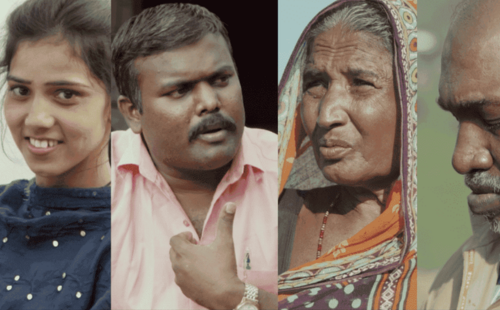
A short documentary series that captures the voices of people from some of India's most climate-vulnerable states. It highlights how people at the grassroots are adapting to the climate crisis.
CEEW and SEI present ‘Portrait of a Silver Lining’ — a poem written and performed to music by Simar Singh, urging bold climate action and accountability to heal our planet.
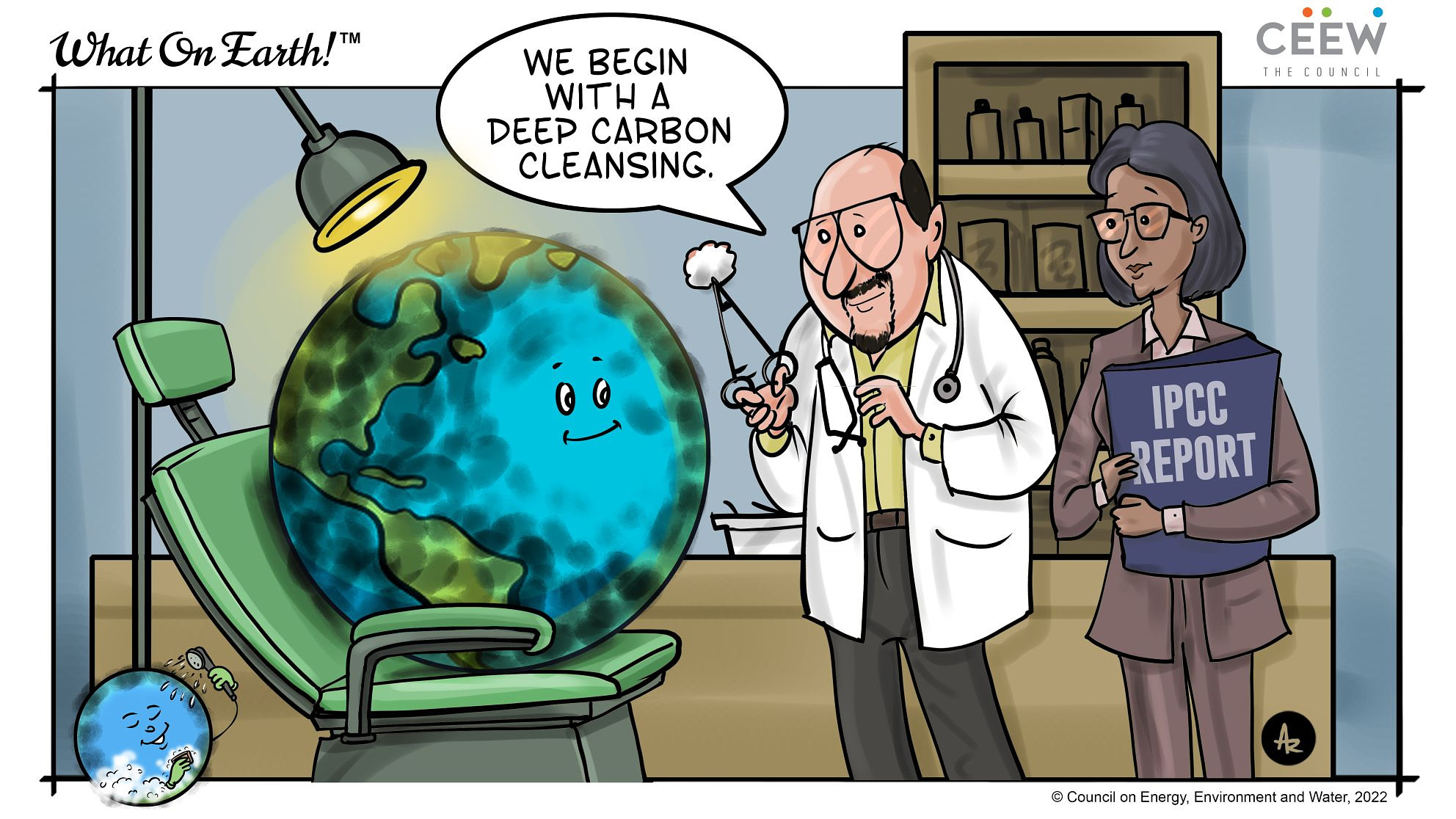
Dedicated to the planet, our Pale Blue Dot, CEEW presents What On Earth!™ A cartoon series on sustainability. On how we are treating the planet and how the planet is treating us back.