Council on Energy, Environment and Water Integrated | International | Independent

India’s electricity demand has been rising sharply—at 9 per cent annually since FY21—driven by economic growth, urbanisation, and increasingly extreme weather events like heatwaves. A new independent study by the Council on Energy, Environment and Water (CEEW), How Can India Meet Its Rising Power Demand?, finds that if demand grows as projected by the Central Electricity Authority (CEA), the country’s existing, under-construction, and planned non-fossil capacity (~500 GW) could be sufficient to meet needs in 2030.
However, if demand continues to outpace projections—as recent trends suggest—a higher renewable energy (RE) pathway of 600 GW by 2030 would be the most cost-effective and reliable approach. This would include 377 GW of solar, 148 GW of wind, 62 GW of hydro, and 20 GW of nuclear power. Crucially, the study shows that such a pathway could reduce power procurement costs by INR 13,000–42,400 crore, cut emissions by up to 23 per cent, and create up to 1,00,000 additional jobs—all while avoiding the need for new coal capacity.
The CEEW study is the first-of-its-kind to model power system dispatch for every 15 minutes in 2030, across multiple scenarios. It also outlines the urgent need to address grid-scale challenges—such as transmission constraints, land procurement, storage deployment, and centre–state coordination—to ensure India can scale clean power reliably.
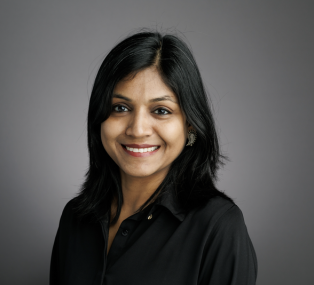
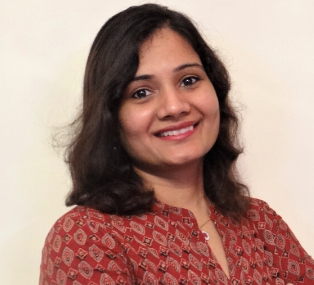
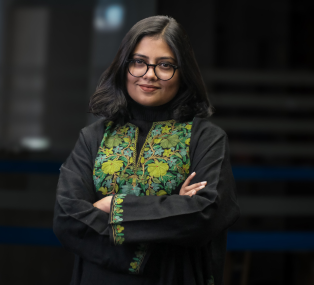
To understand the implications, Neera Majumdar from CEEW’s Editorial team spoke with Shalu Agrawal and Disha Agarwal, authors of the study and power sector experts at The Council, in April 2025, about the shifts needed to secure India’s energy future and what it will take to keep the lights on.
Neera: Here are three women unpacking everything you need to know about India’s power sector. I’m joined by Shalu Agarwal and Disha Agarwal, who lead CEEW’s power markets team. India is grappling with record-breaking heat waves, starting as early as February. Shalu, where does India’s energy demand stand today, and how are we meeting it?
Shalu: Energy is the lifeblood of our economies, and India, being the third-largest global economy since 2021, is naturally seeing a rapid rise in energy demand. Electricity demand in particular, has grown at 9 per cent per annum, almost double the pace of the previous decade. The key drivers of the demand composition are industry, agriculture, and especially households. The household sector, in particular, saw unprecedented growth, particularly in the summer of 2024 when air conditioner sales hit record highs. Rising incomes and extreme heat were both major factors. This year, demand is expected to rise by another 9–10 per cent. It's natural then, to ask, how is India planning to meet this demand? To meet this, our generation capacity has quadrupled over 25 years, reaching 460 GW. While coal and hydro dominated in the past, the last 15 years have seen a pivot towards building a clean, reliable, and affordable grid.
Neera: Disha, in our sector, there is this haloed number of 500 GW clean energy target by 2030. What does that really mean?
Disha: Over the last 15 years, India has made remarkable strides in clean energy. We now have 200 GW of clean energy capacity, including 165 GW from renewables and others from hydro and nuclear. As part of its international commitments, India aims to become net zero by 2070 and to derive 50 per cent of its electricity capacity from non-fossil sources. Domestically, we have set a more ambitious target, 500 GW of non-fossil capacity. Over the last decade, our renewable energy capacity has increased fivefold.
Neera: If we are at 165 GW now, and we have to meet 500 GW in the next five years. Are we on track?
Disha: In 2024 alone, India added 28 GW—a record. We are projected to add 32 GW in 2025. There are challenges on the ground, but with consistent state-level and national efforts, reaching 500 GW is within reach.
Neera: Interestingly, your latest CEEW study proposes going beyond 500 GW to 600 GW by 2030. Shalu, some say that this is too ambitious a target because of the challenges in finding offtake, pricing issues, grid challenges, ground challenges, and so on. Is this even possible?
Shalu: Let me break this into two parts: why 600 GW, and can we do it? First, the “why.” Our demand is rising faster than anticipated. This year, the national grid operator expected shortages in May or June. So, we need to plan for a future where demand is growing higher than our expectations. Our study simulates the power sector’s operation every 15 minutes for the year 2030. If demand grows faster, as we have seen in recent years, 500 GW might fall short. Then we face a choice: more coal or more renewables. Based on detailed assessments of economies, system costs, social impact, or environmental benefits, we find that going for a higher RE pathway is more desirable on all accounts. And that is why we say we must aim for 600 GW rather than adding more coal to the system.
Neera: Since Shalu mentioned the C-word, Disha, does India need more coal capacity?
Disha: Currently, 27–30 GW of coal capacity is under construction. If we meet the 500 GW target and demand stays on track, our study tells us, we won’t need new coal. However, if demand exceeds and if we fall short, our study tells us we might need an additional 6-16 GW of coal. Over and above what is already under construction, in case of demand growing moderately. Again, to be able to meet the demand consistently, the coal fleet would be stressed, and there is a likelihood that we will see more faults, which will increase our cost to supply electricity to people.
Neera: Final question for both of you, what’s your one key message for policymakers to keep India powered? Shalu, I ask that of you at the national level, and Disha, maybe you can speak to the state level.
Shalu: One message would be that policymakers should invest in building capacity across power sector stakeholders because we are entering a future where demand is becoming increasingly uncertain. This happens because of new kinds of industrial opportunities like data centres, green hydrogen, but also because of the uncertainty that climate change poses to us, like rising heat stress and fluctuations in demand because of that. So we need to invest in capacities across stakeholders so that they can visualise what the future is going to look like, better forecast demand and accordingly, better prepare systems to tackle that rising demand.
Disha: States should take the lead. Right now, there are states that are showing the way to other states, so I would say that policymakers should exchange these ideas with each other. They must forge platforms where these ideas and innovations can be shared with other states, and that’s how these new ideas will scale out, and we will see this faster deployment and offtake happening.
Neera: That was incredibly insightful, thank you both. We have covered everything from national ambitions to state-level innovation, from solar surges to the shadow of coal.
But before we wrap up, let’s shift gears.
AT CEEW, we love rapid fires, whether it is on climate or energy. So why not the power sector? Let’s start!
Neera: What’s growing faster—India’s electricity demand or our ability to meet it?
Shalu: Currently, it is demand.
Neera: Coal or renewables, which is cheaper today?
Disha: Renewables. Even with storage, it costs INR 4–5 per unit, cheaper than new coal.
Neera: India’s biggest win and biggest vulnerability in the power sector?
Shalu: Biggest win would be our nationally integrated grid, even the US or China don’t have it. The biggest vulnerability would be our slow response, given our heavily regulated sector.
Neera: One underrated solution for the power sector?
Disha: Robust distribution and transmission planning.
Neera: What’s more challenging, scaling renewables or making coal flexible?
Disha: Making coal flexible. We are still developing cost-effective technologies for that.
Neera: If India had unlimited capital, what would you fix first in the power sector?
Shalu: A new, efficient distribution network, which is currently very leaky. It could save 10 per cent of energy.
Neera: Which states are leading the clean energy transition right now?
Disha: Gujarat and Maharashtra.
Neera: One policy change that could transform India’s energy future?
Shalu: Let’s make coal and RE compete together through a single, technology-neutral tender.
Neera: Can India catch up to its rising power demand?
Shalu: Well, it must, and we can.
Shalu Agarwal is Director of Programmes, Disha Agarwal is Senior Programme Lead, and Neera Majumdar is Communications Manager at the Council for Energy, Environment, and Water (CEEW), New Delhi. This interview was originally recorded in April 2025. Send your comments to neera.majumdar@ceew.in

Add new comment