Council on Energy, Environment and Water Integrated | International | Independent

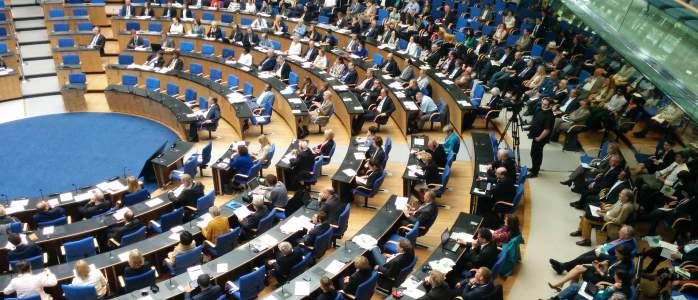
With COP30 a little over three months away, the opportunity to rebuild trust, shift from talks to action, and deliver on long-pending commitments has never been more urgent. The outcomes of the Bonn Climate Conference—this year’s mid-year checkpoint in global climate negotiations—brought longstanding divergences between the developed and developing world to the forefront.
With only marginal progress on key agenda items, the conference opened amid tensions, as developed countries pushed back on including Article 9.1 of the Paris Agreement in the agenda. This article anchors their commitment to provide climate finance to developing countries—making their resistance a clear attempt to dilute responsibility. Meanwhile, climate impacts continue to escalate. Europe—the fastest-warming continent—was hit by extreme heatwaves, marking its hottest June on record. In India, Himachal Pradesh faced 23 flash floods and 16 landslides in just a few days, triggered by unusually heavy rainfall. Without concrete action, the crisis will only deepen.
Here’s where the climate talks stand as we head toward COP30.
Adaptation is now at the forefront of negotiations, with the focus on advancing the operationalisation of the Global Goal on Adaptation (GGA). Countries are currently working to agree on the indicators that will track progress against the specific targets under the goal.
However, progress remained limited, with persistent differences, particularly around indicators for means of implementation. Developing countries strongly opposed including overseas development aid and national budgets as indicators. Some developed countries, such as the EU, UK, and Australia, called for a softer framing—proposing these instead as just one of several “enablers of adaptation”, alongside indicators reflecting national efforts and context-specific conditions.
Countries settled on a conclusion that provided only high-level guidance to further reduce and refine the indicators, including across sectors such as food and water. Looking ahead at COP30, experts are expected to submit a final technical report and a list of potential indicators to the United Nations Framework Convention on Climate Change (UNFCCC) Secretariat by August 2025. This will lay the groundwork for narrowing the list and bringing countries closer to an agreed set of 100 indicators—ensuring a clearer metric to assess both global progress and whether developing countries are receiving adequate support to implement the targets.
Meanwhile, developed countries are unlikely to meet their commitment to double adaptation finance between 2019 and 2025. While public adaptation finance to developing countries rose from USD 22 billion in 2021 to USD 28 billion in 2022, projections suggest that even if the doubling goal is met, it will still account for only around 5 per cent of actual adaptation finance needs. Calls to triple adaptation finance gained traction in Bonn, signalling the scale of support vulnerable countries now require.
With climate needs for both mitigation and adaptation in the developing world rising, the withdrawal of support from major donors—such as the United States halting nearly all aid and European countries announcing cuts—brought climate finance back to the centre of the discussion.
This withdrawal has further compounded dissatisfaction with the outcomes of COP29, the New Collective Quantified Goal was set at merely USD 300 billion per year by 2035, along with a broader aspiration to mobilise at least USD 1.3 trillion annually from all sources, despite the need to increase climate finance five-fold compared to current levels to keep 1.5°C within reach. However, the agreement lacked clarity on burden-sharing, timelines, and finance modalities—especially in terms of grants versus debt.
At Bonn, discussions focused on how finance can be scaled up to reach the USD 1.3 trillion target. Key perspectives included:
Developing countries called for attention to the quality of finance, particularly to avoid financial flows that increase debt burdens.
Developed countries focused on the need to mobilise a wide range of financial resources, particularly through private finance.
Several parties—such as Costa Rica, the Marshall Islands, and the EU—pushing for an implementation-oriented approach, including innovative financial instruments like guarantees.
The roadmap expected to be launched at COP30 will need to align with Article 9.1 of the Paris Agreement by prioritising support for developing countries through grants and concessional finance—an approach also echoed by India.
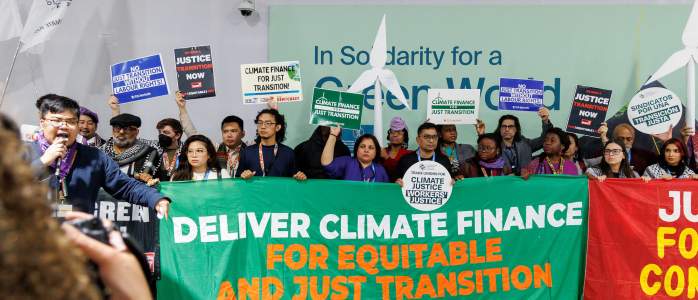
The Just Transition Work Programme, launched in 2022, seeks to address socio-economic vulnerabilities and ensure that no one is left behind in the energy transition from fossil fuels to renewable energy. Bonn was expected to define the programme's scope and governance architecture, but again, countries remained divided.
Developing countries called for the programme to include provision of finance and clarity on its continuation beyond 2026. Developed countries emphasised aligning the programme with the 1.5°C goal and incorporating just transition principles into Nationally Determined Contributions (NDCs), with a strong focus on energy transitions.
Countries left Bonn with a menu of options, including the potential establishment of institutional arrangements under the programme to coordinate and implement just transition actions—particularly relevant to the Global South.
COP28 concluded with the first Global Stocktake (GST), which recognised that current progress across mitigation, adaptation, and support is not enough. The UAE Dialogue was launched as a follow-up to implement GST outcomes.
During Bonn, however, deep divisions resurfaced over the Dialogue’s scope. Developing countries emphasised that the Dialogue—established under the finance section of the GST decision—should remain focused on strengthening enablers, particularly finance. In contrast, developed countries pushed for a broader mandate that would cover the full implementation of all GST outcomes. With no agreement on the way forward, it was decided that a draft note—containing multiple brackets and “options” that reflect points of divergence—would be carried forward for further negotiations.
With the 1.5°C window slowly closing, COP30 must recapture lost momentum by bridging the divide, restoring the trust of global south countries and amplifying their voices, while providing clear direction for action, ambition, and implementation.
Simran Sukhija is a Research Analyst and Jhalak Aggarwal is a Programme Associate at the Council on Energy, Environment and Water (CEEW). Send your comments to simran.sukhija@ceew.in.



Add new comment