Council on Energy, Environment and Water Integrated | International | Independent

Context: Delhi’s recurring winter pollution triggers GRAP measures that often force schools into hybrid mode for weeks, disrupting learning for lakhs of students.
Challenge: Online classes offer limited continuity with digital access gaps, reduced peer interaction, and developmental impacts that make prolonged closures unsustainable.
Opportunity: Targeted in-school interventions, including masking during commutes, advance academic planning, and installing air purifiers, can allow children to continue attending school while reducing harmful exposure.
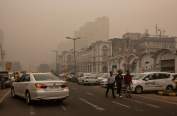
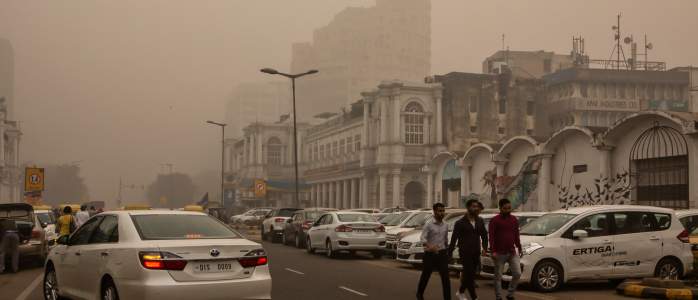
Between 2021 and 2024, Delhi's average winter PM2.5 concentration (November–February) was ~170 μg/m³, over four times the National Ambient Air Quality Standard (NAAQS) of 40 μg/m³ for annual average PM2.5. Whenever the city’s air pollution exceeds permissible limits, the Commission for Air Quality Management (CAQM) implements the Graded Response Action Plan (GRAP). GRAP is an emergency response mechanism based on Delhi’s average air quality index (AQI) or the Indian Institute of Tropical Meteorology’s projected AQI levels, enabling authorities to implement targeted measures as air quality deteriorates. It is implemented in four stages, with the strictest measures enforced in Stages III and IV when AQI moves beyond the severe category (>400 AQI). This season, the CAQM has imposed Stage III two times so far, and Stage IV came into effect on December 13, 2025, as the AQI exceeded the 450+ mark.
One of the interventions under GRAP Stage III & IV includes discontinuing physical classes in schools for children up to Class V, shifting to online lessons, while classes for standards VI–XI continue in hybrid mode. Since December 13, schools have already experienced six days of closures and hybrid classes, with the likelihood of further disruptions in the coming days. Although this measure aims to safeguard children from sustained exposure to severe air pollution, it requires extensive planning to minimise disruptions for students, parents, and schools across Delhi NCR.
Upon analysing Directorate of Education (DoE) circulars from previous years, we observe that school closures are often not limited to short two- or three-day periods and, in some cases, have lasted up to 15 days. Schools are often informed with less than a day's notice, leaving limited time for teachers and administrators to adjust and plan learning activities.
Approximately 83 per cent of people aged 15 and above in Delhi can use the internet. For students aged below 15, internet proficiency can vary significantly. Even when students have access to online learning platforms, technical or connectivity issues can disrupt learning.
While GRAP measures protect children from severe exposure, prolonged school closures can lead to significant consequences. Students already lose opportunities for outdoor activities, and extended periods of online learning can compromise healthy social interaction, peer learning and sports—all critical for overall development. Past experience during COVID-19 has shown how long spells away from school can affect academic and emotional growth.
To better understand students' experiences during air pollution-related school closures, we spoke with around 30 students from classes V and X at a school in Delhi.
Preference for school over home: All students we spoke with preferred attending school rather than studying from home because it allowed them better peer interaction, easier doubt resolution with teachers, and a more focused learning environment.
Challenges in online classes: Some students reported that limited devices at home create barriers. In households where only one device was available, elder siblings in seniors classes were often prioritised, forcing younger siblings to miss lessons.
These insights suggest that shutting schools or shifting to online learning may not be a sustainable solution in the medium or long term. We need to let students attend school. While students’ commute cannot be fully insulated from pollution exposure, their time inside classrooms, where they spend nearly eight to nine hours daily, can be made safer through controlled interventions.
Many countries, such as Thailand, South Korea, and China, also struggle with high air pollution, often resorting to school closures when pollution spikes. Over time, they imposed various regulations to generate an environmentally safe learning environment for students. Table 3 summarises the interventions in these countries.
Drawing from these international examples, we have provided a few suggestions as interim measures to mitigate children’s exposure to harmful air. However, long-term solutions must focus on tackling emissions at source.
Ensuring masking protocol during long commutes While wearing masks inside classrooms may inhibit learning due to discomfort, ensuring students wear N95 masks while travelling to and from school can reduce exposure. Masking in buses and along high-traffic routes helps limit the amount of PM2.5 children inhale during their commute.
Predictability and planning Based on our analysis, November and December consistently recorded the most number of 'Severe' (401–450) and 'Severe+' (>450) AQI days from 2018 to 2024. While specific high-pollution days cannot be predicted far in advance far in advance, these seasonal trends can help teachers and administrators plan better. Until air purifiers are installed in all schools, in-person interactions, hands-on lessons, sports activities, laboratory sessions, and group work can be conducted before the high-pollution period sets in. During November and December, schools can shift to theoretical instructions, assignments, or contingency online modules to ensure a smoother transition between in-person and online learning when air quality worsens.

Installation of air purifiers in schools CBSE regulations recommend 40 students per section. For this estimation, we assume a uniform class size and 40–50 classrooms per school, each classroom requiring one air purifier. Classrooms require higher capacity air purifiers, accounting for a larger area, a higher number of people, and frequent door opening. For the 1,240 government schools in Delhi, the estimated cost of installing air purifiers is estimated at INR 200–250 crore, assuming each air purifier costs around INR 40,000, designed to accommodate classrooms.
With Delhi allocating around INR 19,000 crore to education, the estimated INR 200–250 crore represents only an additional 1–1.3 per cent of the education budget. The government could phase installation, prioritising kindergarten through middle school, where children are more vulnerable to pollution and are still developing key cognitive functions.
Private schools can integrate purifier costs into annual school fees. A simple cost estimate suggests that this would amount to an additional annual fee of ~INR 500 per student for the first three years, falling to ~INR 150 thereafter (for a school with ~2,000 students and 50 classrooms, with each air purifier costing ~INR 40,000 and a HEPA filter rep).
Note: The cost estimates apply only to schools under the jurisdiction of the Government of Delhi and exclude Kendriya Vidyalayas, Ministry of Defence schools, and other Central Government schools.
How can schools choose the right purifier?
Before installing air purifiers, it is important to evaluate the following key parameters:
Ensuring cleaner air in schools is crucial for maintaining uninterrupted learning, achieving better educational outcomes, and protecting children from the adverse health effects of air pollution.
Shubhi Verma is a Research Analyst and Aadya Saxena is a Consultant at the Council on Energy, Environment and Water (CEEW). The authors would like to thank Dr Mohammad Rafiuddin and Karthik Ganesan for their suggestions. Send your comments to shubhi.verma@ceew.in