Council on Energy, Environment and Water Integrated | International | Independent

Ecological mangrove restoration (EMR) refers to the process of repairing human-induced damage to the diversity and dynamics of indigenous mangrove ecosystems (Jackson et al. 1995; World Rainforest Movement 2010). Mangroves are salt-tolerant evergreen ecosystems found in intertidal zones along tropical and subtropical coastlines, estuaries, rivers, and deltas (FAO 2023). While covering only one per cent of global tropical forests, they thrive in the tropics, extending into subtropical regions and dominating 75 per cent of coastlines between 25°N and 25°S (Teutli-Hernández et al. 2020; Upadhyay & Mishra 2014). Mangroves are vital for biodiversity, fisheries, commercial resources, and, crucially, coastal protection from erosion, floods, cyclones, and high tides, earning them names like "Blue Carbon Forests" and "coastal woodlands" (Kathiresan & Bingham 2001; Kathiresan 2017).
Despite their ecological and economic significance, mangroves are among the world's most threatened ecosystems. Between 1980 and 2000, an estimated 180,000 ha were lost annually, though this slowed to 100,000 ha/year in the 21st century (FAO 2007; Worthington & Spalding 2016). In India, mangroves cover 4,992 sq. km, or 0.15 per cent of the country's total geographical area, spread across 12 states and union territories (FSI 2021)1 . However, over 40 per cent of these ecosystems have been lost due to degradation (Suresh 2015). By 2070, climate change could cause a 50 per cent reduction and geographical shift in mangrove habitats (Samal et al. 2022). In response, the Indian government has launched programmes such as MISHTI2 and the Conservation and Management of Mangroves and Coral Reefs under the National Coastal Mission to restore and protect these ecosystems (PIB 2024).
Odisha, with a 480 km coastline, faces significant vulnerability to coastal hazards, with 22 per cent of the coastline classified as highly vulnerable and 62 per cent as moderately vulnerable3 (Kumar et al. 2010). The state has experienced several devastating cyclones, including the 1999 Super Cyclone, as well as Phailin, Titli, and Fani in the last two decades. Coastal erosion has further exacerbated the situation, impacting 28 per cent of the coastline from 1990 to 2016 (PIB 2023). Odisha harbours less than 5 per cent of India’s mangrove cover, with 81 per cent concentrated in Bhitarkanika National Park (BNP)4 (FSI 2021). This geographic concentration of dense mangroves leaves large coastal areas unprotected from coastal hazards, making the case for immediate action to expand and strengthen mangrove ecosystems outside BNP.
Odisha, thus, must prioritise ecological mangrove restoration and management to build coastal resilience, mitigate erosion, and buffer against future cyclones. Beyond ecological benefits, effective mangrove management can enhance livelihood security for coastal communities that rely on these ecosystems for fisheries and resources.
Jobs, market and investment opportunity5
If Odisha could restore 84 sq. km of open mangroves by 20306 spread across the districts of Baleswar, Bhadrak, Jagatsinghpur, Kendrapara and Puri:
~2200 FTE jobs7 can be generated by 2030 through the restoration process with a 5-year implementation period per hectare. The jobs generated include aspects of nursery development for producing quality planting material (QPM)/nursery development and management, site identification, site preparation for restoration, restoration activities, monitoring activities and maintenance activities. It is important to note that all the job opportunities are non-permanent and yearly jobs except in the nursery development, lasting only for the 4-year implementation period.
USD ~100 million8 will be required to execute the restoration activities across 84 sq. km of open mangrove cover in Odisha until 2030. The cost of implementation includes capital costs of nursery development, costs of labour of restoration activities and cost of inputs for restoration activities across a 4-year implementation period of restoration.
No direct products can be extracted from Odisha’s mangroves due to the legal status of protection of mangrove cover. As a result, USD ~1 million8,9 of the market opportunity can be realised through carbon credits in 2030 by restoring 84 sq. km of open mangroves in Odisha10 .
Cost-effective coastal protection: Investing in mangrove restorations could enhance storm protection and disaster resilience of the state. During the 1999 super cyclone, each hectare of mangroves in Kendrapara provided storm protection valued at USD 4,335 to USD 43,352, 25–249 times the district’s per capita income (Das 2021). Villages without mangrove protection faced losses up to USD 153.74 per household, while mangrove-protected areas saw significantly lower losses at USD 33.31 (Sahu et al. 2015). Mangroves, while reducing the cyclone damage, may also reduce significant public expenditure for rebuilding post-disasters. In addition, they may also boost crop yields, making them a high-return investment for Odisha’s coastal protection and economic security. Consequently, investments in mangroves are expected to generate benefits around four times greater than the costs (UNEP 2021).
Coastal resilience and economic gains: Odisha could harness mangrove ecosystems to build economic resilience for marine fisherfolk during the two fishing bans. Each year, the state enforces a two-month ban and a seven-month ban along a 170 km stretch to protect olive ridley turtles, resulting in a total nine-month restriction (Mohanty 2022). Mangroves offer alternative livelihoods during these bans, with potential economic benefits ranging from $2,772 to $80,334 per hectare annually, averaging $28,662 (Salem and Mercer 2012). These ecosystems provide essential resources like fish, crustaceans, timber, honey, and fodder, while also contributing to tourism revenues for the communities in non-protected areas.
Biodiversity heritage: With the rich endemic species heritage in mangroves, Odisha could become India's first state to declare a Mangrove Biodiversity Heritage Site (BHS). Among 70 mangrove species worldwide,11 (16 per cent) are classified as being at an increased risk of extinction (Polidoro et al., 2010). In India, two of these species, Sonneratia griffithii (critically endangered) and Heritiera fomes (endangered), are found only in Odisha’s mangroves (Kathiresan 2010). BNP is home to the Mangrove pitta, a species nearing threatened status, and is primarily located in select areas of eastern mangroves in India. In addition, the state also harbours one of India’s largest populations of saltwater crocodiles11 .
Carbon sink enhancement: Odisha could increase the state's contribution to Nationally Determined Contributions (NDCs) through total carbon sink enhancement by scaling up mangrove restoration. Dense mangroves absorb up to five times more carbon than land forests, slowing down decomposition in their salty, low-oxygen environment, storing it in their leaves, branches, roots, and sediments. Under optimal conditions, they can retain atmospheric carbon for long periods, even centuries or millennia (UNEP 2021). A study shows the sequestration value generates a CO2- equivalent of 26.94/t ha/y by the mangroves of the Mahanadi delta region (Agarwal et al. 2017).
The Action for Protection of Wild Animals (APOWA) facilitated a successful community-led mangrove restoration project to transform 12 hectares of degraded mangroves to enhance self-sufficiency of the villages, ensure food security and livelihoods to coastal communities in the Kendrapara and Basantpur districts of Odisha. The 10 Village Mangrove Councils established, with women at the helm, produced and planted 48,000 saplings, leading to a tenfold increase in fodder production within two years, and created 560 man-days of work, boosting the local economy. The restoration model was centred around building coastal resilience through capacity development for growing vegetables such as mushrooms and adopting the System of Rice Intensification (SRI) for rice cultivation. Stewardship enhancement for restoring and protecting the mangrove cover of the region was undertaken through educational programmes, including eco-clubs and classes in local schools. Women's active participation, particularly from the Maa Mangala Self-Help Group, underscored community empowerment and leadership in restoration efforts in Basantpur village in particular (APOWA 2013).
1. Role of departments:
Forest, Environment and Climate Change Department: could lead mangrove restoration by identifying vulnerable mangrove zones, mapping salt marshes, degraded mangrove areas and suitable areas for mangrove cover expansion by collaborating with scientific bodies for ecological and biophysical alignment. It can mobilise local communities as custodians of mangroves through institutions like Joint Forest Management Committees, Farmer Producer Organisations (FPOs)/ Self-help groups (SHGs), fostering long-term ownership through formal affiliations and community institutions like Van Suraksha Samitis (VSS) and Eco-development Committees (EDCs). The department could develop guidelines and SOPs for site selection, development of nurseries and restoration procedures, while commissioning Key Performance Indicators (KPIs) for continuous monitoring of restoration sites. It can enforce strict regulations to prevent illegal mangrove conversion through regular surveillance and penalties. These efforts could restore ecosystems through community engagements while enhancing livelihoods.
Fisheries and Animal Resources Development Department: could ensure sustainable brackish water aquaculture by collecting data on fisherfolk dependent on mangroves to assess livelihoods and the ecosystem’s economic value. It can formulate guidelines to reduce pressure on mangroves from fish, crab, and prawn seed collection. The department can develop traceability mechanisms to detect illegal shrimp farming and prevent unsustainable practices in collaboration with the Department of Forest. Engaging local communities, it could promote sustainable fishing practices in mangrove cover areas and raise awareness about mangrove conservation. The department could engage with the scientific community to develop mangrove-based fish stocks compendium, sustainable harvesting rates in protected areas and restricted areas.
Department of Agriculture and Farmers’ Empowerment: As a response to increasing salinity, farmers are abandoning or converting their farmland to industrial aquaculture farms in highly-sensitive mangrove areas. The department, here, can play a pivotal role in identification of areas undergoing loss of agricultural land due to various problems – soil erosion, siltation, water ingress – and promotion of organic farming practices around eco-sensitive zones like mangroves. The Department could collaborate with the Department of Forest and Mission Shakti to create mangrove-based alternative livelihood opportunities for communities around the eco-sensitive zones like apiary.
The Odisha Coastal Zone Management Authority: could play a crucial role in safeguarding and enhancing coastal environmental quality while informing the Department of Forest. In collaboration with the Odisha Remote Sensing Application Centre (ORSAC), they can map degraded mangrove forests and identify shrimp farm locations near these ecosystems. This technical expertise could help identify potential restoration sites, complete with area details and geo-coordinates, to guide effective mangrove restoration in key project landscapes. By leveraging advanced mapping and spatial data, the authority can drive strategic restoration efforts, ensuring environmental sustainability and the protection of coastal ecosystems across the state.
2. Role of the private sector:
The private sector could support mangrove restoration through investments, technology, and expertise. Companies can partner with NGOs and government bodies, adopt sustainable practices, and integrate mangrove conservation into CSR strategies. Their involvement can drive effective restoration, enhance community engagement, and promote environmental stewardship. Additionally, they can leverage carbon credits to scale restoration efforts, purchasing credits to offset their emissions while funding large-scale mangrove projects.
3. Role of local administration and civil society organisations (CSOs):
CSOs could leverage their extensive networks to mobilise local communities, engage in restoration activities, and provide essential education. They can drive mangrove restoration in Odisha through community-based programmes, awareness campaigns, and training workshops. By collaborating with academia and community institutions, CSOs can enhance project planning with evidence-based approaches, facilitate site selection, and ensure effective long-term management. This partnership can enable rigorous monitoring and help secure local involvement in planting, monitoring, and maintaining mangroves, ensuring sustainable governance and successful restoration outcomes. CSOs can make inroads for private sector engagement in mangrove restoration projects.
1. Mangrove restoration and regeneration failures: Mangrove restored patches capture sediments and facilitate land formation along coasts, starting as mudflats that evolve into small islands and eventually tidal swamps sustaining mangrove ecosystems (Kathiresan & Bingham 2001). If this process fails, the soil may not rise with sea levels, leading to reduced stability, increased vulnerability of the mangroves to high tides and storms, and impacts on carbon sequestration, nutrient cycling, and habitat stability. In Puri, degradation of restored patches due to failure of planting material to capture sediments has been observed11 . Additionally, unscientific restoration practices, utilisation of non-native species, untimed plantations and reduced freshwater flow can further compromise mangrove health and resilience, exacerbating the degradation process (Ravishankar et al. 2004).
Way forward: Sediment deposition in mangroves can be enhanced by strictly adhering to restoration using native mangrove species, adding exogenous sediment to degraded areas to raise soil levels, or using hydraulic engineering methods like stone packing. Restoring freshwater inflows by reopening natural water channels or constructing artificial ones (e.g., fishbone channels) can further support mangrove ecosystems better and reduce risk of failures. Implementing water management and sea-fresh water exchange channels that prioritise mangrove health is critical. Establishing monitoring programmes to assess mangrove health, track mitigation effectiveness, and identify emerging threats is essential11 . Additionally, supporting scientific research will deepen understanding of mangrove ecology and guide adaptive management strategies for long-term resilience.
2. Anthropogenic pressures: Mangrove restoration outside BNP faces several challenges due to significant anthropogenic pressures (Ravishankar et al. 2004). Expanding port-industrial complexes and shrimp farms, which discharge harmful effluents (Agarwal et al. 2017), coupled with deforestation and conversion for agriculture, are major threats leading to declining mangrove cover. Policies in countries like India and Myanmar that promote converting mangroves into rice paddies for food security have further exacerbated this issue. Additionally, uncontrolled cattle grazing, firewood collection, and over-exploitation in areas such as Jambu, Hatamundia and Kansardia contribute to mangrove degradation (Ravishankar et al. 2004). Restoration efforts are complicated by land use around these sites, where private aquaculture, agriculture, and illegal farms create land ownership issues and affect local economies11 . Coastal developments, including tourism, and changes to watercourses disrupt the necessary freshwater flow and hydrology, making successful restoration more challenging. Existing infrastructure that requires continued access for landowners adds another layer of complexity to the restoration process.
3. Community mobilisation for long-term sustainability of mangrove cover: Currently, mangroves are highly protected ecosystems, with strict regulations governing any community engagement or activities. These regulatory measures are essential for preserving the delicate balance of mangrove environments but can inadvertently create barriers for local communities. The stringent rules often limit community access and involvement in mangrove management, potentially leading to a disconnect between the people and their environment. This regulatory framework, combined with power imbalances and increasing anthropogenic pressures, may further disincentivise communities from supporting mangrove conservation. The lack of inclusive and participatory approaches can result in reduced local stewardship and an increased risk of non-compliance with conservation efforts, as communities may feel excluded from decision-making processes that directly affect their livelihoods and environment11 .
Way forward: To address the challenges of strict mangrove regulations and community disincentives in Odisha, a multifaceted approach is needed. This involves developing inclusive policies that involve local communities in conservation decision-making, implementing community-based management programmes to integrate local knowledge and foster ownership, and providing training and resources to build capacity for sustainable mangrove management. Establishing benefit-sharing mechanisms, such as sustainable harvesting practices and ecotourism opportunities, can offer economic incentives for conservation11 . Participatory monitoring and conflict resolution mechanisms will enhance transparency and address disputes, while awareness campaigns can educate communities on the benefits of mangroves. Collaborative partnerships between government agencies, NGOs, and local stakeholders can further strengthen conservation efforts, ensuring that both ecosystem health and community needs are effectively addressed.
1. Ecological risks: In the past decade, many mangrove restoration projects in the Philippines have involved converting seagrass meadows or mudflats into mangrove plantations. This approach is risky and often results in failure, along with significant loss of other vital ecosystems (Erftemeijer and Lewis 2000). Similarly, in Odisha, there is a high risk of converting salt marshes—crucial for climate change mitigation—into mangrove plantations due to inadequate mapping of suitable restoration areas (Mishra et.al. 2024). Without proper distinction between ecosystems and mapping their corresponding suitability, other valuable ecosystems may be compromised, undermining overall restoration efforts and ecosystem health.
Mitigation: Biophysical resource mapping complemented with suitability analysis helps align restoration efforts with the ecological realities of the region, thereby mitigating ecological risks and project failure risk.
2. Socio-economic misalignments: Long-term mangrove restoration efforts risk failure if they do not consider the socio-economic aspirations of the community. Restoration can falter due to the power dynamics between the Forest Department, government authorities and local communities, as well as due to economic and social priorities of the communities11 .
Mitigation: Effective mobilisation of the community is crucial for successful and long-term sustenance of the mangrove ecosystem. Similar to APOWA's role, CSOs can lead development of long-term affiliations and community institutions to take ownership of the restoration, conservation, and maintenance of mangroves to harness continued socio-economic and cultural benefits of these ecosystems.
3. Natural hazards: Coastal ecosystems face natural hazards such as rise in sea levels, increased salinity, temperature fluctuations, soil erosion, extreme weather events like storms, surges, cyclones, typhoons, and hurricanes, as well as harmful pathogens, which pose significant risks to their survival in the initial stages of restoration. Mangrove restoration procedure typically requires two to three years to mature11 and adapt to local conditions such as creek dynamics and tidal heights, after which they become resilient.
Mitigation: Project financing for mangrove restoration projects must account for potential failures due to calamities, thereby shaping investment strategies to include risk management in financial planning such as insurance or contingency mechanisms.
We limit the EMR value chain analysis to the restoration of degraded mangrove areas within the existing mangrove cover. We exclude mangrove expansion into other areas due to the lack of comprehensive land suitability assessments and bio-physical mapping for identifying appropriate sites for mangrove growth. To mitigate the risk of converting ecologically sensitive other ecosystems, like salt marshes, into mangrove habitats, our focus remains exclusively on restoring degraded areas.
We define degraded mangroves as mangrove covers with a tree canopy density between 10 per cent and 40 per cent (classified as open mangrove cover by FSI) or mangrove areas with a canopy density of less than 50 per cent are considered degraded (Prasetyo et al. 2019).
The EMR value chain consists of multiple activities that are segmented as indicated below:
Quality planting material (QPM) production/ nursery development
Restoration site identification: Rapid Site Assessments, Boundary Demarcation and fencing
Securing community support
Restoration activities: Species identification and appropriation, site preparation, plantation activity, manuring, etc
Monitoring activities: Growth study, watch and ward activities
Maintenance activities: Weeding, soil work, casualty seedling replacements, and renovation of tidal channels
Note: Each activity is spread over a four-year implementation period per site based on the stages of restoration.
We assume that restoration sites will achieve resilience within a standard four-year implementation period, allowing them to be classified as restored. Consequently, we limit the scope of our value chain to include only restoration-related jobs. We exclude post-restoration conservation and maintenance activities beyond the four-year period, as these are typically led by community stewardship efforts, which are voluntary and may not receive direct remuneration from external entities such as governments.
Jobs estimation
Total number of jobs that can be created through EMR in Odisha by 2030 is calculated using phase-wise full-time equivalent (FTE) coefficients required for restoration of per hectare of degraded mangrove area across a four-year implementation/restoration period.
Data collection
To assess labour requirements for mangrove restoration, five key informant interviews (KIIs) were conducted with CSOs involved in restoration projects across Odisha and other states. The KIIs focused on gathering data on restoration phases, activities, and corresponding labour days (man-days) per hectare of land. A mix of purposive and convenience sampling was employed to select CSOs, ensuring relevance and accessibility of data sources.
The KIIs were structured to capture quantitative and qualitative information on the mangrove restoration process. The quantitative section focused on estimating the man-days required for various activities across different phases of mangrove restoration, such as site preparation, planting, monitoring, nursery management, etc. Additionally, qualitative questions explored skill requirements, risks, and challenges within the restoration ecosystem, alongside potential interventions to address these challenges.
The FTE for mangrove restoration was calculated using 1 hectare of land as the standard unit. A man-day was defined as 8 hours of labour, and 360 standard working days were assumed for the restoration sector per year. The total man-days required for each restoration activity per hectare were summed and divided by the standard 360 working days. This method provided an estimate of the annual labour required, expressed as FTE, offering a clear metric for understanding the full-time workforce needed to achieve restoration goals per hectare under standard work conditions.
Annual FTE for mangrove restoration per hectare:

Total FTE for mangrove restoration per hectare:

Note: Each FTE/ha for the same activity across various years of implementation, may vary depending on the amount of man-days required of the same activity in that particular phase of implementation.
Table 1: The phase-wise FTE/per hectare/year considered:
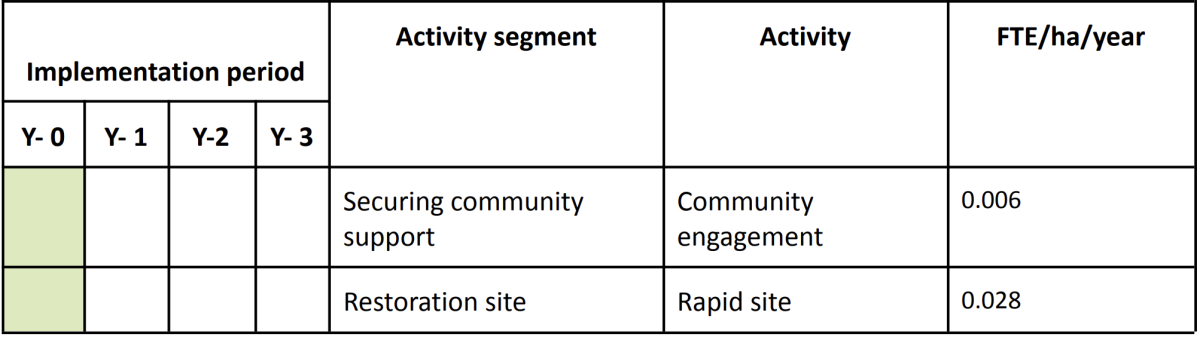
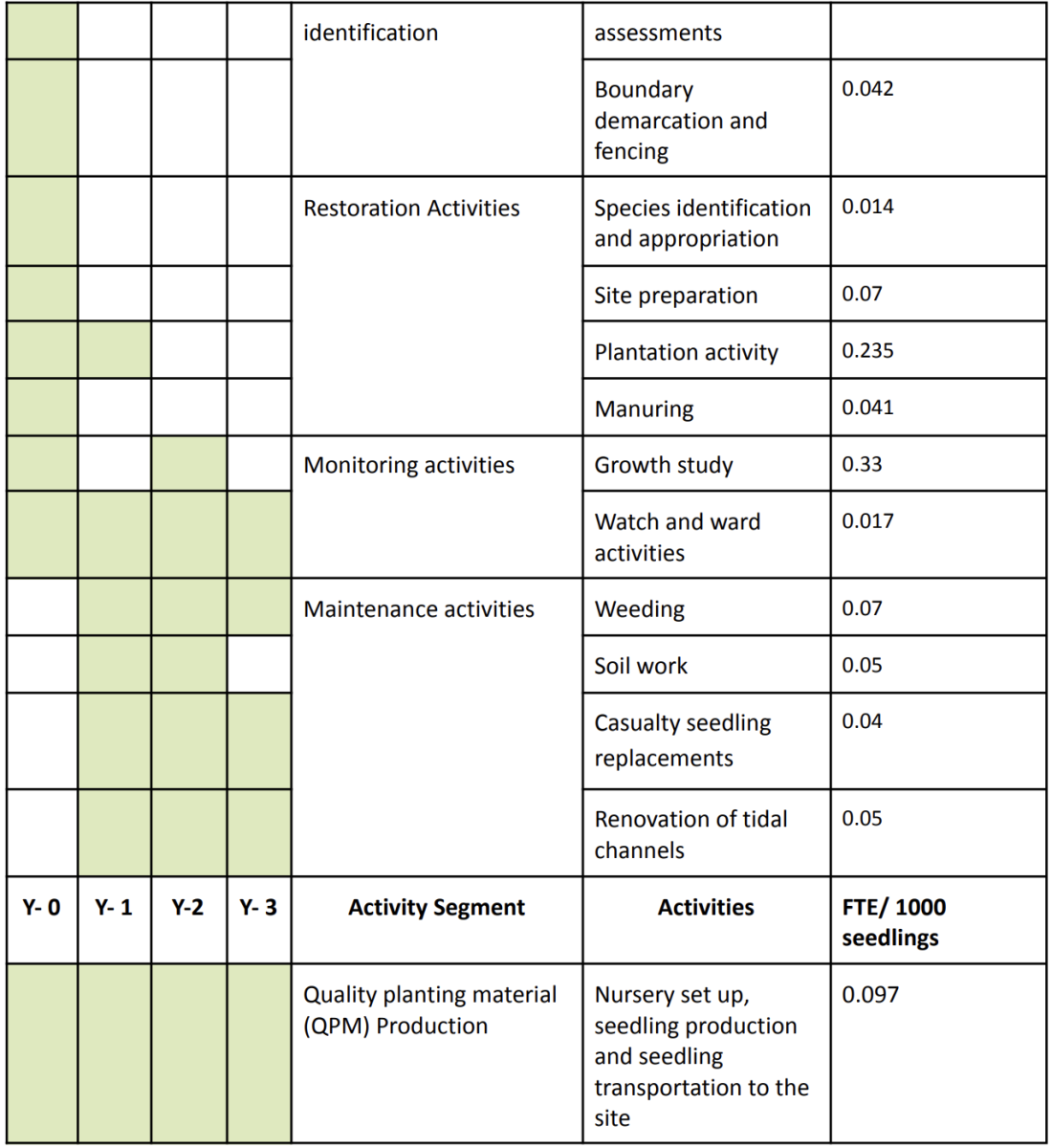
Source: Author’s analysis based on stakeholder consultations
The restoration implementation rate is assumed to increase linearly until 2030. Jobs are calculated using FTEs per activity per hectare, multiplied by the restoration area considered per year. FTEs are reallocated annually to new sites, avoiding double counting of labour demand across years.
Note: The jobs created last only until the restoration activity is completed in the considered sites.
Given the current annual mangrove restoration rate in India, which averaged 8.5 square kilometres (850 hectares) from 2019 to 2021, and the forthcoming target to restore 540 square kilometres (54,000 hectares) over the period from 2023 to 2028, we anticipate an increased implementation rate of 10,800 hectares per year—representing a 12.8-fold increase.
In this context, we have formulated an ambitious scenario for Odisha, considering its technical restoration potential of 8,400 hectares. To achieve full restoration of degraded mangroves by 2030, Odisha would need to escalate its annual implementation rate by a factor of 3.5 compared to the current rate. This approach aligns with the state’s capability and sets a clear path to achieving 100 per cent restoration, amidst the broader national target.
Mangroves in Odisha are subject to stringent conservation regulations due to their protected status, which limits the ability to assess the direct provision of ecosystem services or tangible products derived from these areas. Consequently, to estimate the economic value of mangrove restoration, we utilise carbon credits as a valuation metric. The carbon sequestration potential of mangroves is estimated to range from 1 to 1.5 tonnes of CO2 per hectare per year in degraded areas (RCDC 2013). We thus calculate the carbon credits generated from mangrove restoration for the year 2030, using a crediting period of 25 years. The valuation of these credits is based on a carbon credit price of $12 per tonne of CO2.
Investment opportunity estimation
In mangrove restoration, we view the total investment as an input towards creating natural capital, establishing mangroves as a tangible ecological asset. To estimate the investment opportunity, we account for all costs incurred throughout the restoration process. This includes:
Capital costs for setting up nurseries.


We estimate the total investment opportunity by aggregating the annual expenditures of all sites across different stages of the restoration process through 2030.
Agarwal, S., Banerjee, K., Pal, N., Mallik, K., Bal, G., Pramanick, P., & Mitra, A. 2017. “Carbon sequestration by mangrove vegetations: A case study from Mahanadi mangrove wetland”. Journal of Environmental Science, Computer Science and Engineering & Technology, Vol.7(No.1), 016-029. DOI: 10.24214/jecet.A.7.1.01629.
APOWA. 2013. “Community stewardship in conservation, restoration and sustainable management of mangroves in Orissa.” Mangroves for the future. https://www.mangrovesforthefuture.org/assets/Repository/Documents/Community-Stewardship-inConservation-Restoration-and-Management-of-Mangroves-in-Orissa.pdf.
BeZero. 2024. “How the VCM can turn the tide for blue carbon.” Be zero carbon. https://bezerocarbon.com/insights/how-the-vcm-can-turn-the-tide-for-blue-carbon.
Das, Saudamini. 2021. Valuing the Role of Mangroves in Storm Damage Reduction in Coastal Areas of Odisha. In Book:Climate Change and Community Resilience: Insights from South Asia. Edited by A. K. Enamul Haque, Pranab Mukhopadhyay, Mani Nepal, and Md R. Shammin. N.p.: Springer. 10.1007/978-981-16-0680-9_17.
Erftemeijer, P.L.A. and Lewis III, R.R. 2000. Planting mangroves on intertidal mudflats: habitat restoration or habitat conversion? In Book: “Enhancing Coastal Ecosystem Restoration for the 21st Century edited by V. Sumantakul et al.”. Proceedings of a Regional Seminar for East and Southeast Asian Countries: ECOTONE VIH, Ranong and Phuket, 23-28 May 1999. UNESCO, Bangkok, Thailand, January 2000. pp. 156-165.
FAO. 2007. “The world's mangroves 1980 - 2005,” The thematic study for Global Forest Resources Assessment 2005. The FAO open knowledge. https://www.fao.org/4/a1427e/a1427e00.pdf.
FAO. 2023. “The world's mangroves 2000–2020.” FAO Knowledge Repository. https://openknowledge.fao.org/server/api/core/bitstreams/7f15adf1-2756-4...
FSI. 2021. “Chapter 3: Mangrove Cover.” In India State of Forest Report. Forest Survey of India. https://fsi.nic.in/isfr-2021/chapter-3.pdf.
Kathiresan, K. 2010. “Globally threatened mangrove species in India.” Current science 98 (12): 1551. http://admin.indiaenvironmentportal.org.in/files/Globally%20threatened%20mangrove%20species% 20in%20India.pdf.
Kathiresan, Kandaswamy. 2017. Mangroves in India and Climate Change: An Overview. In: DasGupta, R., Shaw, R. (eds) Participatory Mangrove Management in a Changing Climate. Japan: Springer. https://link.springer.com/chapter/10.1007/978-4-431-56481-2_3
Kathiresan, Kandaswamy, and Brian L. Bingham. 2001. “Biology of Mangroves and Mangrove Ecosystems.” Advances in Marine Biology 40 (December): 81-251. 10.1016/S0065-2881(01)40003-4.
Kumar, T. S., R. S. Mahendra, Shailesh Nayak, K. Radhakrishanan, and K. C. Sahu. 2010. “Coastal Vulnerability Assessment for Orissa State, East Coast of India.” Journal of Coastal Research 26, no. 3 (May): 523-534. 10.2112/09-1186.1.
Mohanty, Aishwarya. 2022. “Marine fishing ban in Odisha leads to loss of income for women involved in allied activities.” Mongabay-India, September 26, 2022. https://india.mongabay.com/2022/09/marine-fishing-ban-in-odisha-leads-to...
Polidoro BA, Carpenter KE, Collins L, Duke NC, Ellison AM, et al. (2010) The Loss of Species: Mangrove Extinction Risk and Geographic Areas of Global Concern. PLOS ONE 5(4): e10095. https://doi.org/10.1371/journal.pone.0010095
PIB. 2023. “Government committed for taking proactive steps in combating sea erosion and protection of India’s coastal areas and the coastal communities.” Press Information Bureau. https://www.pib.gov.in/PressReleasePage.aspx?PRID=1911131.
PIB. 2024. “Schemes for Restoration of Mangrove Forests.” Press Information Bureau. https://www.pib.gov.in/PressReleasePage.aspx?PRID=2002625.
Ravishankar, T., Navamuniyammal, M., Gnanappazham, G., Nayak, S. S., Mahapatra, G. C., & Selvam, V. 2004. “Atlas of mangrove wetlands of India”. M. S. Swaminathan Research Foundation. http://59.160.153.188/library/sites/default/files/mangrovewetlands-orissa.pdf
RCDC. 2013. “The Odisha Community REDD Project: A Brief Report on Accomplishments.”Regional Centre for Development Corporation. https://rcdcindia.org/PbDocument/d3ea3efa4b8071b-45a2-4ac7-ba45-3751a2387d18Final_RCDC_B rief%20Report_Odisha%20Community%20REDD%20project%20(1).pdf.
Sahu, S. C., H. S. Suresh, I. K. Murthy, and N. H. Ravindranath. 2015. “Mangrove Area Assessment in India: Implications of Loss of Mangroves.” Earth Science & Climatic Change 6 (5). http://dx.doi.org/10.4172/2157-7617.1000280.
Salem, M. E., and D. E. Mercer. 2012. “The Economic Value of Mangroves: A Meta-Analysis.” Sustainability 4, no. 3 (March): 359-383. https://doi.org/10.3390/su4030359.
Samal, Pujarini, Jyoti Srivastava, S. R. Singarasubramanian, Pooja N. Saraf, and Bipin Charles. 2022. “Ensemble modelling approach to predict the past and future climate suitability for two mangrove species along the coastal wetlands of peninsular India.” Ecological Informatics 72 (December). https://www.sciencedirect.com/science/article/abs/pii/S1574954122002692
Suresh, H. S. 2015. “Mangrove Area Assessment in India: Implications of Loss of Mangroves.” ournal of Earth Science & Climatic Change 6 (5). 10.4172/2157-7617.1000280.
Teutli Hernández,, C., J. A. Herrera-Silveira, D. J. Cisneros-de la Cruz,, and R. M. Roman-Cuesta. 2020. Mangrove ecological restoration guide: Lessons learned. N.p.: CIFOR - ICRAF. https://doi.org/10.17528/cifor/008170.
UNEP. 2021. “Becoming #GenerationRestoration: Ecosystem Restoration for People, Nature and Climate.” United Nations Environment Programme. https://wedocs.unep.org/bitstream/handle/20.500.11822/36251/ERPNC.pdf.
Upadhyay, V. P., and P. K. Mishra. 2014. “An Ecological Analysis of Mangroves Ecosystem of Odisha on the Eastern Coast of India.” Proceedings of the Indian National Science Academy 80 (9): 647-661. https://www.vpupadhyay.org/papers/Proc.INSA%2080_2014_3.pdf.
Worthington, Thomas, and Mark Spalding. 2016. “Mangrove Restoration Potential: A global map highlighting a critical opportunity.” The Ocean Wealth organization. https://oceanwealth.org/wp-content/uploads/2019/02/MANGROVE-TNC-REPORT-F...