Home
Council on Energy, Environment and Water Integrated | International | Independent

Blue Sky ≠ Clean air
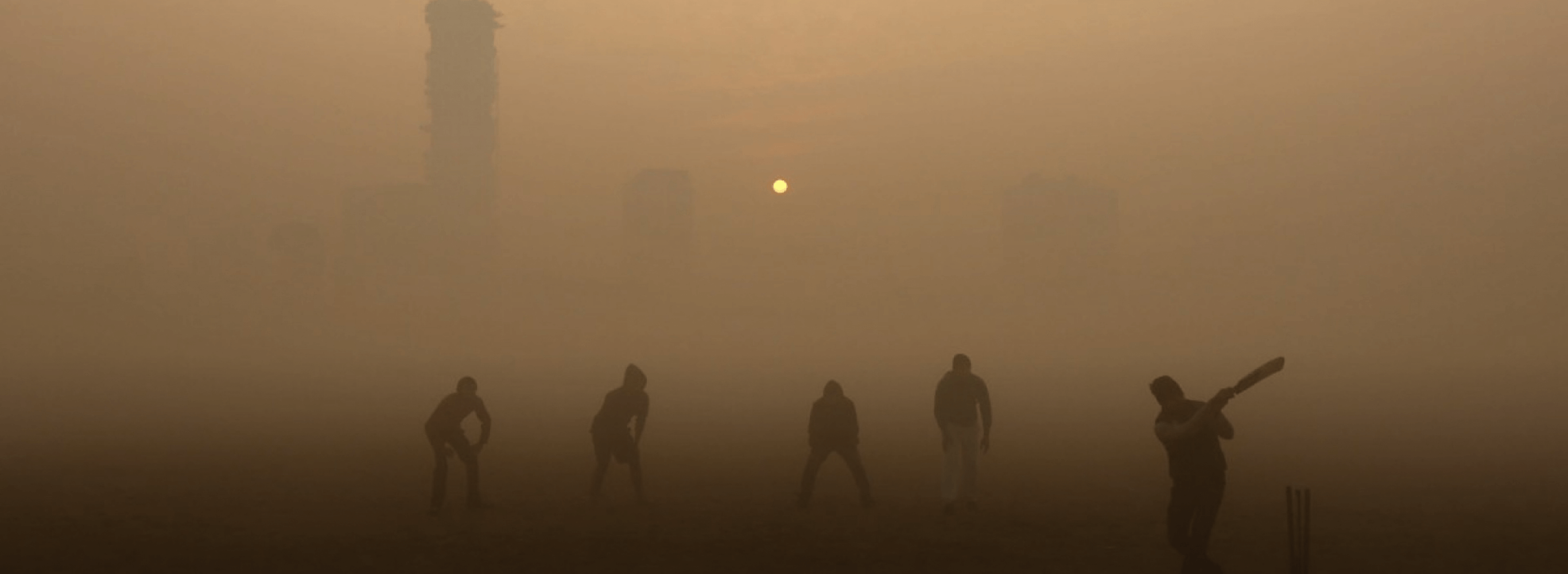
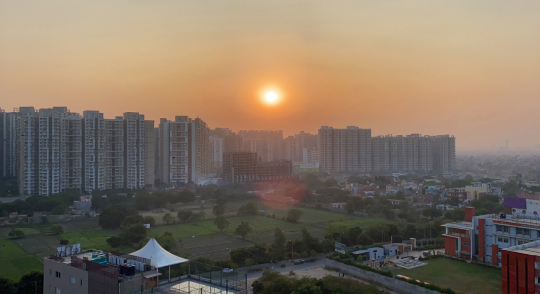
When we see a blue sky, we assume that the air around us is clean and safe for our lungs. We worry when we see a blanket of smog descend upon our neighbourhoods. But relying purely on, such visual cues can be deceptive. Particles that can harm our respiratory tract are mostly invisible to the naked eye. This means we could be breathing polluted air on a day with a clear sky. Nonetheless, it is true that air quality is often worse in certain seasons.
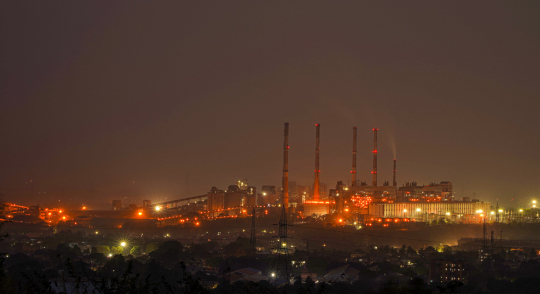
Before delving deeper into the factors influencing seasonal fluctuations in air quality, we must first understand the sources of air pollution. Anthropogenic sources (caused by human activity), such as vehicular exhausts, industrial emissions, garbage burning, and natural sources, such as forest fires, volcanic eruptions and soil weathering, all contribute to air pollution.
While sources like industries, vehicles, power plants, waste burning, road and construction dust pollute the air throughout the year, seasonal influences like dust storms, crop residue burning, and forest fires tend to temporarily worsen air quality. Further, weather conditions like low windspeeds and low mixing heights (typically witnessed during winters) prevent the dispersion of pollutants, causing air quality to deteriorate.
Air Quality - A Silent Killer
Worldwide, air pollution is responsible for 4.2 million premature deaths. In India alone, air pollution killed over 1.5 million people in 2019. Short-term exposure to high pollution levels could result in eye, nose and throat irritation, bronchitis, asthma, and allergic reactions like rhinitis. However, long-term exposure to air pollution could result in more severe consequences like chronic obstructive pulmonary disorder (COPD), ischemic heart disease (IHD), and lung cancer. Research also suggests a link between exposure to air pollution and the prevalence of diabetes.
How can citizens monitor air quality?
The Central and State Pollution Control Boards, which are responsible for measuring and reporting air quality levels, communicate the severity of air pollution through the Air Quality Index (AQI). In India, the AQI is classified into six categories, namely "Good", "Satisfactory", "Moderate", "Poor", "Very Poor", and "Severe". Citizens can check the Central Pollution Control Board (CPCB) website and the SAMEER app to get the AQI of their city/vicinity. They can also check the air quality levels at the nearest monitoring station. The AQI is the maximum/worst sub-index (indicative of individual pollutant concentration) of 8 criteria air pollutants (SOx, NOx, PM2.5, PM10, CO, O3, Pb, NH3).
Health Statements for AQI categories
AQI Associated Health Impacts
Good
(0 - 50)
Minimal Impact
Satisfactory
(51 - 100)
May couse minor breathing discomfort to sensitive people
Moderate
(101 - 200)
May couse minor breathing discomfort to the people with lung disease such as asthma and discomfort to people with heart disease, childrenand older adults
Poor
(201 - 300)
May couse minor breathing discomfort to the people prolonged exposure and disconfort to people with heart disease with shot exposure
Very Poor
(301 - 400)
May couse respiratory illness to the people on prolonged exposure. Effect may be more pronounced in people with lung and heart disease
Severe
(401 - 500)
May couse respiratory effects even on healthy people and serious health impacts on people with lung/heart dieseases. The heallth impacts may be experienced even during light physical activity.
Source: Central Pollution Control Board NAQI Report
What can citizens do to minimise air pollution exposure?
  • Plan outdoor activity based on the air quality.
  • Avoid pollution hotspots, including busy roads and industrial zones, while choosing neighbourhoods to live in.
  • Wear a mask while driving or commuting in heavy traffic/on smoggy mornings.
  • Avoid cooking in unventilated/closed kitchens.
  • Avoid smoking in confined indoor spaces.
  • Improve ventilation in homes and workplaces or use an air purifier.
How can citizens contribute to air quality management?
Educate yourself and others
Targeted information campaigns on understanding air quality should be given to school children, resident welfare associations(RWAs), etc. There is also a need to educate sensitive populations like the elderly, people suffering from respiratory diseases, etc about the precautionary measures they need to take when air quality outside is poor, very poor, and severe.
Monitor air quality actively
  1. Demand air quality sensors to be installed in every constituency.
  2. Demand emergency helplines, task forces to respond in real-time.
  3. Report violations of air quality regulations like garbage burning, illegal dumping of waste and dust from construction sites to relevant authorities.
    • If you are in NCR (National capital region), you can use the SAMEER App to report your grievances.
    • In case you’re located in Uttar Pradesh and outside NCR, you can use the Swacchvayu app
Consume cleaner products
Switch to BS6 vehicles, use LPG as primary cooking fuel, and use energy-efficient appliances.
Make sustainable lifestyle choices
  1. Use public transport, carpool, walk and cycle more frequently.
  2. Adopt waste segregation and management to prevent plastics and other toxic materials from being burnt.
  3. Avoid burning wood, coal for heating requirements and use cleaner fuels like LPG.
Engage in discourse on air pollution
Participate and involve in discussions on air quality organized by research organizations and civil society organizations. Disseminate the knowledge in your casual conversations with friends, family, and colleagues.
What is the government doing to improve air quality?
In January 2019, the Ministry of Environment, Forest and Climate Change (MoEFCC) launched the National Clean Air Programme (NCAP). The NCAP sets a particulate reduction target of 20-30 per cent by 2024, with 2017 as the base year. It mandates the non-attainment cities in the country to develop air quality management plans (MoEFCC 2019). Nonattainment cities are the cities that consistently exceed the permissible limits for criteria air pollutants.
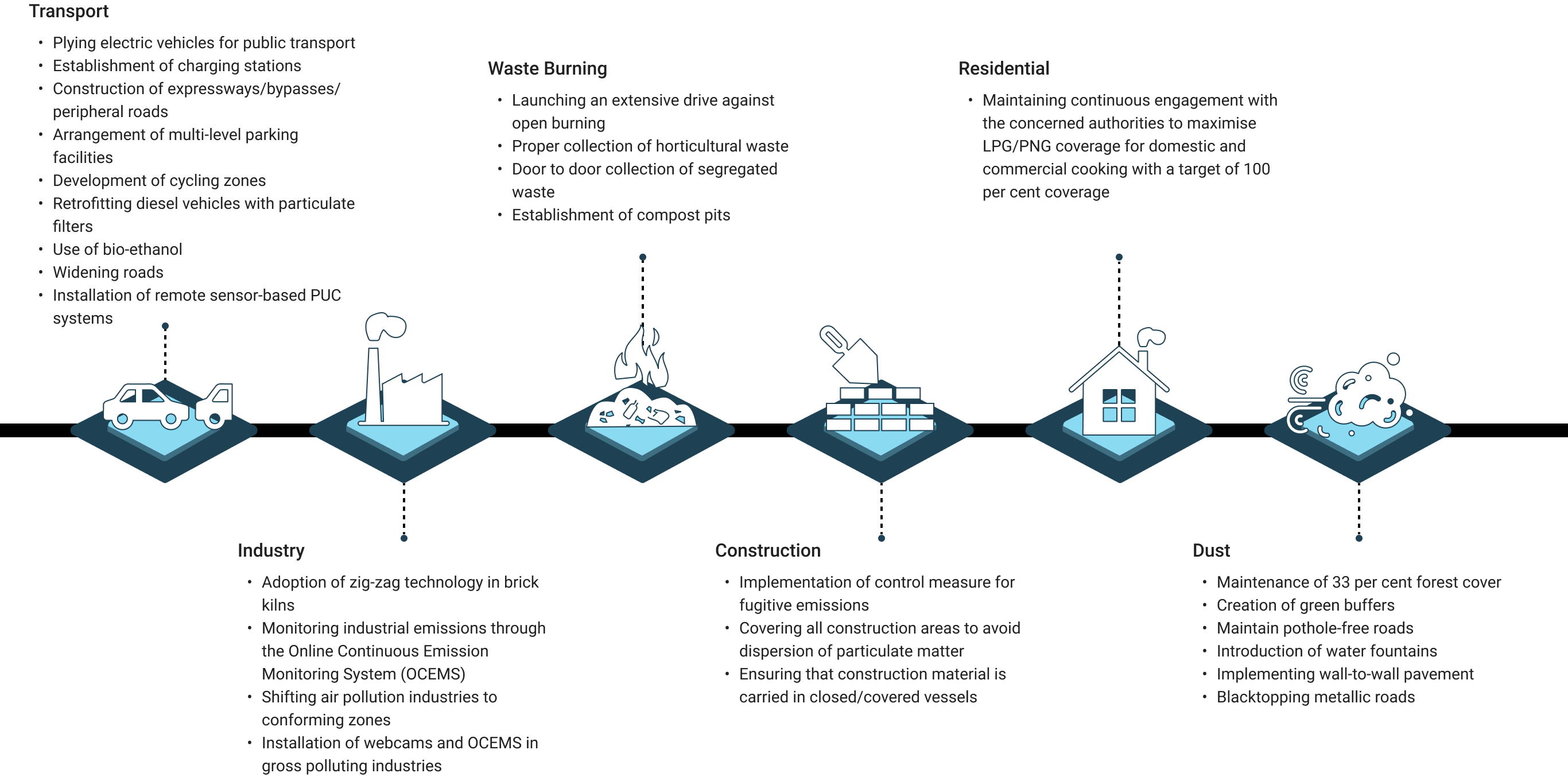
As of July 2021, there are 132 non-attainment cities in the country. If your city is among the 132 non-attainment cities in the country, it is likely that your city has a plan. You can view the plan for your city here. Following is a snapshot of activities that the city action plans cover.
A glimpse at the mitigation measures
Mitigation measeres

Air pollution scenario in major cities of Uttar Pradesh

  • Lucknow

    AQI

    (Avg Past 24 hrs)

    56
    Max & Min

    (Avg Past 24 hrs)

    63 51
    Know morelink
  • Kanpur

    AQI

    (Avg Past 24 hrs)

    56
    Max & Min

    (Avg Past 24 hrs)

    63 51
    Know morelink
  • Ghaziabad

    AQI

    (Avg Past 24 hrs)

    162
    Max & Min

    (Avg Past 24 hrs)

    175 143
    Know morelink
  • Agra

    AQI

    (Avg Past 24 hrs)

    95
    Max & Min

    (Avg Past 24 hrs)

    114 79
    Know morelink
  • Varanasi

    AQI

    (Avg Past 24 hrs)

    95
    Max & Min

    (Avg Past 24 hrs)

    114 79
    Know morelink
Air Quality Index (AQI) data is updated every 24hours