Council on Energy, Environment and Water Integrated | International | Independent


Shaping India's Green Economy Vision
Bringing together leaders from business, finance, academia, and policy, we launched the Green Economy Council (GEC) at the National Green Economy Conclave to chart a new pathway for India’s sustainable growth.
Chaired by Shri Amitabh Kant, with secretariat support from the Council on Energy, Environment and Water (CEEW), the GEC serves as a high-level advisory body that fills a critical gap—recognising, supporting, and amplifying emerging green opportunities and translating them into engines of innovation, entrepreneurship, and employment.
At a time of rapid technological, geopolitical, and climate transitions, India must generate jobs, boost productivity, and build resilience. The GEC seeks to steer this transformation by advancing an alternative economic model—one that is circular, decentralised, regenerative, and globally competitive.
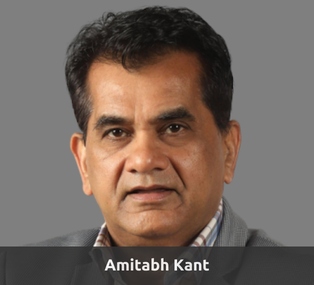



Mr Amitabh Kant served as India's Sherpa to Prime Minister Narendra Modi during the G20 Presidency, championing global issues, growth, as well as geopolitical and technological issues. Mr Kant has led the national effort to accelerate India's transition to cleaner energy, spearheading initiatives such as the Green Hydrogen Mission and the National Mission on Transformative Mobility and Battery Storage, and pushing ambitious climate finance reform through the Green Development Pact in the G20 New Delhi Leaders' Declaration. He was the former Chief Executive Officer of the National Institution for Transforming India (NITI Aayog) (2016-2022), as well as the former Secretary of the Department for Industrial Policy and Promotion (DIPP) (2014-2016), Government of India. He is a member of the Indian Administrative Service, IAS (Kerala Cadre: 1980 Batch).
Mr Kant is the author of “Branding India – An Incredible Story,” and has been a key driver of the “Make in India,” Startup India, “Incredible India,” and “God’s Own Country” initiatives, which positioned and branded India and the state of Kerala as leading manufacturing and tourism destinations. These campaigns have won several international awards and embraced a host of activities – infrastructure development, product enhancement, private-public partnership, and brand building. Mr Kant also conceptualised and executed the “Atithi Devo Bhavah” – “Guest is God” campaign to train taxi drivers, guides, immigration officials and make them stakeholders in the tourism development process. As National Project Director of the Rural Tourism Project of UNDP, he oversaw a paradigm shift in spreading tourism to Indian villages that have core competencies in handicrafts, handloom, and culture. He was also the Chairman and CEO of the Delhi Mumbai Industrial Corridor Development Corporation (DMICDC) and Chairman of the National Productivity Council.
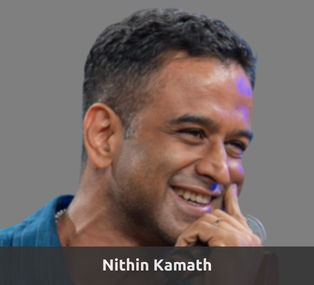
Nithin Kamath is the founder and CEO of Zerodha, India's largest retail stockbroking firm with over 7 million active clients. He pioneered the discount broking model in India, democratising access to capital markets. Through Rainmatter Foundation, he focuses on climate action, biodiversity conservation, and sustainable livelihoods. His perspective on green finance, climate risk assessment, and mobilising retail capital for green investments will be invaluable. He brings experience in building scalable platforms, technology-enabled solutions, and understanding retail investor behaviour.
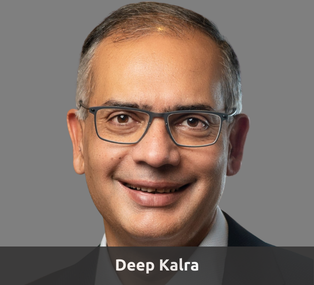
Deep Kalra is the founder and Group Executive Chairman of MakeMyTrip, India's leading online travel company. He pioneered e-commerce in India and built one of the country's first successful internet businesses. His experience in consumer behaviour, digital platforms, and building businesses at scale is valuable for understanding how to mainstream green products and services. He can provide insights on creating market demand for sustainable travel, leveraging technology for green consumption, and building trusted brands in emerging categories.
Ruchi Kalra is the co-founder of OfBusiness and CEO of Oxyzo Financial Services, which provides financing solutions to SMEs. Under her leadership, Oxyzo has become one of India's leading fintech companies focused on the manufacturing and infrastructure sectors. Her expertise in supply chain finance, working capital solutions, and serving the MSME sector makes her uniquely positioned to address financing challenges in the green economy. She brings insights on credit assessment for green businesses, structuring innovative financial products, and scaling sustainable business models.
Shruti Shibulal is the founder and Managing Partner of Tamara Capital, an impact investing platform focused on sustainable and inclusive businesses. She brings extensive experience in impact measurement, ESG integration, and patient capital deployment. Her work spans sectors including clean energy, sustainable agriculture, and the circular economy. She can provide valuable perspectives on blended finance structures, impact measurement frameworks, and attracting institutional capital to green investments. Her philanthropic work through Azim Premji Foundation also brings insights into grassroots sustainability initiatives.
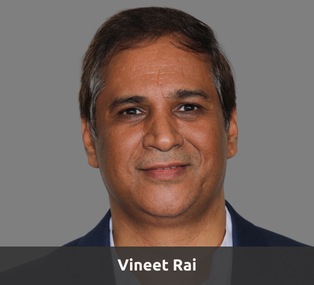
Vineet Rai is the founder and Chairman of Aavishkaar Group, one of India's oldest and largest impact investment platforms established in 2001. The group manages assets exceeding $1.4 billion and operates across venture capital, microfinance, and consulting services, all focused on creating positive social and environmental change while generating financial returns. Aavishkaar has made close to 90 investments that have impacted over 136 million people, primarily in India. He brings deep expertise in deploying capital for underserved communities, using technology as an enabler for economic opportunities, and bridging the opportunity gap for emerging markets. His current focus includes deep tech for climate, green hydrogen, sustainable agriculture, and waste management.
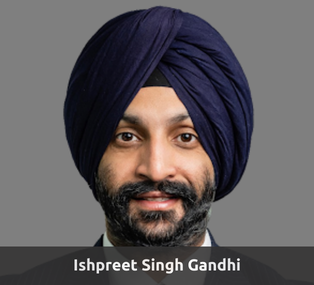
Ishpreet Gandhi is the founder and Managing Partner of Stride Ventures, one of India's leading venture debt funds. He has over 15 years of experience in venture financing and has backed numerous startups across sectors. His expertise in alternative financing mechanisms, risk assessment for early-stage ventures, and understanding startup ecosystems is critical for the green economy. He brings insights on structured financing for capital-intensive green businesses, venture debt as an instrument for clean technology companies, and building robust investment ecosystems.
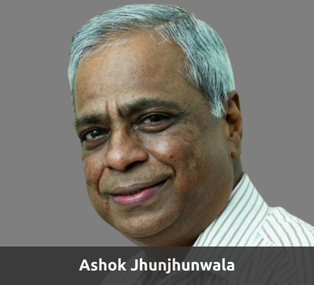
Prof. Ashok Jhunjhunwala is an Institute Professor at IIT Madras and has been a faculty member since 1981. He was awarded the Padma Shri in 2002 for his pioneering work in wireless communication systems. He is considered a pioneer in nurturing industry-academia interaction in India and conceived and built India's first university-based research park (IIT Madras Research Park), which houses over 100 R&D companies. He has incubated and nurtured over 200 deep-tech companies at IIT Madras. He has served as Principal Advisor to the Ministry of Power and the Ministry of Railways. His extensive work spans telecom, renewable energy, electric vehicles, and rural technology, making him a key voice in India's green technology transition. He is also Chairman of IIIT Hyderabad and President of IIT Madras Research Park.
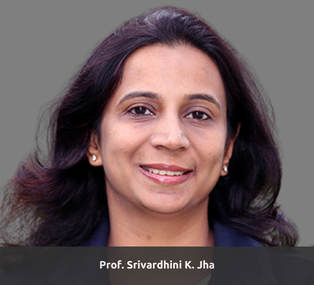
She is the Chairperson of NSRCEL, IIM Bangalore's startup incubation centre. She brings extensive experience in entrepreneurship development, innovation ecosystems, and academic-industry partnerships. She has deep expertise in clean energy, electric mobility, and deeptech innovation. Her work on indigenous EV technology and solar solutions demonstrates the ability to commercialise research into market-ready products. She can reach student communities and academic institutions, inspiring the next generation of green entrepreneurs. Her focus areas include catalyzing the innovation ecosystem, addressing structural challenges limiting commercialisation, and building pathways from research to market.
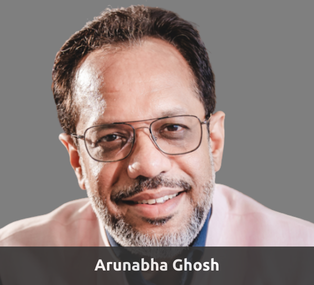
Dr Arunabha Ghosh is an internationally recognised public policy expert, author, columnist, and institution builder. He is the founder-CEO of the Council on Energy, Environment and Water, and has led CEEW to the top ranks as one of Asia’s leading policy research institutions and among the world’s 20 best climate think-tanks. Arunabha advises governments, industry, civil society, and international organisations around the world. In October 2024, the Government of India appointed him to the Commission for Air Quality Management. In May 2025, the Government of Brazil appointed him as a Special Envoy for COP30 climate negotiations. He currently co-chairs the World Economic Forum’s Global Future Council on the Energy Nexus (and previously co-chaired the GFC on Clean Air).