Council on Energy, Environment and Water Integrated | International | Independent

Bio-based packaging materials, sourced from renewable feedstocks such as agricultural residues, present a sustainable alternative to packaging-grade conventional plastics and papers1 . By utilizing lignocellulosic and macromolecular components, these materials achieve performance characteristics comparable to traditional packaging materials, while offering a significantly lower carbon footprint and inherent biodegradability (Stark and Matuana 2021). They offer highly circular and resource-efficient alternatives to over 75 per cent of the existing types of conventional packaging materials consumed globally (India Exim Bank 2020)2 .
India's packaging sector, the fifth-largest in the country, is experiencing rapid growth with an expected CAGR of 22-25 per cent till 2027 PIAI, n.d.). The sector’s expansion3 driven by the rise of e-commerce, a booming food and beverage market, and an expanding pharmaceutical industry4 , presents significant opportunities. However, this growth also exacerbates environmental pressures, with resource extraction (timber and oil) for packaging materials contributing to rising deforestation rates and high greenhouse gas (GHG) emissions. Moreover, improper disposal of packaging post-usage amplifies pollution and contamination levels leading to health hazards and biodiversity losses.
In response, the Government of India has launched initiatives like National Packaging Initiative (Ministry of Commerce and Industry 2021), Extended Producer Responsibility (EPR) guidelines (MoEFCC 2021) and the BioE3 (Biotechnology for Economy, Environment, and Employment) Policy (Department of Biotechnology 2024). These collectively aim to reduce dependency on fossil fuels and timber by promoting the development of sustainable packaging materials, such as high-performance bio-plastic and bio-based packaging grade paper.
Given this landscape, Odisha is well-positioned to capitalize on the emerging demand for sustainable packaging materials through its stringent enforcement of the ban of Single-use plastic (SUP). By leveraging existing infrastructure, such as the National Investment and Manufacturing Zone (NIMZ) at Kalinganagar and the Petroleum, Chemicals, and Petrochemicals Investment Region (PCPIR) at Paradeep, Odisha can establish itself as a key manufacturing hub for the Eastern region. Additionally, initiatives like ProPack5 can further support this transformation, positioning the state as a leader in sustainable packaging production.
Jobs, market and investment opportunity6
Rice straw, which constitutes approximately 87 per cent of the technically feasible surplus agricultural residue 7 in Odisha, emerges as a promising primary feedstock for manufacturing bio-based packaging materials. This feedstock can be utilized to produce two distinct categories of sustainable packaging solutions: packaging-grade paper and packaging-grade polylactic acid (PLA) granules. Since these are mutually exclusive categories for the same feedstock, the overall potential for employment, investment and market opportunities are indicated as a range. Any division in utilisation of feedstock between the two segments, the economic potentials are assumed to occur in between the range of as indicated below:
The bio-based packaging sector in Odisha has the potential to create between ~2000 and 3000 FTE jobs by 2030, with a market potential ranging from ~USD 200 million to USD 400 million in 2030 and investment opportunities from ~USD 400 million to USD 1000 million by 2030.
The limits of ranges indicated are defined based on high-growth scenarios for each of the segments and are described below:
Pioneer the development of sustainable alternatives to single-use plastic (SUP): India implemented a ban on the manufacture, distribution, stocking, sale, and use of 19 key SUP items in 2022, alongside stricter regulations on carry bags, the major sources of plastic pollution (PIB 2022). Odisha, having led with its plastic ban in 2018 (OSPCB 2018) and SUP ban in forest areas (Times of India 2024), is ideally positioned to pioneer investment in bio-based packaging production. This move could pave the way for a state-wide ban, driving the local market toward eco-friendly, bio-based packaging solutions.
Reduce India’s import dependence: India currently imports USD 15 billion in plastic raw materials and USD 63 billion in pulp and waste paper, highlighting a critical reliance on external sources (NITI Aayog 2022). With per capita packaging consumption rising by 200 per cent over the past decade to 10.5 kg, Odisha can play a key role in reducing this import dependence by diverting surplus crop residues for packaging material production, utilising renewable local resources to enhance self-sufficiency.
Boost local circular bioeconomy and emission reduction: Odisha could harness its surplus crop residue of 1.76 million tonnes as a renewable feedstock for bio-based packaging material production as a channel for ex-situ management of crop-residues under the Crop-residue Management scheme. This repurposing of surplus crop residue into packaging materials addresses a critical challenge by potentially reducing emissions by an estimated 0.076 Mt CO2e—1.5 per cent of India’s emissions from crop-residue burning (India GHG Platform 2019; Jain, Bhatia, and Pathak 2014).
For better and nature-positive waste management: Odisha can effectively address the challenges of recycling and managing non-biodegradable packaging waste, which accounts for 59 per cent of India’s municipal waste (CSE 2020). By promoting the adoption of bio-based packaging materials, the state can redirect investments from developing a packaging waste recycling ecosystem to an industrial composting ecosystem to harness the inherent ability of bio-based packaging materials to be both biodegradable and compostable.
Inspiration from a success story
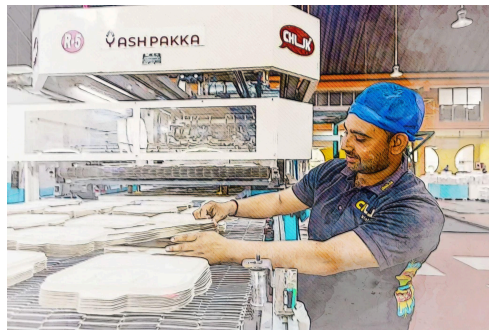
Yash Pakka, with a mission to "let the world eat safe" from Ayodhya, Uttar Pradesh, transforms the 75,000 tonnes of waste “bagasse” into pulp and paper food grade packaging materials annually. Reaching 43 countries through his compostable tableware brand, CHUK, and other agri-residue based packaging paper and pulp for food service and delivery, Pakka utilises bagasse from three sugar mills nearby which support roughly 3,000 farm households. Pakka runs year round on 100 per cent biomass-based energy generated from utilisation of Black Liquor8 while ensuring nature and climate positive processes across their operations. Pakka has now emerged as a pioneer in sustainable packaging solutions in India, boasting a state-of-the-art research lab for material development at IISC, Bangalore.
1. Role of departments:
Industries Department: would be central in inviting the private sector and investments in the bio-based packaging sector. They could facilitate the setting up of manufacturing facilities through Production Linked Incentives (PLIs) for indigenous biopolymer manufacturing. Additionally, the department could channelise intersectoral coalitions to increase the domestic adoption of bio-based packaging materials across all industrial and manufacturing clusters in the state. It could also provide financial assistance for research and development (R&D) activities to reduce production costs or develop schemes for viability gap funding (VGF) to reduce market prices of packaging products. Additionally, the department could engage with private sectors in providing logistical support and developing ancillary industries like adhesives, labels, and coatings, which are crucial for scaling bio-based packaging.
Industrial Promotion & Investment Corporation of Odisha (IPICOL): IPICOL could play a critical role in promoting investments in bio-based packaging industries through funding and grants. By focusing on the development of ancillary industries, IPICOL could help Odisha’s Plastic Park evolve into a hub for bioplastic production for the export market and the eastern zone in India.
Science and Technology Department (S&TD): S&TD could facilitate collaborative R&D activities for bio-based packaging by coordinating funding initiatives alongside OID and IPICOL. By supporting technological advancements and ensuring effective knowledge transfer, S&TD can enable process improvements that bring down production costs and enhance product competitiveness.
Medium, Small and Micro Enterprises (MSME) Department: The MSME Department would play a role in promoting the involvement of micro, small, and medium-sized enterprises in providing logistical support for the bio-based packaging supply chain. This includes supporting the collection, storage, and transportation of feedstock and helping MSMEs to align their operations for the supply chain’s efficiency. Additionally, they would work on incentivising and promoting ancillary industries necessary for bio-based packaging.
Commerce and Transport Department: This department could work with the MSME and Industries departments to create an effective logistical network for the bio-based packaging sector ensuring a robust supply chain from feedstock collection to final packaging.
Odisha State Pollution Control Board (OSPCB): OSPCB would be responsible for ensuring bio-based packaging material standards through certifications, in collaboration with the Bureau of India Standards (BIS). By establishing a state-wide certification mechanism for bio-based packaging, OSPCB could ensure compliance with sustainability standards. Additionally, OSPCB could intensify regulations on single-use plastics (SUP) to foster greater adoption of bio-based alternatives. It would also facilitate setting up industrial composting units for bio-based packaging disposal, ensuring these materials meet their end-of-life sustainability goals.
Department of Housing and Urban Development (HUD) and Directorate of Municipal Administration (DMA): The Departments could set up industrial composting facilities in urban areas to process the end products of bio-based packaging based on recommendations and regulations prescribed by OSPCB. This department would help formulate the necessary guidelines and provide financial or logistical support for establishing composting units through public-private partnerships (PPPs). This includes identifying appropriate sites, issuing tenders, and overseeing construction and operation to ensure bio-based packaging materials are safely decomposed.
Odisha Assembly of Small and Medium Enterprises (OASME): OASME could work with the Industries Department, IPICOL, and MSME department to host awareness-raising initiatives, such as the annual Pro-Pack summit, focusing on the advantages and applications of bio-based packaging. OASME could also promote industry-specific workshops and partner with Startup Odisha to support investments across the supply chains of the bio-based packaging sector.
Startup Odisha: Startup Odisha could provide specialised incubation support for bio-based packaging industries, starting from early biopolymer, packaging-grade paper production to final product development. It could promote adoption of bio-based packaging products across various other products and develop models for scaling up sectors.
Odisha Skill Development Authority (OSDA) and Skill Development & Technical Education Department: the departments could contribute by developing specialised training programmes and courses related to bioplastics, biochemistry, biopolymers and biorefineries, in collaboration with institutions like the Indian Institute of Packaging (IIP). They could develop regional hubs for skill development in the bio-based packaging sector, supporting the creation of a skilled workforce for plant operation, maintenance, and management of biorefineries. They could play a crucial role in workforce development by creating courses, diplomas, and technical modules specifically tailored to creating packaging products from bio-based packaging materials.
2. Role of the private sector:
Technology development: The private sector could play a crucial role in the innovation and commercialisation of bio-based packaging. Investors and financiers can provide essential funding for R&D initiatives, enabling the development of new technologies that can make bio-based packaging materials more affordable, scalable, and efficient. Manufacturers can develop improved production processes to reduce costs and enhance quality, making these materials competitive with traditional packaging options. They can also establish research partnerships with universities and research organisations to ensure a continuous stream of innovation in terms of products, process and technology.
Collaboration: Collaboration across different actors in the private sector can significantly contribute to scaling up production. Manufacturers can collaborate with agricultural producers through farmer producer organizations (FPOs) or farmer cooperatives to secure a long-term stable supply of feedstock for biorefineries. By forming joint ventures or strategic partnerships, industries can leverage each other’s strengths in logistics, technology, and market access to expand the production capacity. Private sectors based on segments like pharmaceuticals and food processing sectors can develop an intra-state network of ancillary industries to support the value chain development for bio-based packaging products. Private sector may also collaborate with government departments through PPPs to develop industrial composting units across Odisha.
Compliance: Industry associations can develop compliance mechanisms for the sector to adopt bio-based packaging across the economic sectors on the lines of EPR guidelines (MoEFCC 2021). The private sector must secure periodic certifications and verification for all types of packaging materials produced. Biorefineries must adhere to the guidelines and regulations laid out by the Central Pollution Control Board (CPCB) and report periodically to the State Pollution Control Board (SPCB) in order to ensure environmental compliance across the manufacturing line.
3. Role of local administration and civil society organisations (CSOs):
Impact assessments: CSOs could conduct independent impact/lifecycle assessments to analyse the environmental and social benefits of transitioning to bio-based packaging. These assessments are crucial for identifying the actual impact on carbon emissions, resource use, and waste reduction compared to traditional plastic packaging. By providing unbiased, data-driven insights, CSOs can create evidence that supports the scaling up of bio-based packaging solutions and can communicate the benefits to both policymakers and the broader public. Impact assessments also help identify potential challenges and solutions for mitigating negative effects, making the transition smoother.
Awareness: CSOs can play a critical role in raising awareness about the environmental benefits of bio-based packaging among consumers, businesses, and policymakers. They can conduct workshops, campaigns, and educational programmes as part of packaging industry conferences. Further, CSOs should conduct awareness initiatives that could influence consumer preferences towards bio-based packaging solutions, which, in turn, can drive market demand and incentivise manufacturers to increase production.
Mobilisation: CSOs can mobilise farmer cooperatives, collectives and FPOs to divert the surplus crop residue to industries, thereby reducing GHG emissions and pollution from burning. CSOs can serve as a vital link between industries and farmers, educating farmers on opportunities and connecting them with biorefineries to supply crop residues as raw materials for bio-based packaging. They can also facilitate the maintenance of feedstock quality standards at the grassroots level by working closely with farmer organisations to ensure consistent, high-quality raw material supply.
1. Limited market competitiveness and higher costs of production9: The biomass-based packaging sector in India faces barriers such as product costs that are three-to-five times higher than conventional plastics (Awasthi et al., 2020), requirement for R&D (Birania et al. 2021), and logistical challenges like storage and transport of the required quality and quantity of biomass (Raimondo n.d.). The lack of economies of scale and lack of technology availability, unlike in the well-established fossil fuel industry, has led to an increased production cost, making bio-based alternatives less competitive in the market as they are sold at a rate almost three to five times that of traditional plastics and one and a half to two times that of fossil fuel-based biodegradable polymers such as PBAT10
Way forward: Indigenous manufacturing facilities have the potential to bring down the costs of production. However, swift investments in R&D, skilling, and incentivisation must be prioritised for the same. The Odisha government, on the lines of Government of India, may become an early supporter of the Performance Linked Incentive (PLI) for biorefineries and subsidies to invite manufacturers and set up biorefineries in the state.
2. Supply security of feedstocks to biorefineries: Odisha is a leading rice-producing state, contributing over 24.4 per cent of the total agricultural output. Consequently, the availability of alternative crop residues, biomass, or feedstocks for the commercial production of packaging materials—whether for biopolymer-based bioplastics or bio-based packaging paper—may be limited. Additionally, rice straw plays a significant role in biomass-to-power and bio-based ethanol production in the state, resulting in competing use cases and increased competition for rice straw as a feedstock for the packaging sector that may further increase the Costs of Goods Sold (COGS).
Way forward: Implementing informed biomass allocation policies that prioritise rice straw for biorefineries over energy or biogas generation is essential to ensure adequate availability of raw material for production. Reorienting overall policy support for biomass utilisation is crucial to scale bio-based refineries, which can offer greater economic potential than simply meeting energy needs where, in turn, exploring alternative sources for energy generation is a practical possibility.
3. Lack of clear certifications for product differentiation: In India, biodegradable and compostable plastics, whether derived from biomass-based biopolymers or fossil-fuel-based polymers, are not distinctly categorised under the IS/ISO 17088 standards. This ambiguity hampers manufacturers' ability to justify the costs of their products to customers. As a result, the lack of clarity in product differentiation promotes the adoption of low-cost fossil-fuel-based packaging materials over biomass-derived alternatives.
Way forward: The Odisha Pollution Control Board (OPCB), in collaboration with the Bureau of Indian Standards (BIS), could establish a state-wide certification mechanism for bio-based packaging materials. Alternatively, the state could subsidise global certification costs for enterprises to also facilitate higher uptake of the products in both domestic and export markets.
4. Lack of ancillary industries: Packaging is a demand-driven sector that relies heavily on a robust presence of upstream and downstream industries to expand production capabilities. Odisha’s strong steel and food processing sectors provide opportunities for diverse packaging solutions using similar materials. However, the absence of ancillary industries, such as coatings, labels, and adhesives manufacturing, may hinder the domestic uptake or growth of the bio-based packaging industry in the state.
Way forward: Promoting the establishment of ancillary industries such as coatings, labels, and adhesives through targeted incentives can significantly strengthen the supply chain. This can be initiated in Odisha through collaboration between OASME and Start-up Odisha for leveraging Pro-pack annual summits for promoting entrepreneurship among ancillary and supporting industries. In addition, identifying ancillary industries clusters for development of “plug and play” models to establish biorefineries for packaging product manufacturing is crucial10 .
5. Logistical challenges in ensuring high quality feedstock: The collection of crop-residue feedstock faces significant logistical hurdles. Limited mechanisation for residue collection often leads to inefficient gathering processes, increasing costs and time. Additionally, fragmented landholdings in many regions complicate large-scale collection efforts. Inadequate storage facilities can result in degradation of the crop-residue due to moisture, pest infestation, or microbial activity. Furthermore, underdeveloped transportation networks in rural areas hinder timely delivery to processing units, affecting the overall quality and usability of the collected biomass.
Way forward: Private sector involvement could be promoted to provide logistical support for biorefineries. This can be developed in collaboration with supply chain management experts and FPOs/farmer co-operatives to ensure efficient and scalable solutions for transportation, storage, and distribution. Additionally, creating cluster-based resource maps to identify the types and availability of feedstock in different regions can enable more targeted logistical planning.
6. Lack of end-of-life management facilities for bio-based packaging materials: Biopolymers such as PLAs require specific conditioned environments for effective biodegradation or composting. In India, while composting units do exist, the majority are primarily designed to process organic waste. The limited number of industrial composting facilities, both at the state and national level, hampers the widespread adoption of bio-based packaging materials. This infrastructure gap often results in these materials ending up in landfills, undermining and underutilising their environmental co-benefits. Without adequate composting systems, the potential for waste reduction, circular economy practices, and soil enrichment through composting remains largely untapped.
Way forward: Regulations on the use and manufacturing of SUPs could be strengthened to encourage the adoption of bio-based packaging materials across industries. At the same time, to ensure the safe disposal of these alternatives, efforts could focus on establishing industrial composting units through public-private partnerships (PPPs).
7. Shortage of skilled workforce for operation and maintenance of biorefineries: The lack of skilled labour for the operation and maintenance of biorefineries poses a significant challenge to indigenous manufacturing in the packaging material manufacturing sector. Without trained personnel to manage complex processes and maintain equipment, operational inefficiencies and increased costs may arise. This skills gap could lead to reliance on foreign expertise, hindering the growth and competitiveness of the domestic bioeconomy.
Way forward: Educational and training institutions can create specialised courses and diplomas in biorefinery management to meet the increasing demand for skilled labour in this sector. By collaborating with industry leaders operating biorefineries, these programs can also offer apprenticeships to ensure that technicians and managers are practically well-equipped to support manufacturing projects.
1. Food security risks: The prevalence of first-generation (1-G) biomass, specifically corn and cassava-based starch bioplastic polymer granules, in India’s bioplastic market—accounting for 30 per cent 10 of total production—poses a significant food security risk. This concern is exacerbated by the bioplastic certification norms established by the CPCB, which currently prioritise biodegradability and compostability while neglecting the sustainability of feedstock sources. Although 1-G biomass-derived bioplastics are acknowledged for their compostability, the indiscriminate promotion of this sector at the current stage without regulations may lead to the conversion of food-producing land for biomass cultivation, thereby threatening food availability and accessibility. Such a transition could intensify the ongoing "food versus materials" debate, similar to the "food versus fuel" discourse.
Mitigation: It is imperative to prioritise investments in R&D focused on bioplastics derived from surplus second-generation (2-G) crop residues and agricultural waste biomass. Additionally, regulatory frameworks and certification should be revised to incorporate feedstock sustainability as a critical criterion alongside end-of-life parameters such as biodegradability/compostability.
2. Import dependence: India's bioplastic market is heavily dependent on fossil-fuel-based biopolymers, with 70 per cent relying on imported polybutylene adipate terephthalate (PBAT). Emerging domestic producers face higher production costs due to the need for crude oil imports. While PBAT is the most cost-effective alternative to traditional plastics and meets biodegradability and compostability certification requirements, scaling domestic production may in all cases, raise oil import levels or the overall import of PBAT. This situation could reinforce India's fossil fuel dependency and lead to higher greenhouse gas emissions.
Mitigation: The promotion of bioplastic manufacturing should be accompanied by robust regulations and distinct certifications to differentiate products in the market. There must also be a stronger focus on process-related R&D for biomass-based bioplastics to achieve techno-economic feasibility.
3. Environmental risks: The pulp and paper industry is highly energy-intensive and polluting, primarily due to its reliance on conventional technologies, which lead to excessive consumption of raw materials, chemicals, energy, and water, resulting in significant effluent generation. Classified as one of the 17 highly polluting industries by the CPCB, it demonstrates inadequate compliance with environmental regulations (PSA 2014). Agro-residue based biorefineries/pulp and paper refineries which are manufacturing units for manufacturing of packaging-grade paper from 2-G biomass/crop-residues are much more polluting than virgin refineries (Tewari, Batra and Balakrishnan 2009) unless waste, such as Black Liquor is managed responsibly, as mandated by the CPCB for red industries.
Mitigation: Compliance with the guidelines prescribed by the CPCB for red industries is essential, including monitoring and evaluation by OSPCB. However, adherence to these regulations can increase capital costs by 1.5 times 10 . To mitigate this financial burden, conditional capital subsidies or conditional loans for environmental compliance infrastructure development can be issued, supporting industries in achieving regulatory standards.
In this analysis, we limit the scope of the bio-based packaging material manufacturing value chain to capture only direct employment opportunities up to the material manufacturing stage. Consequently, any subsequent value-added activities aimed at converting the material into packaging end products, involving ancillary or subsidiary industries, are excluded.
The scope of the value chain is confined to the manufacturing of bio-based packaging materials intended to replace paper and plastic packaging. Specifically, it encompasses the production of various grades of bio-based packaging papers, such as Kraft paper and Folding Box Board (FBB), as well as bioplastics derived from second-generation (2-G) biomass, focusing on the production of PLA granules. Other forms of bioplastic production from 2-G biomass are excluded due to inadequate technological readiness levels in India.
The direct employment opportunities created for bio-based packaging material manufacturing includes the following components:
Bio-based Packaging material manufacturing in biorefineries can be further segmented into the following:
We assume the central business units of the value chain are biorefineries, where the stages of paper manufacturing and bioplastic manufacturing happens.
Market sizing (in units):
To estimate the potential for bio-based packaging material manufacturing in Odisha by 2030, we conducted a technical feasibility analysis focusing on the supply side of feedstock availability within the state. We identified rice straw as the primary feedstock for producing both bio-based packaging paper and bioplastic polylactic acid (PLA). Our selection was based on a comprehensive mapping of all available crop residues and their technical feasibility for deriving packaging materials from them. Our analysis revealed that rice straw accounts for 87 per cent of the total crop residues available in Odisha, positioning it as an ideal and abundant renewable resource for bio-based packaging material production in the state.
We conducted a technical feasibility analysis assuming a production capacity of 100 tonnes per day (TPD) for each type of biorefinery. Using district-level surplus crop residue- rice straw - data (Agricultural Statistics Odisha 2019; MNRE n.d.), we estimated the number of biorefineries that could be established for bio-based packaging production in Odisha. This estimation involved mapping available feedstock in each district against the feedstock required for production. The total feedstock available in a district is calculated based on the sum of surplus residue available in the district and 50 per cent of the surplus residue available in the physically adjacent districts. We applied conversion rates of 4:1 for bio-based packaging paper and 6:1 for bioplastic production to determine feedstock needs 10 . We, thus, determined the potential for establishing either 8 biorefineries for bio-based paper production or 6 for bioplastic production across Odisha.
Considering that the production processes for bio-based packaging paper and bioplastic are mutually exclusive due to the reliance on similar feedstock and production capabilities, we have developed an ambitious scenario for bio-based packaging, focusing on two growth trajectories that compete for feedstock utilisation:
As a result, it is assumed for each of the ambitious scenarios developed for both use cases (bioplastic and bio-based paper production) the feedstock is exclusively used for the production of products related to the use case. Hence, any potential for job creation, market growth, and investment will be presented as a range between these two growth trajectories, assuming that the development of bio-based packaging will likely fall within the potential outcomes of the ambitious scenarios for the corresponding use cases.
Jobs estimation
The total number of jobs that can be created in Odisha by 2030 is calculated using processing based categorisation of full-time equivalent (FTE) coefficients per unit of production for each use case. Per unit of production is expressed as one metric tonne (MT) of produce.
Data collection: To assess labour requirements for each stage of production of bio-based packaging products, a total of five key informant interviews (KIIs) were conducted with manufacturers, industry association and academicians across Odisha and other states. The KIIs focused on gathering data on the pre-production phase of biomass collection, storage and inventory management, construction of biorefinery and manufacturing and specifically for bio-plastics, post-production stage - granule manufacturing. A mix of purposive and convenience sampling was employed to select manufacturers, ensuring relevance and accessibility of data sources.
The KIIs were structured to capture quantitative and qualitative information on the packaging material manufacturing process. The quantitative section focused on the number of people employed at various stages, both contractual and permanent, required for various stages of manufacturing as per the manufacturing unit. Additionally, qualitative questions explored skill requirements, risks, and challenges, alongside potential interventions to address these challenges in various stages of the manufacturing or the production.
The FTE for bio-based packaging material manufacturing was calculated considering 100 tonnes per day (TPD) capacity biorefinery as the standard unit which operates for 300 days a year. The total FTE factor for each stage of value chain was calculated based on the following:
A. The number of permanent employees at each stage of manufacturing based on the days of operation.
B. The number of contractual employees, their contract period and the days of operation.
C. The number of people involved in construction, based on the days required for construction for each biorefinery of capacity 100 TPD.
This method provided an estimate of the annual labour required, expressed as FTE, offering a clear metric for understanding the full-time workforce needed to achieve production potential of packaging material per year by 2030.
a. FTE for permanent employees per MT :
b. FTE for contractual employees per MT:
It is assumed that each day of the contractual period engages contractual employees for not more or less than 8 hours a day.
c. Total FTE per MT:
d. FTE for construction per 100 TPD biorefinery:
It is assumed that each person engages construction employees for not more or less than 8 hours a day.
Table 1: Category-wise FTEs
We calculated the investment required to establish 100 TPD capacity biorefinery for bio-based packaging paper and bioplastic manufacturing as highlighted in Table 2. The investments exclude land costs, lease costs and other operating expenditures. The investment required captures solely the infrastructure and machinery needs for manufacturing and storage.
Table 2: Investment per 100 TPD capacity for biorefinery
Market opportunity is captured through the average selling prices in 2024 (indicated in Table 3) of bio-based packaging-grade paper and PLA granules.
Total MO in 2030 = ∑ (Average selling proce of packaging product per kg * product in kgs in 2030)
Table 3: Average selling price per Kg of product
The total packaging products produced for both packaging-grade paper and PLA granules is calculated based on the industry efficiencies of the biorefineries. Through stakeholder consultations, the industry manufacturing efficiencies for packaging-grade paper biorefinery is 85 per cent and for PLA manufacturing biorefinery is 66.6 per cent.
Birania, Sapna, Sunil Kumar, Nitin Kumar, Priyanka Rohilla, Ravi Kumar, Arun K. Attkan, and Anil Panghal. 2021. “Advances in development of biodegradable food packaging material from agricultural and agro-industry waste.” Journal of Food Processing Engineering, (November).
https://onlinelibrary.wiley.com/doi/epdf/10.1111/jfpe.13930
Centre for Science and Environment (CSE). 2020. “Managing Plastic Waste in India.” Centre for Science and Environment. https://www.cseindia.org/managing-plastic-waste-in-india-10352
Department of Biotechnology. 2024. “Cabinet approves BioE3 (Biotechnology for Economy, Environment and Employment) Policy for Fostering High Performance Biomanufacturing.” Press Information Bureau.
https://dbtindia.gov.in/sites/default/files/Press%20Release_Press%20Info...
India Exim Bank. 2020. “SELF-RELIANT INDIA: APPROACH AND STRATEGIC SECTORS TO FOCUS.” India Exim Bank.
https://www.eximbankindia.in/Assets/Dynamic/PDF/Publication-Resources/Re...
Jain, Niveta, Arti Bhatia, and Himanshu Pathak. 2014. “Emission of Air Pollutants from Crop Residue Burning in India.” Aerosol and Air Quality Research 14, no. 1 (January).
Ministry of Commerce and Industry. 2021. “Efficient and Sustainable Packaging key to Environmentally Sustainable Logistics.” Department of Commerce.
https://www.commerce.gov.in/press-releases/efficient-and-sustainable-pac...
MNRE. n.d. “National Biomass Atlas.” Sardar Swaran Singh National Institute Of Bio-Energy.
https://nibe.res.in/biomass-atlas.php
NITI Aayog. 2022. “Report on Alternative Products and Technologies to Plastics and their Applications.” NITI Aayog.
https://www.niti.gov.in/sites/default/files/2022-07/Plastics%20Alternati...
Odisha State Pollution Control Board (OSPCB). 2018. “Ban of Use of Plastic / Polythene / Thermocol.” Odisha State Pollution Control Board (OSPCB).
https://ospcboard.odisha.gov.in/wp-content/uploads/2018/10/Poster_Plasti...
Office of the Principal Scientific Advisor to the GoI (PSA). 2014. “Opportunities for Pulp and paper industies.” Principal Scientific Advisor, Government of India.
Packaging Industry Association of India (PIAI). n.d. “Packaging sector.” Packaging Industry Association of India. Accessed March 20, 2024. https://www.piai.org/packaging-sector.php
Press Information Bureau (PIB). 2022. “Ban on Single Use Plastics.” Press Information Bureau.
https://www.pib.gov.in/PressReleasePage.aspx?PRID=188285
Propack. n.d. “4th Edition: Propack Odisha - International Expo 2025.” Propack Odisha.
https://odishapropack.com/
Raimondo, Maria. n.d. “Bio-economy strategies: implementation and governance in developed and developing countries.” Università degli Studi di Napoli Federico II.
https://www.fedoa.unina.it/11824/1/Tesi%20dottorato_Raimondo%20Maria.pdf.
Stark, N. M., and L. M. Matuana. 2021. “Trends in sustainable biobased packaging materials: a mini review.” Materials Today Sustainability 15 (November).
https://linkinghub.elsevier.com/retrieve/pii/S2589234721000257
Times of India. 2024. “Odisha imposes ban on single-use plastics in sanctuaries, national parks from April 1.” Times of India, March 8, 2024.
https://timesofindia.indiatimes.com/travel/travel-news/odisha-imposes-ba...
Tewari PK, Batra VS, Balakrishnan M. 2009. “Efficient water use in industries: cases from the Indian agro-based pulp and paper mills”. J Environ Manage. Jan 2009. 90(1):265-73. Doi:10.1016/j.jenvman.2007.09.001. Epub 2008 Feb 20. PMID: 18077079.
WEDC. 2017. “India: the world’s fifth-largest packaging industry.” Wisconsin Economic Development Cooperation.
https://wedc.org/market-intelligence/posts/india-the-worlds-fifth-larges...